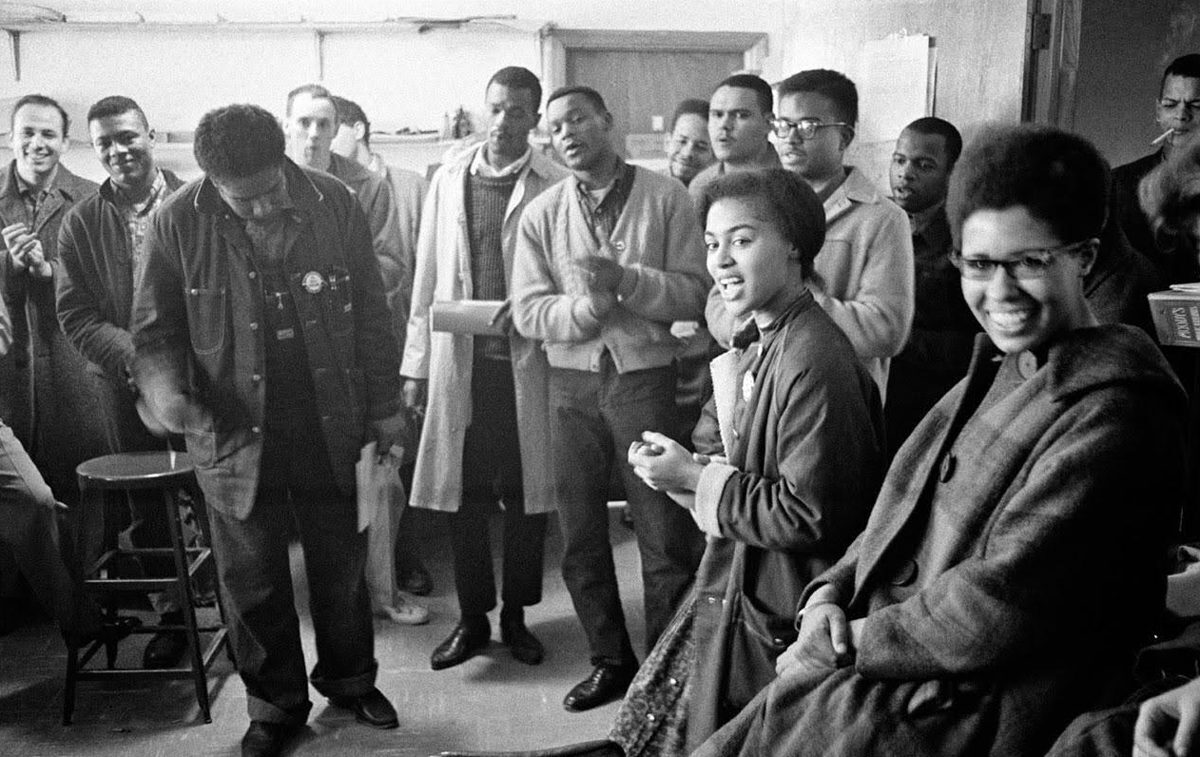
“Ours is not the struggle of one day, one week, or one year. Ours is the struggle of a lifetime, or maybe even many lifetimes, and each one of us in every generation must do our part.”— John Lewis, former Chairman of SNCC, icon of the modern Civil Rights Movement, and U.S. Congressman
The modern American Civil Rights Movement, spanning 1954 to 1968, was a pivotal era in which Black Americans and their allies organized to fight for the rights long denied them. Activists chose many paths during this time; one considered central to the civil rights era was the path of nonviolence. A notable group that embraced nonviolence from its founding was the Student Nonviolent Coordinating Committee (SNCC).
What was SNCC, and what were its central values and goals?
“Through nonviolence, courage displaces fear; love transforms hate. Acceptance dissipates prejudice; hope ends despair. Peace dominates war; faith reconciles doubt. Mutual regard cancels enmity. Justice for all overcomes injustice. The redemptive community supercedes systems of gross social immorality.”— Excerpt from the Student Nonviolent Coordinating Committee Constitution, revised in conference, April 1962
The Student Nonviolent Coordinating Committee (SNCC) was a student-led organization committed to securing voting rights for Black Americans, particularly in the American South. Their efforts focused on dismantling barriers such as literacy tests, poll taxes, and intimidation—tools historically used to suppress Black voter participation. In the face of systemic resistance, SNCC engaged in grassroots organizing and acts of nonviolent resistance to ensure that the federal government upheld the constitutional rights of all citizens. Their work played a critical role in advancing civil rights and empowering marginalized communities.
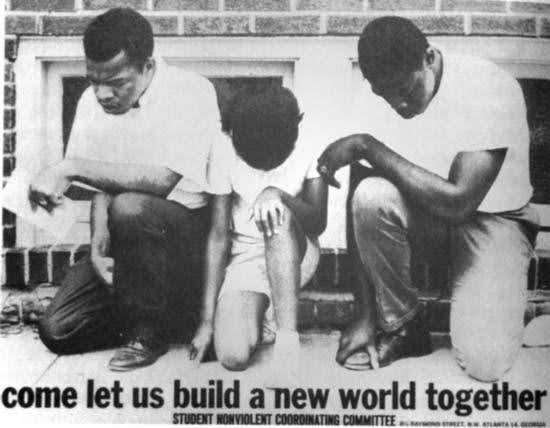
What earlier nonviolent movements created the conditions for the formation of SNCC?
“Being an American of dark complexion and some 26 years, these questions flash through my mind: 'Should I sacrifice my life to live half American? Will things be better for the next generation in the peace to follow? Would it be demanding too much to demand full citizenship rights in exchange for the sacrificing of my life? Is the kind of America I know worth defending? Will America be a true and pure democracy after this war? Will Colored Americans suffer still the indignities that have been heaped upon them in the past?' These and other questions need answering; I want to know, and I believe every colored American, who is thinking, wants to know.”— Excerpt from James G. Thompson's letter to the Pittsburgh Courier
The struggle for civil rights for Black Americans is part of a legacy that spans many generations, with its roots originating in the Transatlantic Slave Trade. After emancipation following the American Civil War, Black Americans continued to endure the effects of the Paradox of Oppression. This paradox manifested through a tolerance of Black Americans as limited participants in the American workforce, while never being fully accepted as trusted and valued members of American society.
This contradiction was illuminated during World War II through the Double V Campaign. Launched by the Pittsburgh Courier in early 1942, the campaign of "Victory Abroad" and "Victory at Home" was sparked by a letter from James G. Thompson, a citizen who enlisted in the military a year after writing his landmark letter. Thompson highlighted the paradox of fighting Nazism and fascism abroad while being denied basic rights at home.
The efforts of the Double V campaign during World War II, along with the return of Black veterans and the increase in Black activism, particularly in the South, helped lay the socio-political groundwork for the modern Civil Rights Movement.
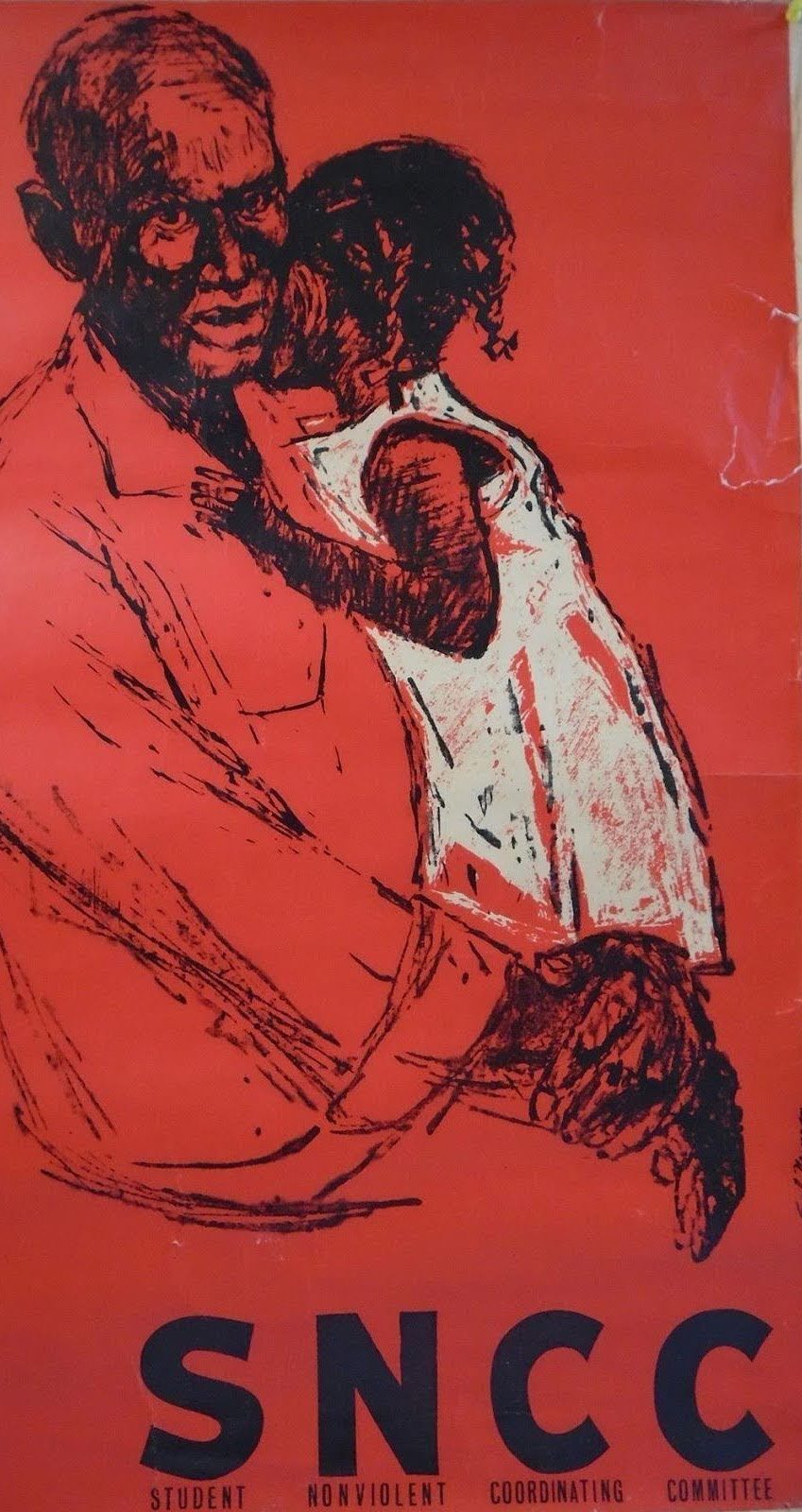
The confrontation of the Paradox of Oppression, both abroad and at home, became part of the central framework within the modern Civil Rights Movement. SNCC recognized parallels between its struggle for local civil rights and broader anti-colonial movements in Africa, viewing segregation in the U.S. and colonial actions in Africa as interconnected systems of racial oppression.
How did SNCC's efforts fit into the larger landscape of the modern Civil Rights Movement?
“The Freedom Schools stand as an integral part of SNCC's voter registration activities. They will provide politically emerging communities with new young leadership and constitute a real attack on the presently stifling system of education existing in the state. If the program succeeds, the basis will have been laid for a cadre of student leadership around the state of Mississippi committed to critical thinking and social action. The program will succeed if it is given support by the people of the North.”— Unsigned and undated excerpt from Memorandum: On the SNCC Mississippi Summer Project.
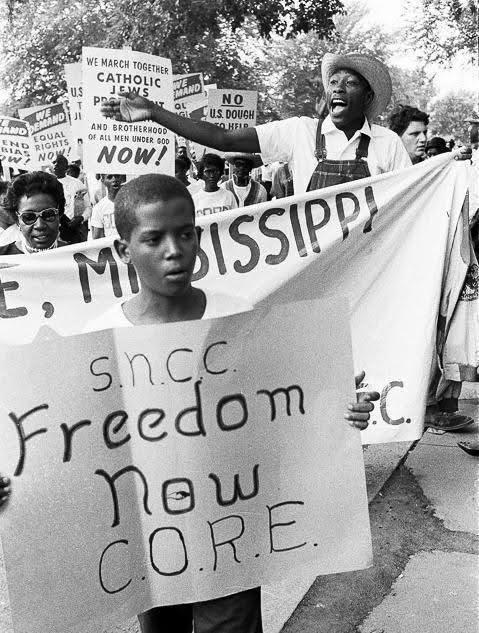
Resistance during the modern Civil Rights Movement existed on a spectrum. While more commonly highlighted moments like Selma or The March on Washington were at the forefront of the public consciousness, SNCC's actions showed that activism could take many forms, including large-scale demonstrations and smaller local efforts. SNCC encouraged the use of art and allyship as powerful tools of resistance alongside protests, voter registration drives, and sit-ins. SNCC often collaborated with other nonviolent groups, including the National Association for the Advancement of Colored People (NAACP) and the Congress of Racial Equity (CORE), participating in Freedom Rides and voter registration drives. Although over time SNCC's evolving ideology no longer strictly adhered to a commitment to nonviolence, leading to a weakening of ties with some groups–such as the National Association for the Advancement of Colored People (NAACP) and the Southern Christian Leadership Conference (SCLC), notably led by Dr. Martin Luther King Jr.–the profound collective impact on the success of the modern Civil Rights Movements is due in part to the early collaborative efforts of these organizations.
How did SNCC's actions differ from other approaches within the larger struggle for Civil Rights?
“We don't hate nobody because of color. We hate oppression.”— Bobby Seale, cofounder of the Black Panther Party
The modern Civil Rights Movement was a joint effort by many groups whose main goal was securing equal rights for Black Americans. SNCC began as a group committed to nonviolence, but over time, some members began to embrace ideas more closely aligned with the Black Power Movement, whose central principles were self-determination and Black pride. Aligned with these principles and influenced by the Black Power Movement, the Black Panther Party was founded by Huey Newton and Bobby Seale, who had become frustrated with what they saw as slow progress by other civil rights groups, inspiring them to push for faster and more systemic change. The Black Panther Party focused on armed self-defense, direct confrontation with politicians and law enforcement, and community programs such as free clinics and breakfast programs. They worked to protect Black citizens from the brutality many faced, which they saw as part of the country's legacy of racial oppression and violence.
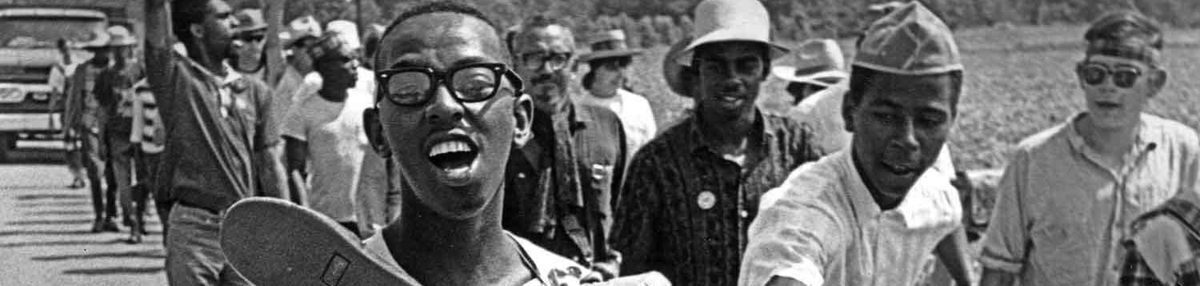
What outlets did SNCC use to communicate its ideas and messages?
“I am the voice that is heard everywhere; Each day I struggle to get segregation away from here. I am the voice that men call upon for Unity for Brotherhood for Now for Eternity.”— Excerpt from The Voice of Freedom, by Robert Lee, age 18, Greenville
As part of their resistance efforts, SNCC established Freedom Schools across Mississippi to provide Black students with educational experiences that centered on vibrant Black histories. These schools aimed to teach history often omitted from traditional schools, highlighting the resiliency of Black Americans. In addition to learning about their cultural and historical roots, students were encouraged to share their voices and lived experiences through creative arts such as poetry.
Poetry was a foundational outlet of resistance for the SNCC, emerging from a long tradition in which enslaved people used poetic expression as coded language, testimony, and a vehicle for the abolitionist movement. Drawing inspiration from this powerful legacy, SNCC members continued utilizing poetry as a modality for protest, solidarity, and liberation. Through Freedom Schools, students were encouraged to express their experiences through the arts as a means of resilience, especially in moments that felt difficult or hopeless. By engaging in poetry, students were given an outlet to express their diverse and ever-shifting emotions.
SNCC also fostered a culture of allyship by intentionally incorporating a range of diverse voices, placing Black students and members at the forefront of the movement. Through this inclusive approach, the organization uplifted those most affected by injustice and ensured that their experiences and leadership shaped the direction and impact of the civil rights struggle.
What is the significance of using writing and poetry tools of resistance?
“In every breast, God has implanted a principle, which we call love of freedom; it is impatient of oppression.”— Excerpt from Phillis Wheatley's 1774 letter to Reverend Samson Occom following her emancipation
During the era of enslavement, teaching enslaved people to read or write was forbidden and often criminalized. Literacy represented autonomy, knowledge, and personhood: qualities that directly threatened systems of racial oppression. Many enslaved people gained access to education through underground networks or, like poet George Moses Horton, taught themselves to read and write. In rare cases, such as with poet Phillis Wheatley, enslavers provided education. These individuals used their voices, poetry, and writing to advocate for freedom, contributing to the abolitionist movement.
Although many enslaved people were denied educational opportunities, they developed other forms of resistance through spirituality and music, creating what became known as "spirituals." These songs preserved collective memory, expressed hope for change, and communicated the songwriter's resistance to submitting to oppression. Poets and activists, such as members of SNCC, drew direct inspiration from these spirituals and poetry created during the era of enslavement. These histories are deeply interconnected, reflecting a shared legacy of resistance and creative expression.
What is the legacy of SNCC and the use of artistic expression? How is it still felt today?
“Although SNCC the organization no longer exists, we believe that its legacy continues and needs to be brought forward in ways that continue the struggle for freedom, justice and liberty...Built into our efforts is the determination to see that our legacy, the legacy of the freedom struggle, is passed from our generation to future generations.”— Excerpt from the Mission Statement of the SNCC Legacy Project
SNCC largely ceased its operations as a formal, structured organization by 1973. Today, it functions largely as a network that connects young activists in their efforts to champion causes such as climate justice and voting rights. Many young advocacy groups continue to align themselves with the SNCC in an effort to carry its legacy forward. Its strategies and lessons are shared today through efforts by SNCC veterans, especially through the SNCC Legacy Project, which preserves SNCC's history while also supporting modern movements.
The use of art as an outlet for expression and resistance lives on today through the poetry of SLAM poets, a form of poetry that began in the mid-1980s and was influenced by SNCC's creation of a culture of nonviolent activism. This culture encouraged the authentic spoken word rooted in the Black American experience to serve as a tool for social change. Musical artists like Kendrick Lamar also carry the legacy forward. In 2018, he won the Pulitzer Prize for Music for his work portraying "the complexity of modern African American life."