
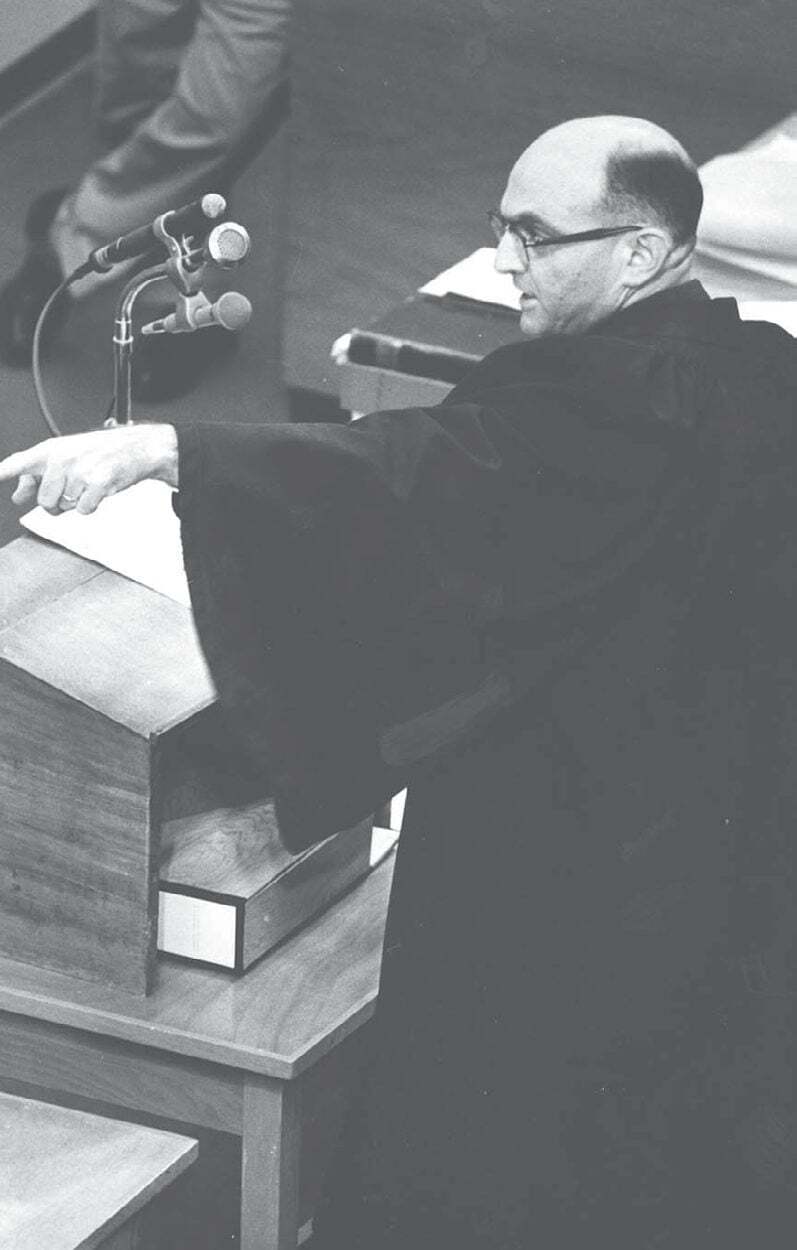
“When I stand before you here, Judges of Israel, to lead the Prosecution of Adolf Eichmann, I am not standing alone. With me are six million accusers. But they cannot rise to their feet and point an accusing finger towards him who sits in the dock and cry: "I accuse." For their ashes are piled up on the hills of Auschwitz and the fields of Treblinka and are strewn in the forests of Poland. Their graves are scattered throughout the length and breadth of Europe. Their blood cries out, but their voice is not heard. Therefore, I will be their spokesman, and in their name, I will unfold the terrible indictment.”— Attorney General Gideon Hausner in his opening speech at the trial of Adolf Eichmann
The capture and subsequent trial of Adolf Eichmann in 1961 were highly significant because they educated the global public on the full extent and human horror of the Holocaust, establishing key precedents in international law regarding universal jurisdiction for crimes against humanity, and provided a vital moment of justice and catharsis for Holocaust survivors and the young state of Israel. The trial centered the testimonies of Holocaust Survivors, officially acknowledging their lived experiences by a legal authority and giving their voices a global audience for the first time in history. The trial redefined how the Holocaust was remembered and established testimony as a powerful, legitimate force for truth, accountability, collective memory, and the education of future generations.
What was the climate after World War II?
In the immediate aftermath of World War II, Europe faced profound political, economic, and social upheaval. Although many Nazi war criminals were quickly apprehended and tried for their roles in the Holocaust, others used the chaos of postwar Europe to evade capture--leaving a deep sense of injustice among survivors. Pursuing accountability and justice became a core mission for those seeking justice for the crimes of the Nazi regime, particularly in the case of high-ranking officials who had orchestrated the horrific events of the Holocaust. Among the most sought was Adolf Eichmann, a senior Schutzstaffel (SS) officer and architect of the Final Solution, whose capture became a symbol for achieving justice after mass atrocity.
Due to the Nazi policies implemented during the Holocaust forced emigration and deportation left Europe facing one of the largest refugee crises in history. Hundreds of thousands of survivors were displaced, often with no homes, families, or communities to return to. For Jewish survivors, Antisemitism, which long predated the Holocaust, continued to persist across much of Europe, and acts of antisemitic violence remained a real and immediate threat. For many Jewish refugees, the postwar landscape offered neither safety nor stability, underscoring the profound challenges of rebuilding lives after genocide.
Approximately 250,000 Jewish survivors were put in Displaced Persons (DP) camps in Austria, Italy, and Germany after the war, many of whom sought to rebuild their lives (USHMM). For many Jewish refugees, British Mandatory Palestine emerged as the primary destination, reflecting a deep longing for safety, self-determination, and a return to the ancestral Jewish homeland.
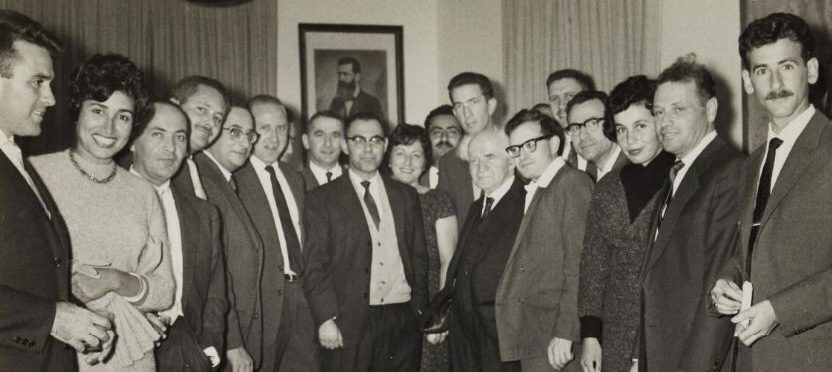
In 1947 as the influx of refugees continued the UN General Assembly voted in favor for the creation of the State of Israel and in 1948, all restrictions from the British Policy on Jewish immigration were lifted. Highlighting this pivotal moment, Prime Minister David Ben-Gurion stated:
“The Nazi Holocaust, which engulfed millions of Jews in Europe proved anew the urgency of the reestablishment of the Jewish State, which would solve the problem of Jewish homelessness by opening the gates to all Jews and lifting the Jewish people to equality in the family of nations.”— David Ben-Gurion
After the establishment of the State of Israel in 1948, the government faced immediate security concerns and the need for an intelligence service became paramount. In 1949, Prime Minister David Ben-Gurion authorized the formation of what would become Mossad. The Mossad’s central mandate was safeguarding the new nation from external threats, as well as embarking on the mission to bring many of the fugitive perpetrators of the Holocaust to justice.
Who was Adolf Eichmann?
Adolf Eichmann was a senior official in the Nazi regime whose actions played a central role in the deportation and murder of millions of Jewish and non-Jewish victims during the Holocaust. In January 1942, he joined fourteen other high-ranking Nazi leaders at a lakeside villa in Wannsee, near Berlin, for a meeting that became known as the Wannsee Conference. There, the participants formalized what they called “the Final Solution to the Jewish Question,” implementing the systematic deportation, and mass murder of Europe’s Jewish population.
Eichmann oversaw the large-scale deportation of Jewish people across Europe, organizing the logistics that sent victims to ghettos, concentration camps, and extermination camps. Through the systems he coordinated, millions of Jewish and non-Jewish people were forcibly removed from their homes and sent to their deaths.
“Vi makht men dos?” (“How does one do that?”)
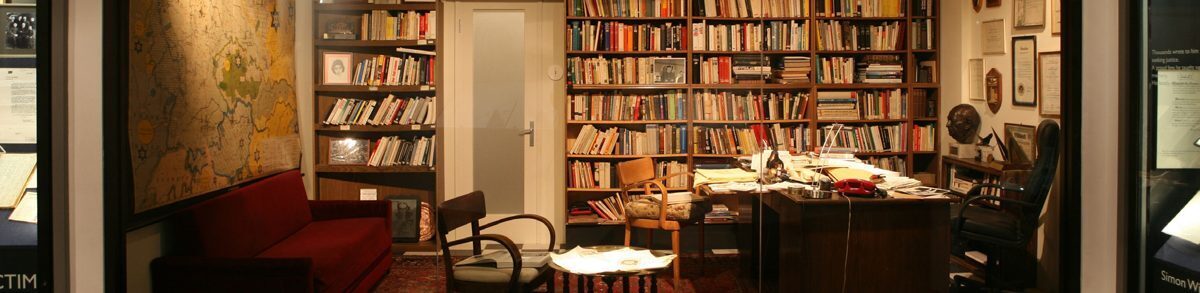
After the war, a group of individuals comprising of Israeli Intelligence (Mossad) agents and survivors such as Simon Wiesenthal compiled files on fugitive Nazi war criminals. Wiesenthal famously said, “When history looks back, I want people to know the Nazis weren't able to kill millions of people and get away with it.” Wiesenthal firmly believed in the principle of justice over vengeance. In his pursuit to confront denial and ensure accountability, he co-founded the Jewish Historical Documentation Centre, dedicating his life to gathering evidence on Nazi perpetrators. His work helped identify roughly 1,000 war criminals—including Adolf Eichmann—solidifying his legacy as a relentless advocate for truth and justice.
In 1945, Nazi war criminals including Adolf Eichmann, the architect of the Holocaust, fled Europe through what was known as the Ratlines—Passages of escape that usually lead to South America, Spain, and Switzerland.
Eichmann fled to Buenos Aires, Argentina, where during this time, he changed his name to Ricardo Klement and hid from prosecution for his crimes.
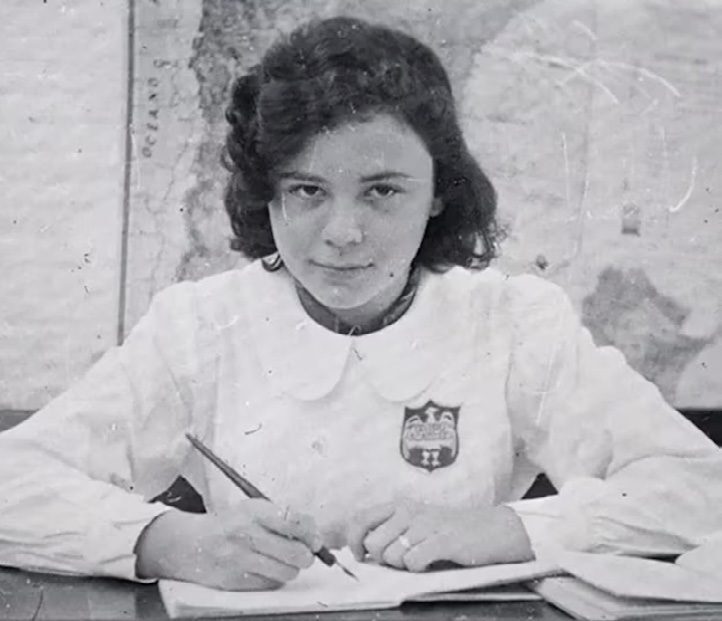
In 1956, Sylvia and Lothar Hermann played a key role in identifying Adolf Eichmann in Argentina. Lothar, a German-Jewish man who had emigrated to Argentina, grew suspicious when his daughter Sylvia began dating Klaus Eichmann, Adolf Eichmann’s son. Klaus frequently boasted about his father’s Nazi activities during the war. Lothar sent Sylvia to gather more information, and during a visit to the Eichmann home, she met Adolf Eichmann himself. Though he claimed to be Klaus’ uncle, Klaus often addressed him as “father.” The Hermanns alerted Fritz Bauer, a prosecutor in West Germany, who then passed their findings directly to Mossad.
Once Mossad confirmed Eichmann’s identity, Israel’s Prime Minister, David Ben-Gurion, authorized a high-level, top-secret mission to extract him from Argentina. The operation required absolute secrecy, both because it violated Argentine sovereignty and because of the risk that Eichmann might be tipped off and escape once more.
In May 1960, four Mossad agents—Peter Malkin, Rafi Eitan, Zvi Aharoni, and Moshe Tabor—along with physician Yonah Elian, as well as document forgers and disguise experts, carried out the mission to capture Adolf Eichmann in Argentina and bring him to justice in Jerusalem. The team secured a signed confession and Eichmann’s agreement to stand trial in Israel. Disguised as a member of the flight crew, Eichmann was secretly transported to Jerusalem to face justice.
In a moment of awe, one of Ben-Gurion’s cabinet members exclaimed in Yiddish, “vi makht men dos?”—“how does one do that?”—capturing the extraordinary and seemingly impossible nature of this act of justice.
What was the Significance of Eichmann Being Tried in Israel?
Prime Minister David Ben-Gurion underscored the profound significance of holding a trial of this magnitude in the young State of Israel. He declared:
“Here for the first time in Jewish history, historical justice is being done by the sovereign Jewish people. For many generations, it was we who suffered, who were tortured, who were killed. It was we who were judged. Our adversaries and our murderers were also our judges. For the first time, Israel is judging the murderers of the Jewish people. It is not an individual that is in the dock at this historic trial, and not the Nazi regime alone, but anti-Semitism throughout history.”— David Ben-Gurion
What Was the Trial of Adolf Eichmann and How Was it The First of its kind?
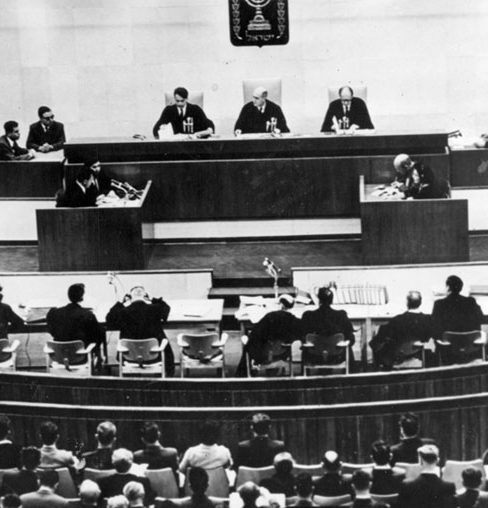
The Trial of Adolf Eichmann, which began on April 11, 1961, was a landmark moment for how justice would be pursued after mass atrocity and how the world would come to learn about the details of the Holocaust and the victims whose voices had never before been heard. This trial was among the first international trials to be broadcast globally, giving the world an unprecedented window into the atrocities that took place during The Holocaust. Alongside documents, evidence and official records, the prosecution called 100 survivors to testify, each recounting personal experiences that were directly connected to Eichmann’s actions.
Eichmann was charged and convicted on 15 counts under the Nazi and Nazi Collaborators (Punishment) Law of 1950. The trial set an important precedent for the principle of “command responsibility,” rejecting Eichmann’s defense that he was merely “following orders.” He was ultimately sentenced to death.
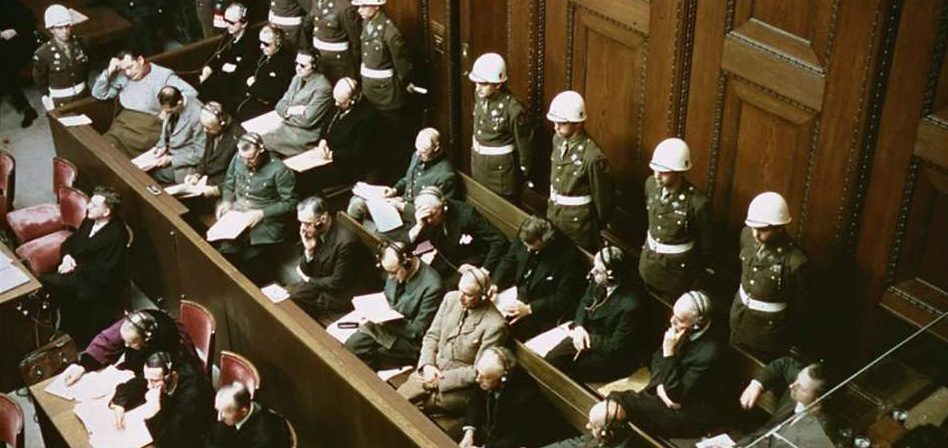
Before the Trial of Adolf Eichmann, the most significant effort to bring Nazi perpetrators to justice was the Nuremberg Trials. These proceedings held 22 of the highest-ranking Nazi officials accountable and established a legal precedent that shaped the field of international criminal law. In the years that followed, additional trials prosecuted lower-level perpetrators, region-specific collaborators, and individual figures.
Why Testimony During the Trial?
Nearly twenty years after the end of World War II, the lived experiences of Holocaust Survivors had become clouded by distance, misconceptions, and false narratives. Public memory often fell into a reductive binary: the image of a few heroic resistors on one side, and on the other, the false perception of passive victims who submitted without resistance.
Survivor testimonies pierced beyond the binary of perpetrator and victim--restoring nuance, dignity, and humanity to the voices of the victims. In doing so, the trial reshaped global understanding, challenged assumptions, and established testimony as an enduring force for education, justice, and remembrance.
Who Testified at the Trial?
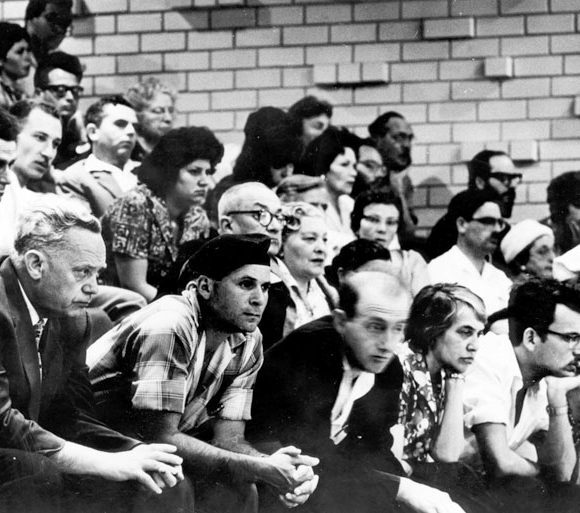
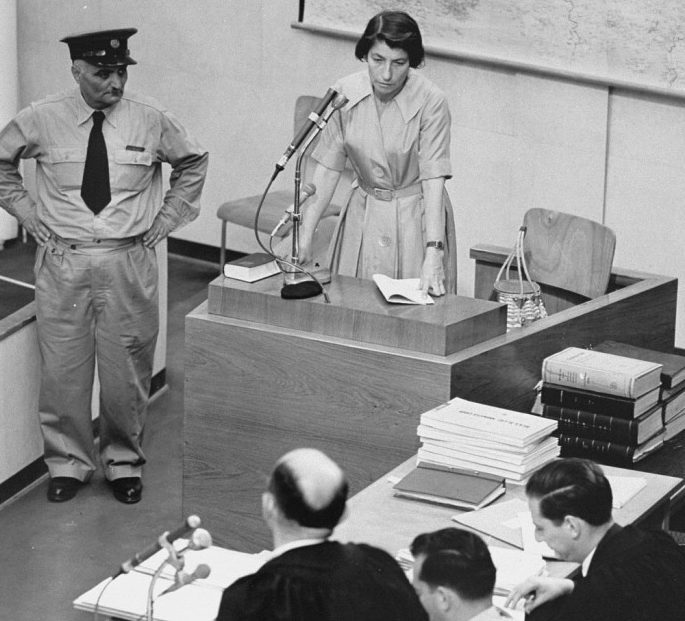
One hundred Holocaust survivors shared their experiences during the trial. While many had no direct encounters with Eichmann himself, their testimony illuminated the profound impact of his actions on their lives during the Holocaust. Among the survivors, voices like Zivia Lubetkin—who's experience during the Warsaw Ghetto Uprising reframed the misunderstanding that Jewish People were passive during the Holocaust, invigorating an interest in Jewish Resistance during the war.
Survivors like Israel Gutman, years later, reflected on the effects of the trial and noted that:
“they listened and they heard perhaps for the first time what happened to this kind of simple people which was their tragedy, what happened to their families, what happened to them, day by day,[...] this caused a very strong, a very profound change in the – the approach to the average survivors.”— Israel Gutman
Why is This Important Today?
One of the most impactful takeaways from the trial of Adolf Eichmann is the humanization of history. Many trials of war criminals had foregone a human centered focus in lieu of empirical evidence and documents. By placing fact and testimony in conversation with one another, our modern day understanding of the Holocaust has been greatly informed by survivors who have shared their stories. These individuals have widened historical understanding and have created centers of collective memory and healing that inform how we approach not only teaching, learning, and listening about historical atrocities.
This trial emphasizes the power that testimony and narrative sharing has in our society and reminds us that our voices contribute to an intricate web of collective history that is shaped and molded by us and the experiences we have. We are not a drop in the bucket, and every unique narrative contributes to deeper understanding about the world around us.
How will your story shape our collective histories?
Key Terms
Key terms
- David Ben-Gurion
- Israel’s first prime minister (1948–1953; 1955–1963), is widely regarded as the nation’s “founding father.” He played a central role in shaping the new state’s political and civic landscape, establishing the institutions and frameworks that anchored Israel’s early development.
- “The Final Solution of the Jewish Question”
- The “Final Solution of the Jewish Question” was the culmination of escalating Nazi racial laws, discriminatory policies, mass deportations, and the violence of the Einsatzgruppen death squads. Between 1941 and 1945, this plan became the driving force behind the mass execution of Jewish people, marking the period in which the largest number of murders during the Holocaust took place.
- Nazi and Nazi Collaborators (Punishment) Law of 1950
- This legal framework was designed to assist in the persecution of Nazi War Criminals and collaborators of Nazi war crimes. This series of laws criminalized a multitude of war crimes including but not limited to, crimes against humanity, acts of genocide, as well as crimes against Jewish people such as cultural erasure.
- Nuremberg Trials
- The Nuremberg Trials, held from 1945 to 1946 under the leadership of the Allied powers, brought high-ranking Nazi war criminals to justice. These proceedings not only held perpetrators accountable but also set important precedents for the development of international criminal law.
- Ratlines
- A series of escape routes used by Nazis fleeing persecution post-World War II. These escape routes led to Spain, Switzerland, Canada, and most commonly South America, due to support from Argentinian President Juan Peron, a Nazi sympathizer and supporter.
- Schutzstaffel
- The Schutzstaffel, commonly referred to as the “SS” was a paramilitary organization that was responsible for enforcing Nazi racial policy as well as participating in the mass murder and deportation of millions of Jewish People and targeted communities. Many of the leaders of the SS were charged and found guilty of war crimes and crimes against humanity after the war.
- Simon Wiesenthal
- Simon Wiesenthal, a Holocaust Survivor, devoted his life to tracking down escaped Nazi war criminals and preserving the historical memory of the Holocaust. Guided by a belief in justice rather than vengeance, he co-founded the Jewish Historical Documentation Center, which not only collected evidence against perpetrators but also helped families search for missing relatives. His unwavering commitment to justice, memory, and education eventually inspired the creation of the Simon Wiesenthal Center — the founding organization of the Museum of Tolerance.
- Wannsee Conference
- The Wannsee Conference was a gathering of high-ranking Nazi officials who came together to discuss and implement the “final solution of the Jewish question.” During this time, at a lakeside cabin, these officials made decisions that would systematize the mass murder and deportation of millions of Jewish People.
- Warsaw Ghetto Uprising
- From April 19 to May 16, 1943, the largest act of Jewish resistance during World War II took place in the Warsaw Ghetto. As Nazi forces attempted to deport the remaining Jewish residents to concentration and extermination camps, resistance groups such as the Jewish Combat Organization and the Jewish Military Union stood up in defiance. Against overwhelming odds, they fought courageously for 29 days. The Warsaw Ghetto Uprising endures as one of the most powerful testaments to Jewish resistance and the pursuit of dignity amidst unimaginable persecution.
- Yonah Elian
- Yonah Elian, the physician who accompanied the Mossad agents during Adolf Eichmann’s extraction, was responsible for keeping Eichmann sedated throughout the operation. After the mission, Elian refused any public recognition and declined to speak about his role.
- Zivia Lubetkin
- Zivia Lubetkin was a central figure in the Jewish Resistance and one of the few female leaders of the Jewish Underground and the Jewish Combat Organization. She played a pivotal role in the Warsaw Ghetto Uprising and was among the few fighters to survive, leading her comrades through the sewers to escape. After the war, she continued her efforts by working closely with survivors and assisting them in immigrating to Israel.