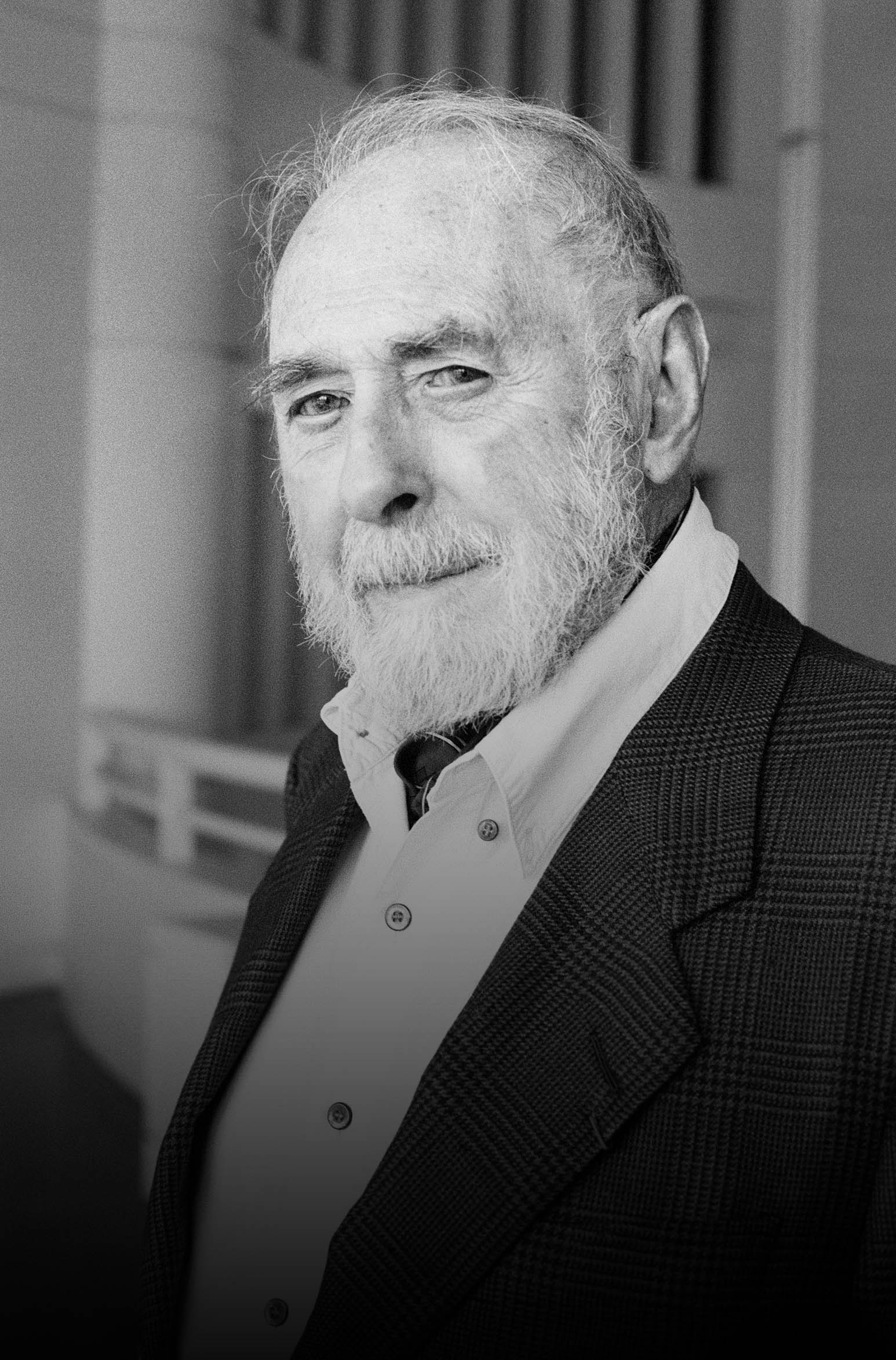
Walter Bodlander
I truly believe that those who do not learn from history are condemned to repeat it. I want new generations to know the facts so that someday ‘Never Again’ will be a reality.
Walter Bodlander was born on November 30, 1920, in Breslau, Germany (now Wroclaw, Poland), as the only child of Franz and Dorothy Bodlander (née Dembinski-Cohn). His family was so assimilated that Walter did not even realize that he was Jewish until Hitler came to power. The Bodlanders owned a factory, opened by Walters’ grandfather in the 1890’s, which produced products used for house painting.
From 1933-1939, the Nazi government passed laws persecuting the Jewish population of Germany, making life increasingly difficult. Despite his family’s financial means, they could not afford to flee Germany, due to the Nazi government’s control of monetary exchange rates and the application of the fugitive tax. This tax required that Jews fleeing Germany had to pay approximately 30% of their total wealth to the government.
His parents were, however, able to send Walter to the French-speaking part of Switzerland to go to school in Neuchatel (École Supérieure de Commerce de Neuchâtel). In the beginning, he stayed with the Weber family, who housed him and taught him some French. During school breaks, he travelled back and forth between Switzerland and Germany. He managed to avoid most of the antisemitism because he looked Aryan.
In 1936, Walter’s father died of a heart attack. His mother, Dorothy, was able to obtain a visa to Palestine for herself and also for Walter, since he was still a minor. However, Walter first wanted to finish his schooling in Switzerland. When he graduated in 1939, his student visa expired, and the Swiss government required him to leave.
He made his way to France, because it offered the last open port that would allow Walter to sail for Palestine. When Hitler invaded Poland, Walter volunteered for the French Army in order to fight the Nazis. The army quickly discovered that he was not a French citizen, so he was discharged and put on a boat to Palestine.
After a year in Palestine, Walter was able to attain a visa to come to the USA. Since the shorter routes were too dangerous, the journey took three months aboard a ship traveling around Africa and South America.
From New York City, Walter moved to Los Angeles. In 1942, after the Japanese bombed Pearl Harbor, he volunteered for the U.S. Army, thereby qualifying to become a U.S. citizen. Walter attended Officer Candidate School, graduated, and then was assigned to Camp Richie. He served in military intelligence because of his skills as a native German speaker. He was sent to Devon, England, with the 4th Infantry, part of the American Forces that landed on Utah Beach in Normandy, France, on D-Day, June 6, 1944.
Walter was one of the first American soldiers to make land during the invasion. His primary responsibility was to interrogate captured Germans to discover the locations of German units and command centers. He continued to work in military intelligence, making his way across Europe. In 1945, Walter was in Munich when the war officially ended. He entered Dachau Concentration Camp only several hours after it had been liberated, describing corpses on a derailed train and the camp inmates as “disoriented and mostly skeletal.” After the war, Walter joined the hunt for war criminals and led the force that arrested the Nazi police chief of Munich. As a military intelligence officer, Walter’s decorations included two Bronze Stars, the Purple Heart, The Presidential Unit Citation, the Combat Infantry Badge, and the EAME Campaign Medal with five battle stars.
Shortly after the war, Walter moved to Los Angeles and taught high school. He started speaking at the Museum of Tolerance in the fall 2014 to student and public groups to preserve history and inspire youth. Walter Bodlander z”l passed away on February 2, 2020, at the age of 99. His memory and legacy will live on at the Museum of Tolerance.
Z”L stands for the Hebrew words meaning “may his/her memory be a blessing.”