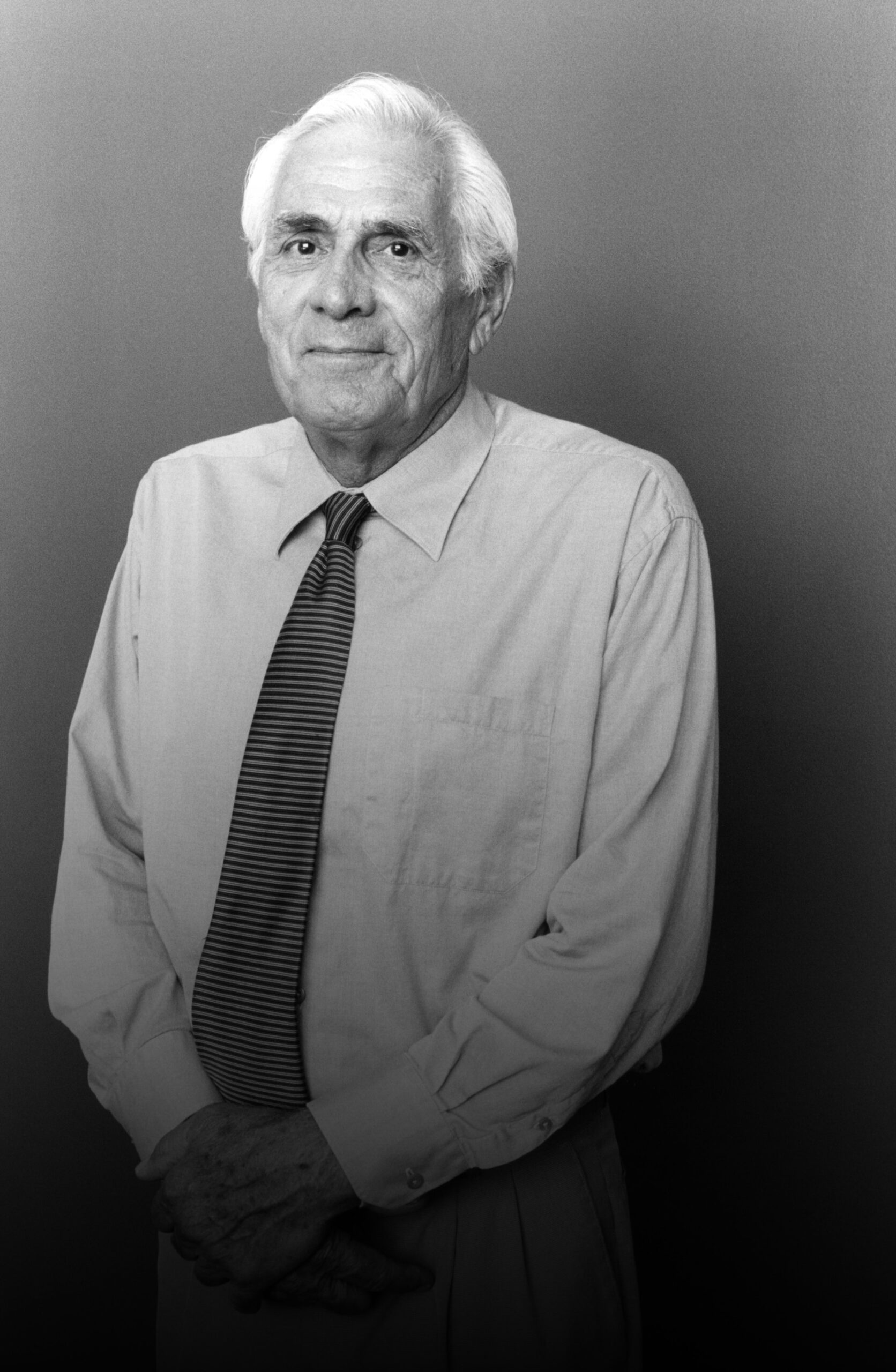
Peter Daniels
Although it is important to remember the past, don’t let the past rule your life.
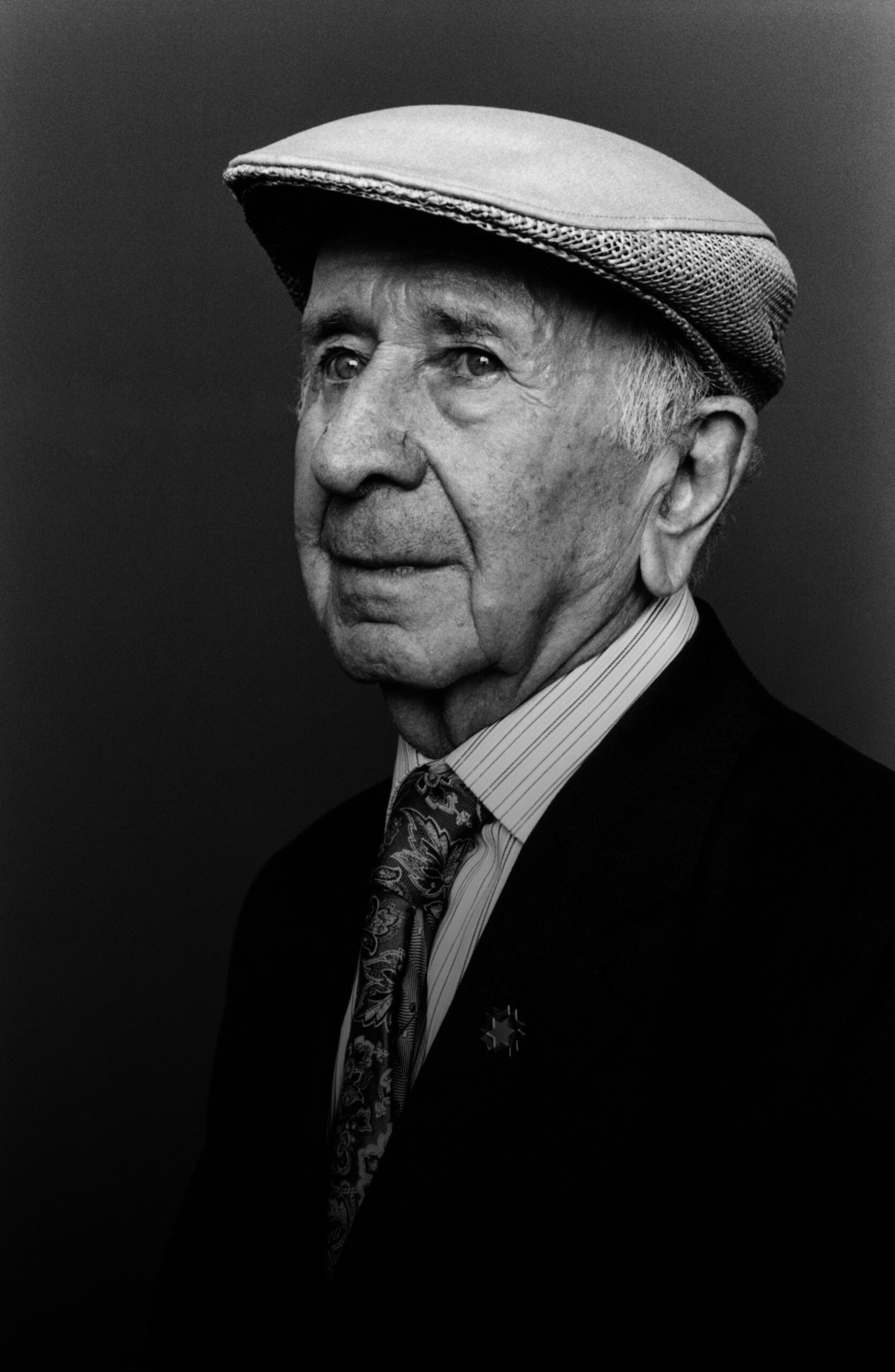
Peter Daniels was born Peter Berlowitz on July 8, 1936, in Berlin, Germany. He lived with his mother, Hilde Berlowitz, in their small apartment because his father, Erich Daniels, had abandoned them and migrated to Shanghai. While his mother worked as a seamstress at a German uniform factory, Peter, four years old, stayed at home alone. He was not allowed to attend public school or to go outside and play in the park with other children. Many Jews in Germany had already been arrested and deported. Peter’s maternal grandmother was a convert to Judaism. Though she was a Jew, Hilde used her mother’s baptismal papers to “prove” that she was only half-Jewish and a mischling (part Christian). This enabled them to evade the early deportations. In an effort to blend into German society, Hilde would even take Peter to Nazi parades, where he occasionally saw Hitler.
However, in June of 1943, Peter and Hilde were arrested, put onto cattle cars, and sent to Theresienstadt (Terezin) Concentration Camp in Czechoslovakia. Originally built to hold 5,000 people, Theresienstadt held about 60-80,000 prisoners. There were poor sanitary conditions, limited food rations, and virtually no medical aid. When they arrived at the camp, Peter was separated from his mother and sent to the children’s barracks. One week after arriving in Terezin, Peter turned seven years old and was forced to work gathering rocks, loading boxes onto trains, and tending the vegetable fields that fed only the camp guards and administrators. Each month, the Judenrat, a Nazi-mandated Jewish Council, was forced to select about 1,000 prisoners to be sent to Auschwitz-Birkenau Extermination Camp. Peter’s mother was able to show their “mischling” papers which saved them from deportation to the death camps. In June 1944, the International Red Cross visited the camp, and inmates were forced to pretend that they were treated well, a tool of Nazi propaganda.
In the spring of 1945, with the Soviet Army approaching, the Germans quickly abandoned the camp. On May 1, Red Cross personnel took over supervision of the camp, bringing food, clothing, medicine, and warm blankets. On May 8, 1945, Peter stood by the barbed wire and saw the Soviet Army liberate Theresienstadt. That day was one of pandemonium as German uniforms were burned and chocolate was handed out to the dazed inmates. However, the soldiers left almost immediately for Berlin where there was still fighting. Of the 15,000 children who passed through the camp, only about 125 survived. Miraculously, Peter was one of them.
Peter and his mother were forced to remain in Theresienstadt for another month after liberation, as a precaution against the spread of deadly diseases. When they were finally allowed to leave, Hilde chose to return to Berlin, where they lived in the American sector of the city. After three months, Hilde heard that Max Kurlander, whom she had met in Theresienstadt, was in a displaced person’s (DP) camp in Munich. Hilde traveled to Munich, married Max, and moved with Peter to the DP camp in Deggendorf, a town outside Munich.
There were no other children Peter’s age in the DP camp, so he was forced to attend a public school about a mile away. As the only Jewish student in the school, Peter endured abuse from the schoolchildren, and Hilde decided to take him out of school.
Peter’s stepfather had a cousin in New York who agreed to sponsor the family. They were able to immigrate to the United States in 1947, then moved to Queens, where they opened a dry-cleaning business. At the age of 14, Peter left his parents, who were abusing him, and started living on his own, working at odd jobs to survive.
Peter joined the Navy at the age of 22 and worked as a swim instructor stationed in Guam, Hawaii, and San Diego. After four years of military service he finished high school in San Diego. He continued his education at San Diego City College, San Diego State University, and went on to graduate school at Thunderbird School of Global Management in Phoenix, Arizona. He was 33 when he finally graduated and began a successful career in corporate real estate and finance, which spanned many decades.
As a member of the group, Children of the Holocaust, he was interviewed by Steven Spielberg. After his retirement, he began another career as an active volunteer at the Museum of Tolerance and at the Los Angeles Museum of the Holocaust. He also gave his testimony at schools, synagogues, and Jewish community centers throughout the United States, both in person, on radio or in electronic presentations. He knew that if an event is not spoken of, it would soon be forgotten.
Peter and his wife, Joan, were blessed with four children: Ilana (and Michael) Kirsch, Dahn (and Laura) Tamir, Rahm (and Jennifer) Tamir, and Erik (and Julie) Daniels; and nine grandchildren: Max and Arielle Kirsch, Annika and Axel Tamir, Hazel and Micah Tamir, and Rose, Peter, and Russell Daniels.
After a long battle with cancer, Peter Daniels z”l died at home on May 24, 2021, surrounded by his loving wife and other family members. He will be sorely missed by all.
Z”L stands for the Hebrew words meaning “may his/her memory be a blessing.”