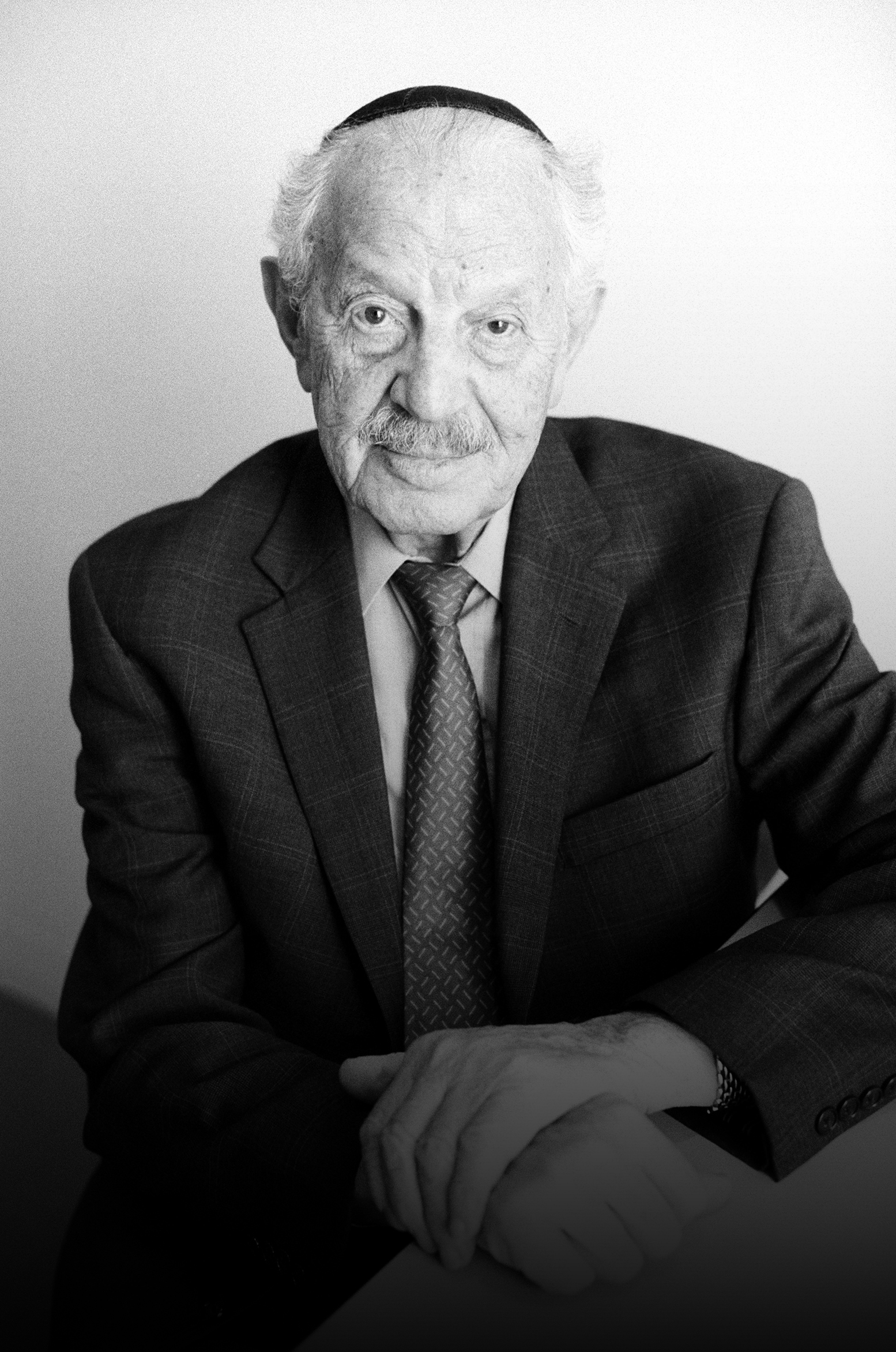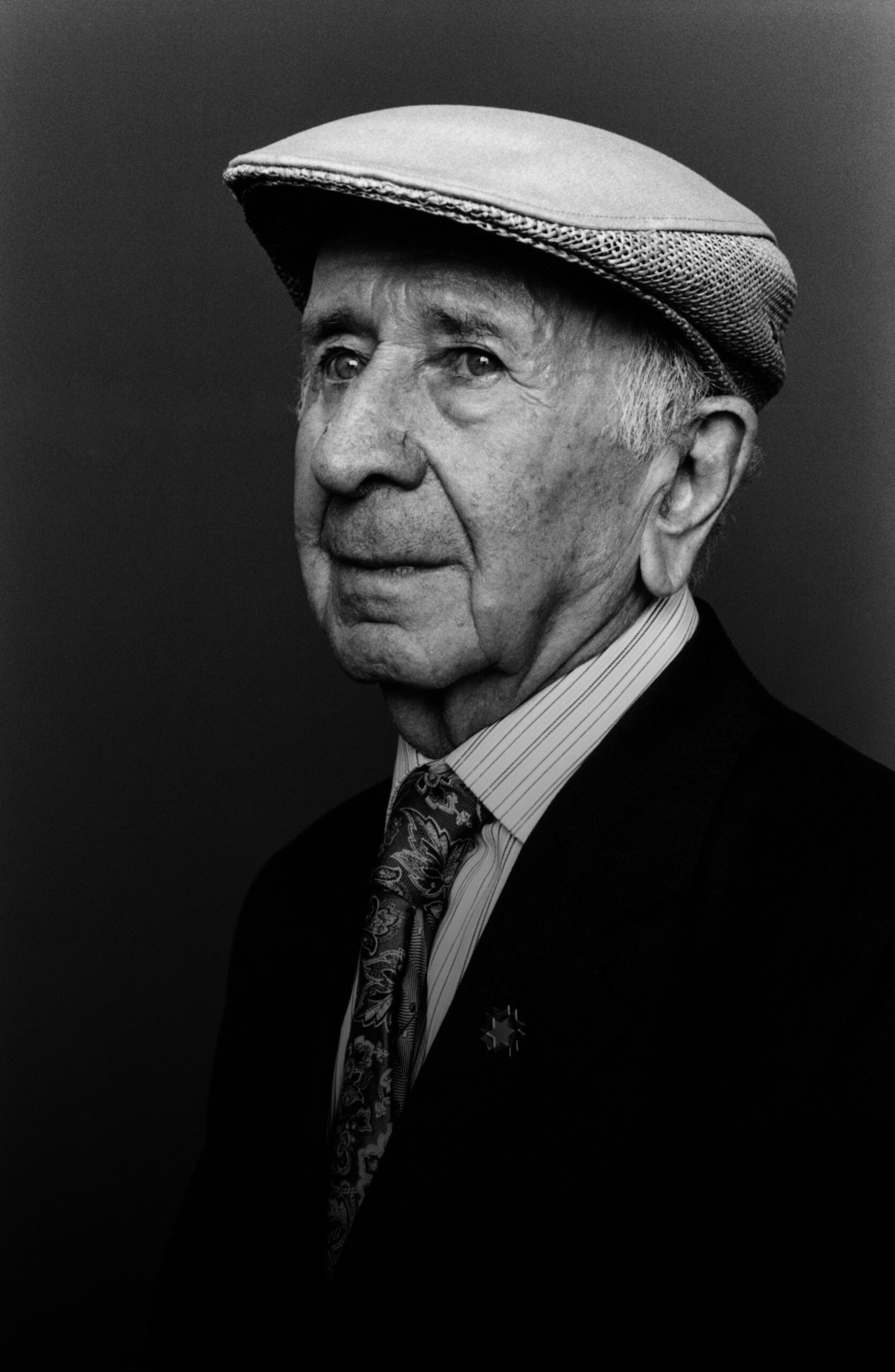
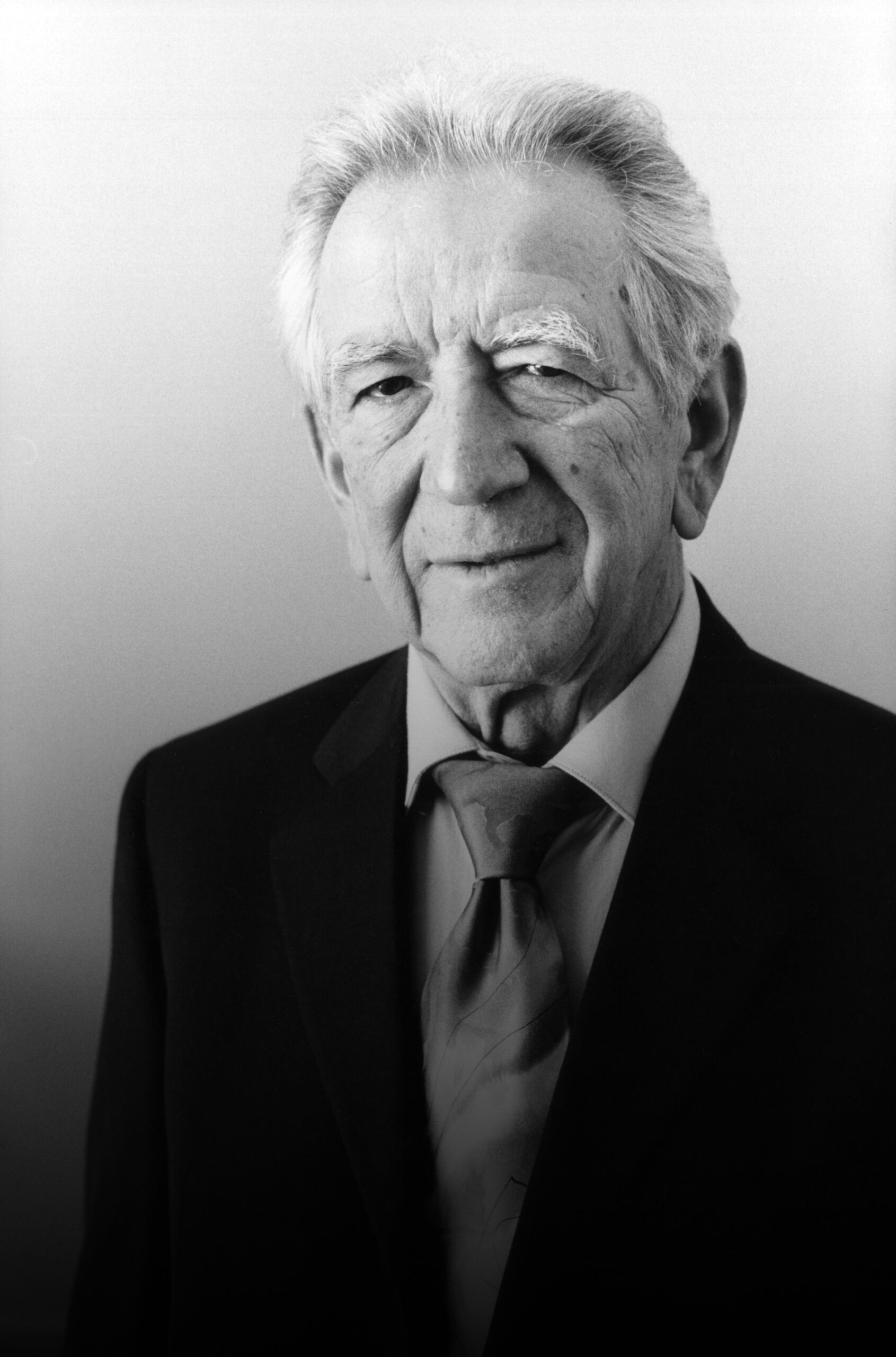
Morris Price
No matter how bad something might sound, or how bad you might feel, or how bad your day is, try not to get so down that you are unable to cope with it. Try to fight.
Morris Price was born Moniek Prajs on April 1, 1927, in Wolbrom, Poland. He was raised by his parents, Manela and Itka Prajs, and had three sisters and two brothers. He was the youngest child. His father was a cattleman who bought cows from farmers and resold them to butchers. Because his father owned his own horse and buggy, his family was considered to be middle-class. In addition to his immediate family, Morris’ grandparents also lived in his house.
Though the city of Wolbrom was rather small, it boasted a fair-sized Jewish population. However, life changed quickly for Morris when he was just 12. In 1939, Germany occupied Poland and antiJewish laws went into effect. Morris was no longer allowed to attend public school and was prohibited from attending the theatre or participating in sports with other Poles. At the same time, Morris’ older brothers were forced to do hard labor during the day.
In the summer of 1942, Morris’ family received notice that they were going to be “resettled.” Two of his sisters decided to go into hiding. One of his father’s friends, a Christian farmer in Wolbrom, agreed to hide the sisters, despite the personal risk. Morris and the rest of his family reported to the designated field for resettlement. His father was sent to a labor camp while his mother, sister, and grandmother were separated and sent elsewhere, most likely to a death camp. Morris, 15-years-old at the time, was sent with his brothers to a different labor camp just outside of Krakow, Poland, where their job was to construct railroad tracks.
While in the labor camp, Morris heard that Wolbrom would be liquidated. He decided to sneak back to the city to inform his sisters who had returned to their home from hiding. Morris was successful in warning both of his sisters and one cousin to leave Wolbrom. Together, they went back to the farmer to see if he would hide them in his barn. He hid them for one week, but then the farmer was afraid for his own safety, so they had to leave.
Eventually, they made their way back to the Krakow Ghetto. Morris and his sisters began working in a nearby labor camp, but when part of the labor camp was shut down, Morris was sent to the Krakow Ghetto and once again separated from his family. He remained in the ghetto from January to March of 1943. In March, the Germans reduced the size of the Krakow Ghetto, and Morris was transported to Auschwitz-Birkenau Extermination Camp. Upon arrival, Morris made a decision that saved his life. He was packed in a truck with many prisoners and was told to remain on the truck.
However, he noticed that young and able-bodied people were getting off the truck. Morris decided to jump off the truck when no one was looking and join the young group of prisoners. Had he stayed with the original group, he would have been sent directly to the gas chambers.
Life in the camp was very difficult, especially during winter, due to the extreme weather conditions, starvation rations, and disease. There were two roll calls a day, and prisoners waited for long hours outside to be counted. Many people committed suicide. Morris survived 18 months in Auschwitz.
In October 1944, with the Soviet Army approaching, Morris was transported by cattle car to Dachau Concentration Camp in Germany. In April 1945, with the American Army fast approaching, Dachau prisoners were sent on a death march. Morris managed to survive the death march, and on May 1, 1945, the first jeep with American soldiers liberated the prisoners.
Immediately following the war, Morris lived on a farm near Munich. Then, he went to a displaced persons camp in Germany to look for family. He found out that one of his brothers had survived and was living in Poland. On his way to Poland, he learned that both his sisters had also survived. In 1949, the surviving four siblings came to the United States.
Morris first entered the US via New Orleans and then settled in Nashville, Tennessee. He served in the U.S. Army, and was sent to Mannheim, Germany, where he served as a translator. After being discharged in 1952, Morris moved to California. and worked as a watch repairman and then as a jeweler. Morris met Shirley, and they married on January 8, 1961. They have three children: Michael, Debra, and David. Sadly, David suffered from a neurological disease called ataxia and passed away suddenly at the age of 33 in December 2001.
Morris began speaking at the Museum of Tolerance in 2005 because he finds it meaningful when he can share his testimony with younger people who might not know about the Holocaust. He inspires his audience with his courage and resilience.