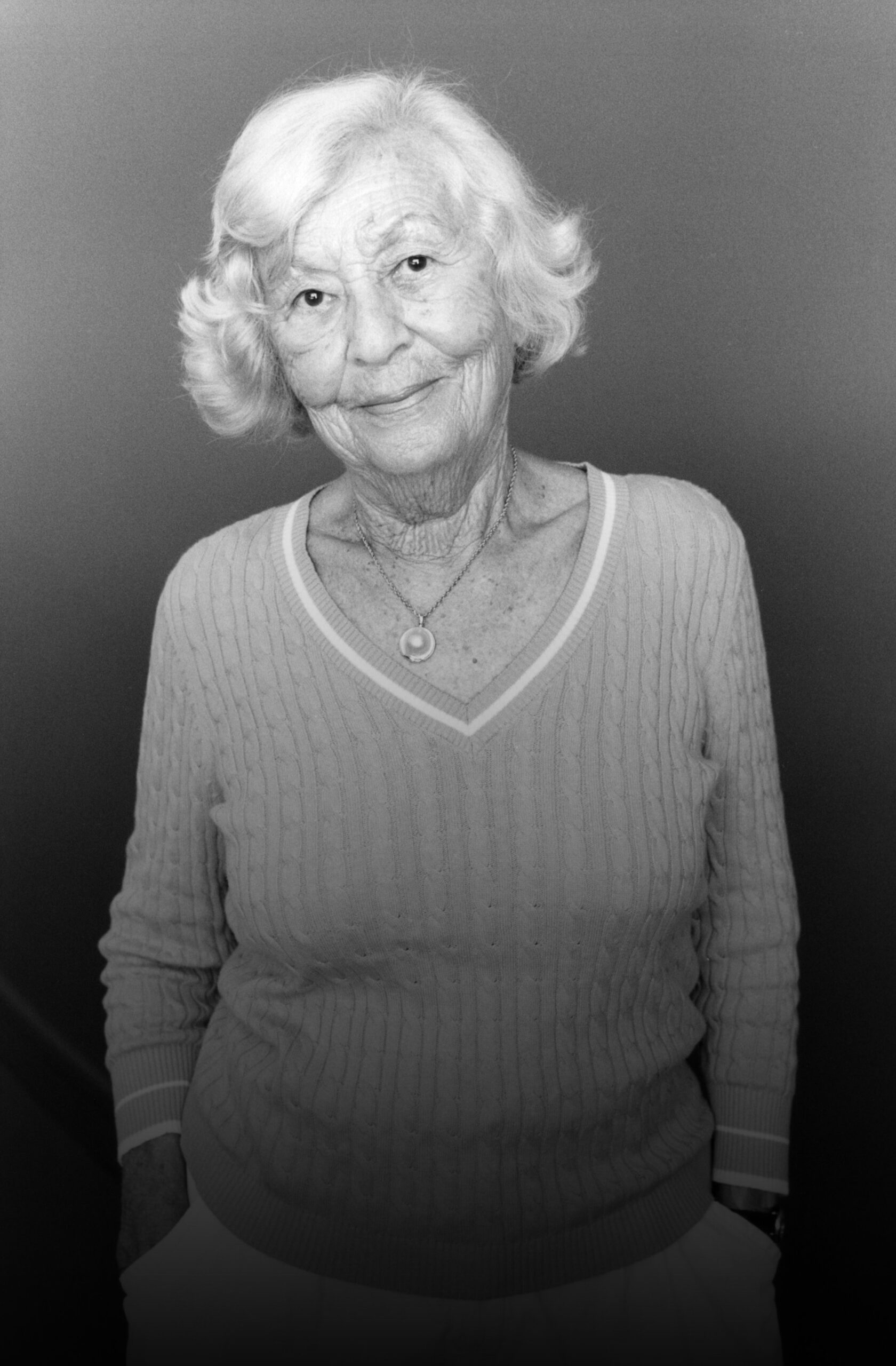
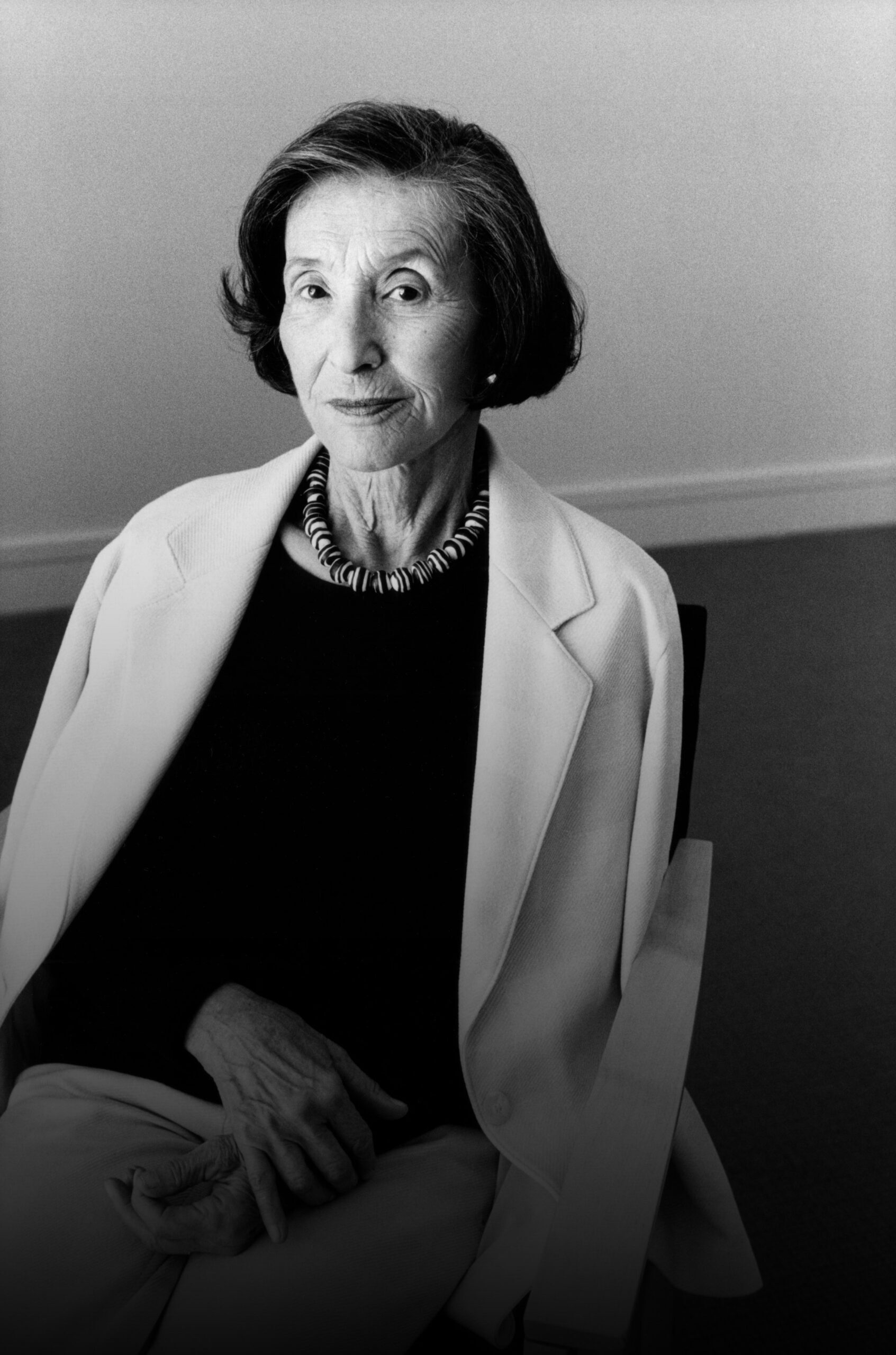
Marie Glasser
I’ve been trying to live my life so that if my parents would see me, they would be proud.
Marie Glasser was born Mari László on April 3, 1927, in Oradea, Romania and grew up with her parents, Andrew and Anna László, and brother, George, who was nine years younger. The family lived on their own farm, about five miles from Oradea. The region was called Transylvania and became part of Hungary in 1940.
Conditions in Hungary were difficult during the war, and Marie’s father was taken into forced labor. On March 19, 1944, Germany occupied Hungary and Jews were forced to wear a yellow Star of David to identify them as Jewish. On the morning of May 5, 1944, Marie and her family were awakened by Nazi officers, given 30 minutes to gather their belongings, and forced into the already crowded ghetto in Oradea.
Marie’s family lived in a single room with her mother’s parents, two great aunts, and another family of four. After three weeks, it was rumored that everyone from the ghetto was to be deported. Her immediate family, her grandparents, and her 96-year-old great-grandmother were forced onto a train, believing that they were being relocated for work, but after a three-day journey by cattlecar, with little food and water, they arrived at Auschwitz Extermination Camp.
In the camp, they were herded onto the selection platform. Marie’s family was immediately separated, as the guards ordered the men to form one line and the women and children to form another. A guard at the front sent Marie and her father to the right and the rest of her family to the left. At that time, she did not know what it meant; she later learned that those sent to the left went directly to the gas chamber. The women sent to the right were forced to strip naked, keeping only their shoes, and then taken to the showers. Her head was shaved, and Marie was given a man’s pajama top and underwear that hung down to her knees. She was sent to “Camp C,” known as the Hungarian women’s camp, with 31 barracks, each holding about 1,000 women, eight to ten women sharing a single bunk bed, and two toilet barracks. Miri, the barrack leader, greeted Marie with: “You are coming in by the door, and you will be going out by the chimney.” At Auschwitz, Marie was forced to stand at Appell (roll call) twice a day. Malnutrition was so severe that women stopped menstruating after the first month.
After spending nearly two months in Auschwitz, Marie was among a group of 500 women selected to be transported to a work camp at Lubberstedt, in northwest Germany. At this camp, Marie worked in a munitions factory where she made bombs for the Germans. Despite the lack of food and minimal clothing, all 500 women survived the winter of 1944-1945.
In April 1945, the Nazis abandoned the camp, fleeing from the advancing British Army and loading all of the prisoners, including Marie, onto cattle cars. When the British approached the train, the Nazis ordered the prisoners to crawl into the surrounding fields. Eighty girls died in the chaos, and the remaining prisoners were left in the forest for three days to fend for themselves. The British Army liberated them on May 2, 1945, just six days before the end of the war in Europe, and took them to the town of Plön, where they received medical attention.
Marie weighed only 80 pounds, even though she was five feet six inches tall.
Marie left for America several years later, arriving in Los Angeles in September 1949, having been sponsored by a cousin. She graduated CSU Long Beach in 1954, earned her teaching credential at UCLA in 1962, and began her career as a French teacher in the Beverly Hills Unified School District for twenty-five years. Marie married Robert Glasser and had one daughter, Ann, and two grandsons, Daniel and Elliot.
After retiring, Marie started volunteering at the Museum of Tolerance, first as a docent, and then as a Holocaust Survivor speaker to “give a voice for those who cannot speak.” Marie Glasser z”l passed away, but her legacy lives on at the Museum of Tolerance.
Z”L stands for the Hebrew words meaning “may his/her memory be a blessing.”