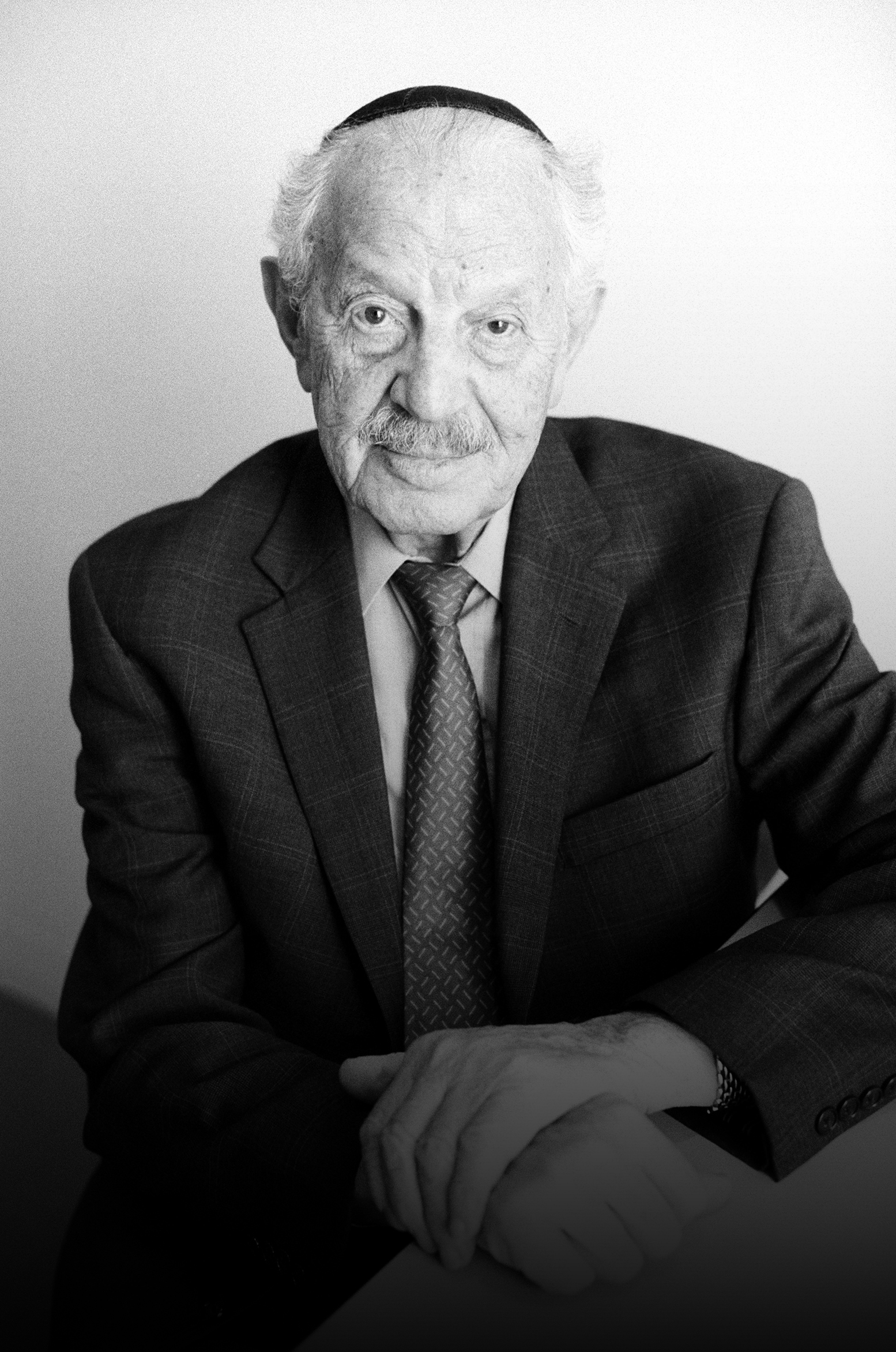
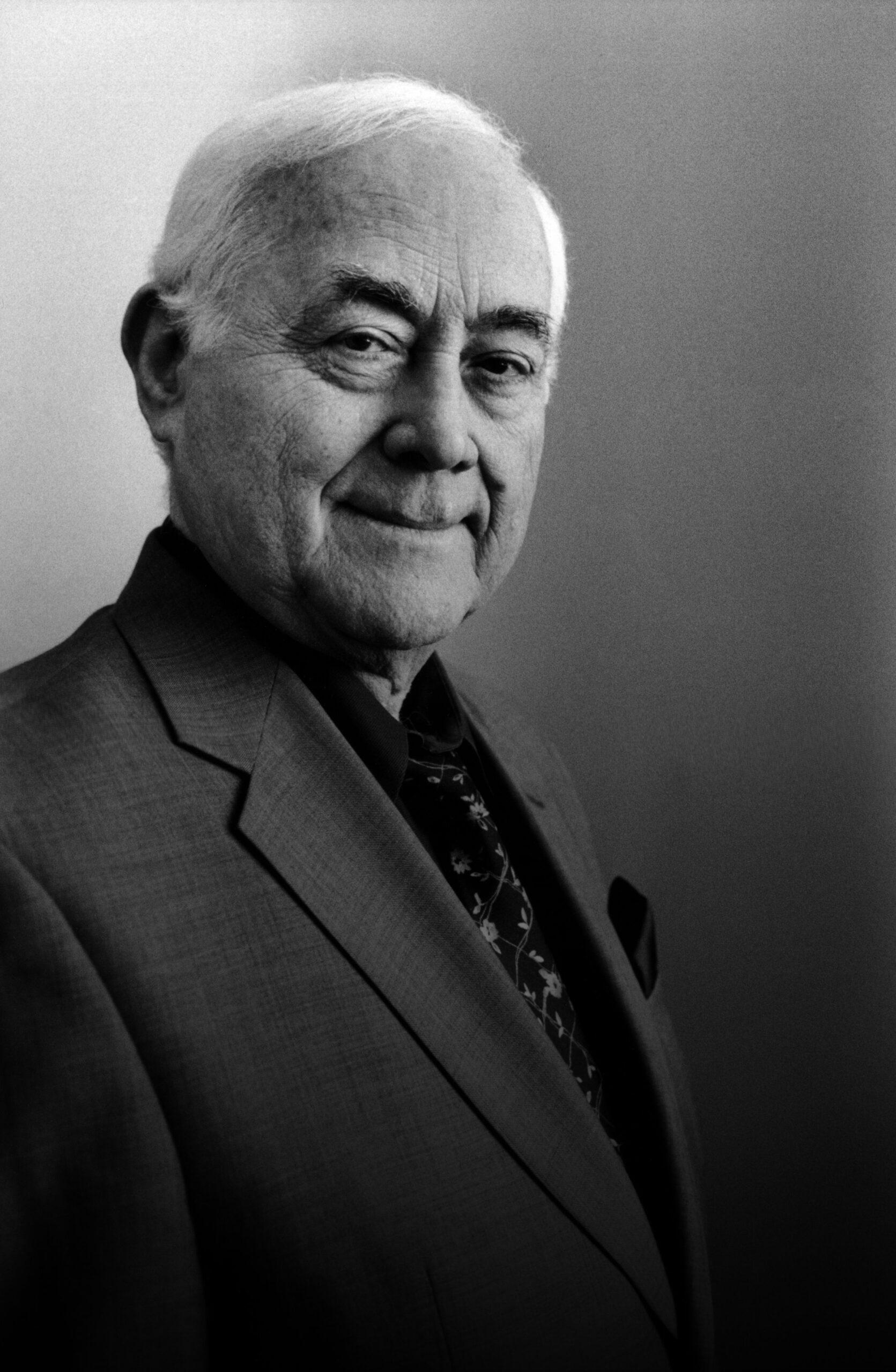
Lawrence H. Warick, M.D.
Teach the future generations about evils of war, hatred, and prejudice. Tolerate – if not love – your fellow man.
Lawrence H. Warick was born on May 2, 1936, in Warsaw, Poland with the Polish name of Lova Warszawczyk. He lived in the Jewish quarter of Warsaw with his parents, Joseph and Marstza Warick, and his paternal grandparents.
Lawrence, called Larry, was only three years old when Nazi Germany invaded Poland on September 1, 1939, and bombed Warsaw continuously for a month. He remembered seeing thousands of dead bodies from the bombings lying in the streets. He vividly recalled when Nazi soldiers destroyed his father’s store and beat his father up and how disease, starvation, and random shootings became common in the Warsaw Ghetto.
After a year, Larry’s clever mother smuggled him and his father out of the ghetto to Bialystok, in Eastern Poland, where his maternal grandmother lived. His mother joined them later. The family stayed in the Bialystok Ghetto, which was occupied by the Soviet Army, for half a year. Larry believed that the pact of non-aggression between Germany and the Soviet Union (Molotov Ribbentrop Pact) essentially saved his and his father’s lives. Without the pact, they would have been deported to and murdered at Treblinka Concentration Camp, like many of his relatives who had not escaped the Warsaw Ghetto.
In February 1941, the Soviet secret service shipped Larry and his family by cattle train to a labor camp in Siberia. They stayed for about a year and a half in a cold and brutal labor camp, where many children and elderly people died. Fortunately, Larry’s mother spoke Russian and was able to work in a kitchen to provide food for her family. Larry contracted tuberculosis and whooping cough in addition to several other childhood diseases but was fortunate enough to recover.
Subsequently, they were relocated by the Soviet military to Soviet Georgia, where they lived for over two years. At the end of 1944, Larry and his family fled Georgia and trekked back to Poland which had been liberated by the Soviets three months earlier. They found Poland in ruins, and learned that 300 family members had all been murdered. They continued to face terrible antisemitism. For about six months they stayed in the city of Lodz.
After two failed attempts to smuggle themselves out of Poland into the American-occupied zone of Germany, their third attempt was successful. Larry and his family lived in a displaced persons’ camp first in Munich and then in Stuttgart, where he attended make-shift classes taught by German, Austrian, and Polish university professors. It took three years before they could immigrate to the United States.
They boarded the Troop Carrier USS Bundy and finally arrived in New Orleans in May 1949, later relocating to New York City where Larry’s father was able to reestablish his small business. Larry learned English by going to the movies and reading comic books, and then started his formal education. He attended City College of New York, and graduated from Albert Einstein Medical School in New York City.
After finishing medical school, Larry moved to California and trained in neurosurgery and psychiatry at the LA County/USC Medical Center. He married Elaine in 1963, and they had two children, David and Cathy, who both became teachers, and a wonderful grandson, William.
Larry lived in Brentwood, worked as a psychiatrist in his Santa Monica-based office and, as a member of the faculty of UCLA Medical School, taught psychiatry to residents and medical students. Larry prided himself on being a student of history and a teacher. He served as a trauma doctor in the Air Force for six years during the Vietnam War. Larry’s work and his life displayed his “reverence for the fragility and resilience of life” and his commitment to social justice and human dignity.
In 2009, Larry began speaking at the Museum of Tolerance. He believed it was his responsibility to share his testimony and to teach future generations to “never let hatred, bigotry, or prejudice influence you. Tolerate – if not love – your fellow man.” Dr. Larry Warick z”l passed away suddenly on August 15, 2020. His memory will live on at the Museum of Tolerance.
Z”L stands for the Hebrew words meaning “may his/her memory be a blessing.”