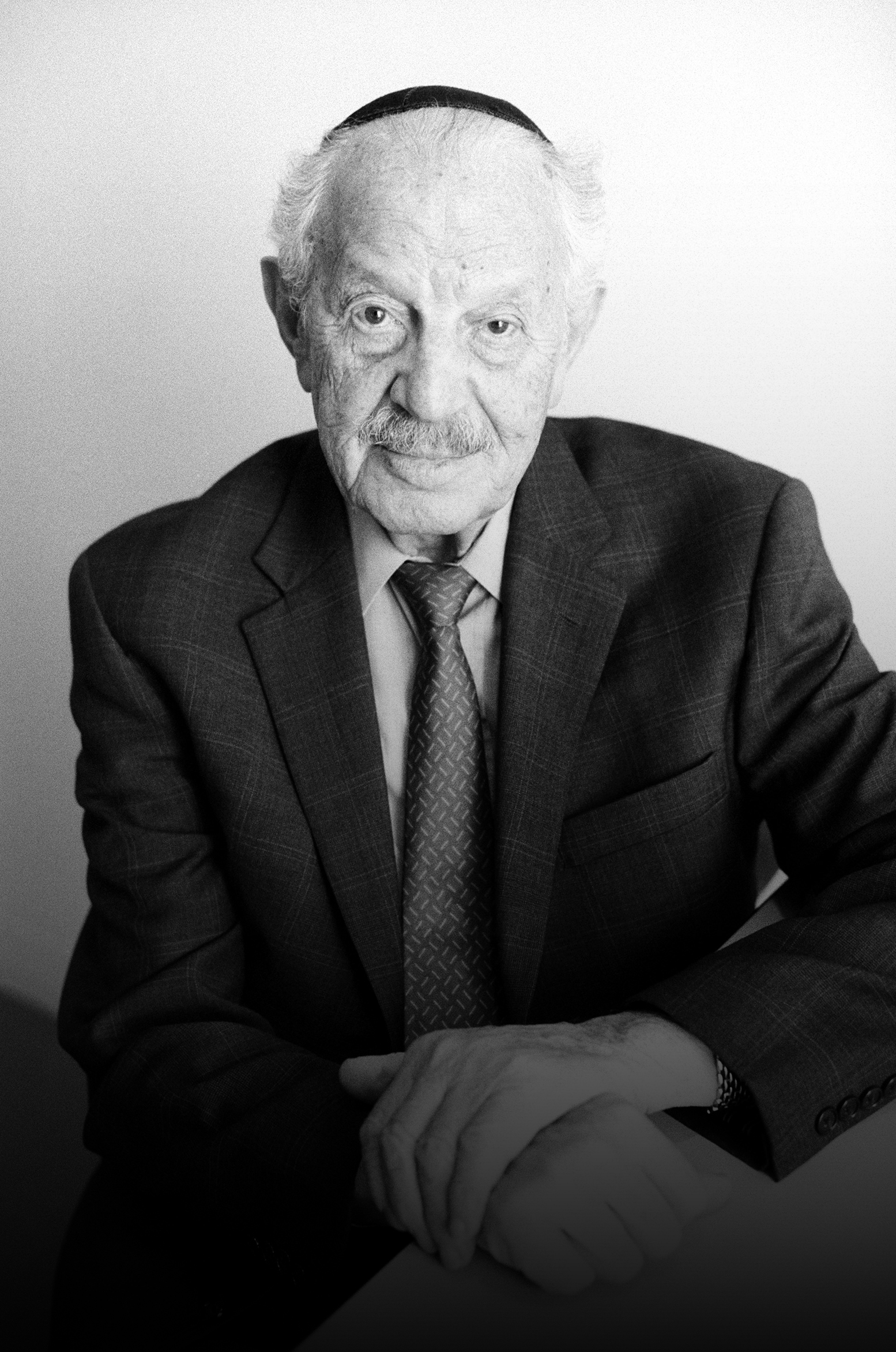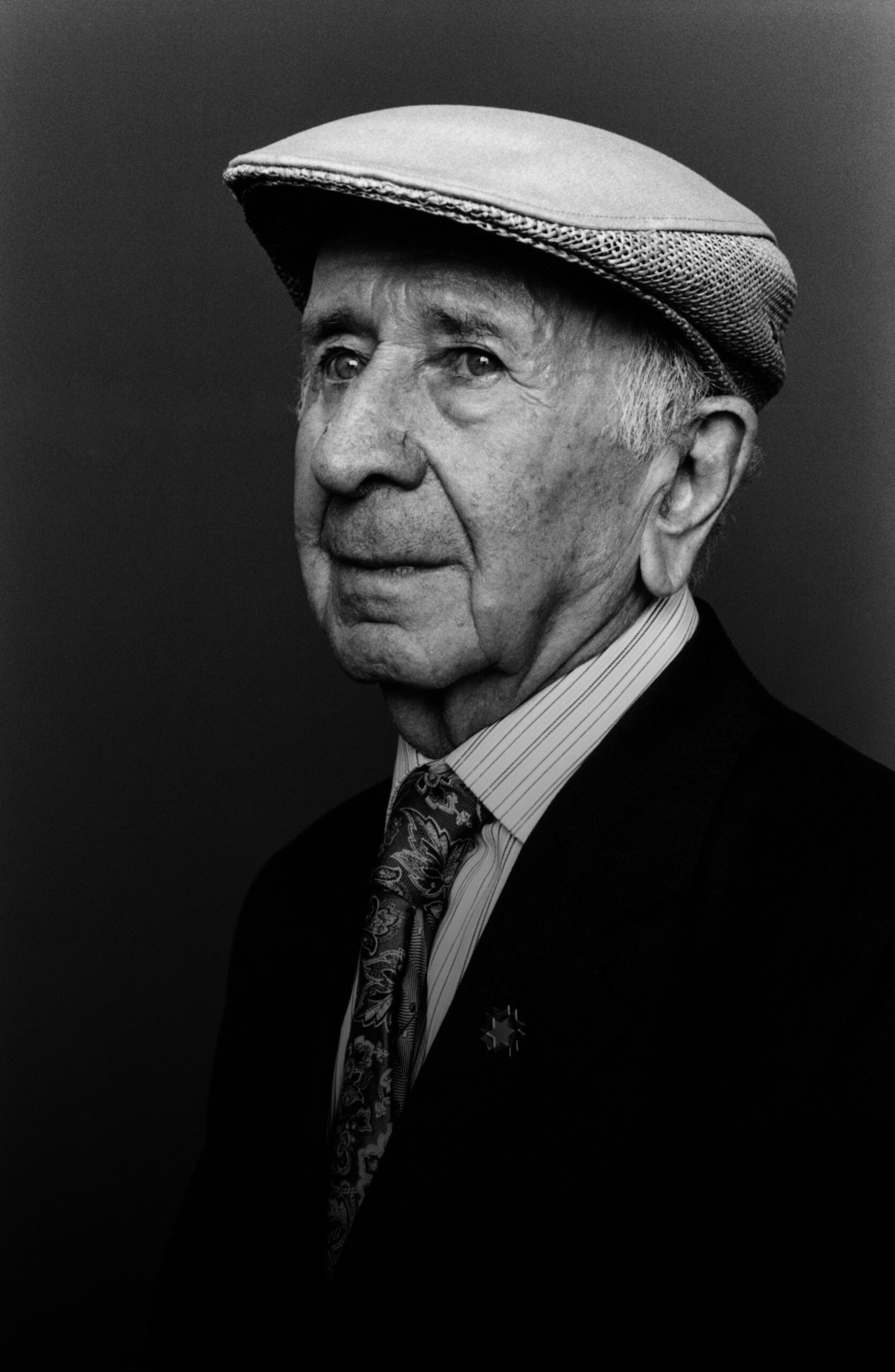
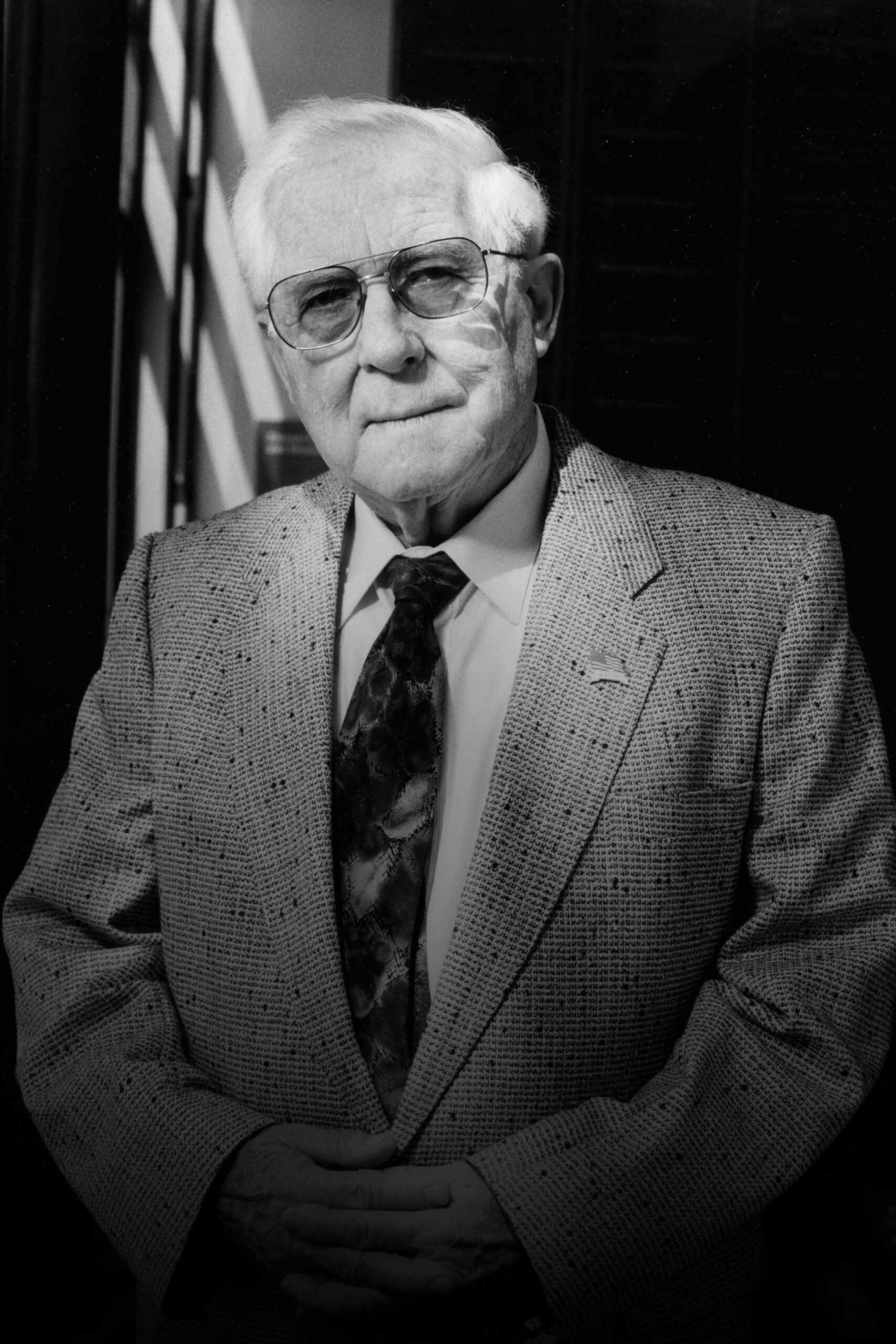
Joseph Aleksander
My philosophy of life is to be kind to others, and hopefully they will be kind to others in return.
Joseph Aleksander was born Josef Leib Aleksander on August 3, 1923 in Warsaw, Poland. He lived with his parents, Abram and Paula, and his older brother, Joel. Warsaw, the capital of Poland, was a large city with a population of three million including approximately 300,000 Jews. By 1939, news of Hitler’s anti-Jewish laws, as well as the German invasion of Czechoslovakia and Austria, caused the Jewish population to feel threatened.
In 1938, his American cousins from Denver, Colorado wanted to bring the two Aleksander boys to the United States. Because of U.S. immigration restrictions, only Joel was allowed to immigrate. Despite the German invasion of Poland on September 1, 1939, Joseph graduated from trade school as a mechanic/machinist, and for a while, worked in his trade while still maintaining some social life with his friends.
In October 1940, the Germans created the Warsaw Ghetto by erecting barbed wire fencing around the Jewish neighborhoods. The Germans crowded about 400,000 Jews into a tiny area of Warsaw. No food was allowed in the ghetto, and Jews died from hunger and disease. In the fall of 1941, Joseph’s father was caught on the street by the police and shipped to the Treblinka Extermination Camp, where he was murdered.
In May 1942, Joseph volunteered to work at the Luftwaffe Concentration Camp near Warsaw, where he and other prisoners performed manual labor and survived on meager food rations.
The camp was liquidated a year later in May 1943. The S.S. guards marched the victims to the old Warsaw railroad station and packed them into enclosed cattle cars without food, water, or toilets. On the three-day trip many people died of thirst and suffocation. Joseph passed out but awoke to the screams of the S.S. guards. The prisoners were then marched to the horrible extermination camp Lublin Maidanek where Jews were starved, beaten, and shot to death.
This camp was liquidated three months later, and the survivors were shipped by railroad cars to Auschwitz Extermination Camp. Joseph survived the deadly selection process by Dr. Josef Mengele (who was called Dr. Death), and was tattooed with his number, 127915. His mother was immediately sent to the gas chambers.
Joseph was forced to deliver heavy equipment to German workers. One day, a very heavy object that Joseph and another man were moving fell and crashed on the floor. Joseph was then transferred to the “death commando,” where he knew that his life was in danger. He pleaded with the guards that he could be of better service in a technical commando and succeeded. He was transferred to the Machinist Battalion, where he survived on a small ration of watery soup, a piece of bread, and, occasionally, a slice of salami.
In the winter of 1944, Auschwitz was liquidated. Joseph and the 60,000 remaining prisoners were forced on a death march to Gleiwitz, Germany. Approximately half of these prisoners died from frostbite, starvation, or were simply murdered along the way. Joseph’s ration of bread was stolen during his sleep in the snow, and he was desperate. A young Christian Slovak shared his bread with him and he survived. Joseph arrived barely alive and was then shipped to Buchenwald Concentration Camp, located near Weimar, Germany.
There was no work in this camp, and Joseph was given even less food than in the previous camps. Knowing that the Allied forces were advancing, Joseph and a few other prisoners hid in the mud under the foundation of the barracks until liberated by the American Army on April 11, 1945. Joseph, weighing only 100 pounds, contracted typhus, spent two weeks in a hospital, and later was sent to a private German house in Weimar for further recuperation.
Upon recovery, Joseph went to a displaced persons camp in Stuttgart, Germany, where he met and married Johanna Gerstenbaum in May 1946. Joseph’s family in America arranged for their immigration papers, and they arrived at Ellis Island on June 15, 1946. After a brief stay in New York and Colorado, they settled in Los Angeles. They have two sons, Alan and Michael and two grandsons, Daniel and Derek.
Joseph worked as a Quality Control Engineer at Mattel Toy Company before retiring. He became a speaker at the Museum of Tolerance so that his story would reach future generations. He believed that a person’s character counts more than his/her race, religion, or ethnicity. Joseph Aleksander z”l has passed away, but his legacy will be remembered.at the Museum of Tolerance.
Z”L stands for the Hebrew words meaning “may his/her memory be a blessing.”