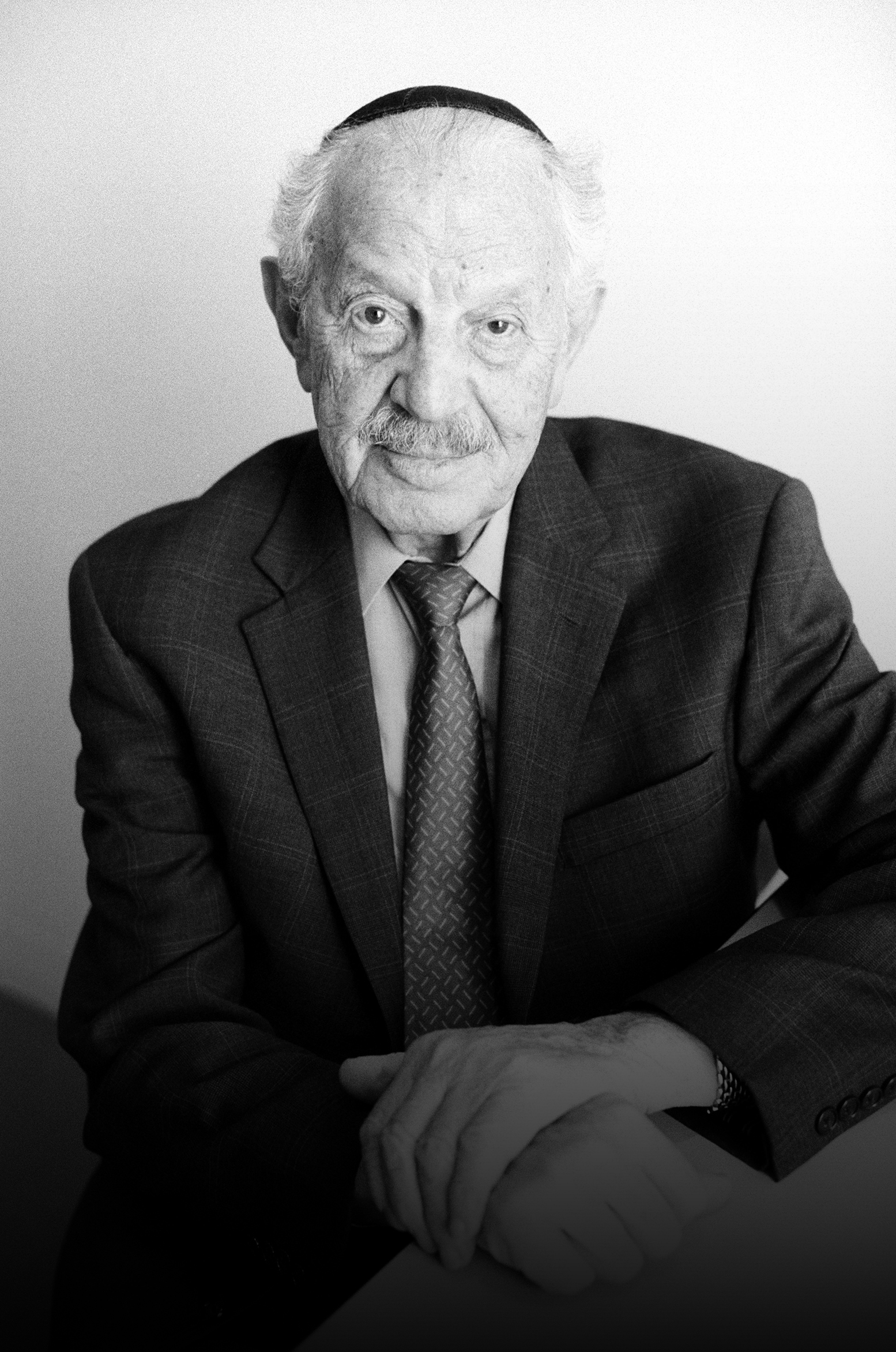
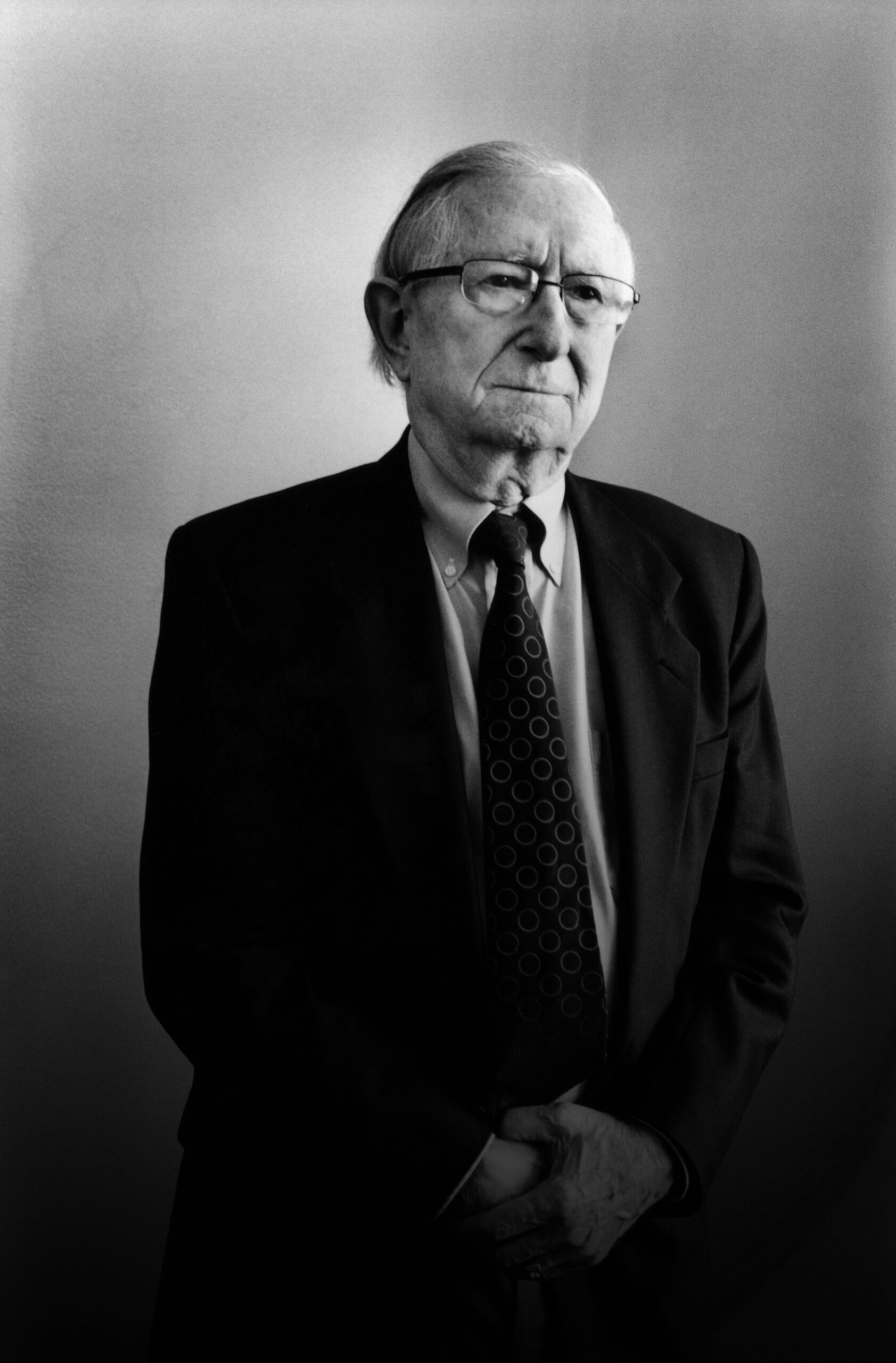
John Adler
Don’t take your freedom for granted. Guard it well and fight for it, if necessary.
John Adler was born Hans Guenter on September 17, 1923, in the small village of Goldberg, Germany, where his parents, Charlotte and Salo Guenter, owned a small business. Hans was an only child and, since there were only two Jewish families in the entire village, his parents decided to move to Breslau (Wroclaw, in today’s Poland), which had a much larger Jewish community.
John first heard Hitler’s antisemitic rantings when his speeches were broadcast on the radio and played from loudspeakers in the streets. He realized the full extent of Nazi hatred after two synagogues in Breslau were burned down on Kristallnacht, the Night of Broken Glass, on November 9-10, 1938.
When John was 12 years old, he joined a Zionist youth group and started to learn about Palestine. He promised himself that he would one day leave Germany and resettle there. His plans were put on hold when John’s parents told him that they wanted to go to Shanghai. Not wanting to go there, John “broke his piggy bank” and bought a one-way ticket to Berlin where he had a wealthy aunt and uncle. When John arrived in Berlin, however, he discovered that his uncle, who owned the Saxonian Newspaper, had been arrested and killed by the Gestapo.
The Zionist Youth Organization had its headquarters in Berlin, and John lost no time in registering there. After an interview, he was given a visa to go to Palestine, which was then a British protectorate. His aunt contacted John’s parents, informing them of his whereabouts and convincing them to allow him to go to Palestine. His aunt said he would have better opportunities if he left Germany. His parents finally agreed.
The Zionist Youth Organization in Berlin enrolled John in a hachsharah program, an agricultural preparation camp for the Palestinian kibbutz where he would be living. John saw his parents one final time when their train to Italy stopped at the train station near his camp. From Italy, his parents took a cruise line to China. John remained at the camp until August of 1939. He then boarded a ship to Israel from Trieste, just two days before the Germans invaded Poland.
When he arrived in Haifa, John was driven to his assigned location, which was about five miles from the Lebanese/Syrian border, then patrolled by French Vichy forces. The kibbutz was a primitive community of 2,000 people, one paved road, a dining hall, and several wooden shacks.
After 18 months there, John was granted permission to leave the kibbutz. He boarded a bus to Tel Aviv and became an auxiliary policeman. He was 17 years old.
When John turned 18, he joined the British Army and was sent to an African transit camp, south of the Suez Canal. Initially, he was sent to Egypt, but he was then transferred to Tobruk, Libya where he fought for three years. After the Germans were defeated in Africa, John was sent to Italy to liberate Sicily. When he arrived on the Italian mainland in 1943, John decided to stay there.
After the war, John arranged for an Italian work visa and a British passport. He was released from the army in 1946 and opened a wool retail store in Rome with a friend of his.
In 1948, John joined a Jewish Aid Committee in Rome, interviewing people and meeting survivors of concentration camps. His parents, who had survived the war in Shanghai, had now moved to Los Angeles and invited John to join them. He traveled to New York, arriving on Yom Kippur, where he saw a televised broadcast of a Yom Kippur synagogue service. This demonstration of Judaism’s acceptance in a Christian country moved John, who saw it as an “affirmation of dignity.” John came to Los Angeles in September 1948, first working as a shipping clerk and ultimately managing his own import business. On June 12, 1949, he married Ruth and later had a daughter Eileen. He is proud of his two grandsons, Matthew and Michael.
John began speaking at the Museum of Tolerance because he had always wanted to share his story. Unlike most survivors, he was able to fight for himself and, for that, he was grateful. When it became difficult for John to continue speaking on his own, his daughter Eileen joined him at the Museum of Tolerance, continuing to inspire audiences with John’s courageous story. John Adler z”l passed away in August 2020. His memory will always be a blessing.
Z”L stands for the Hebrew words meaning “may his/her memory be a blessing.”