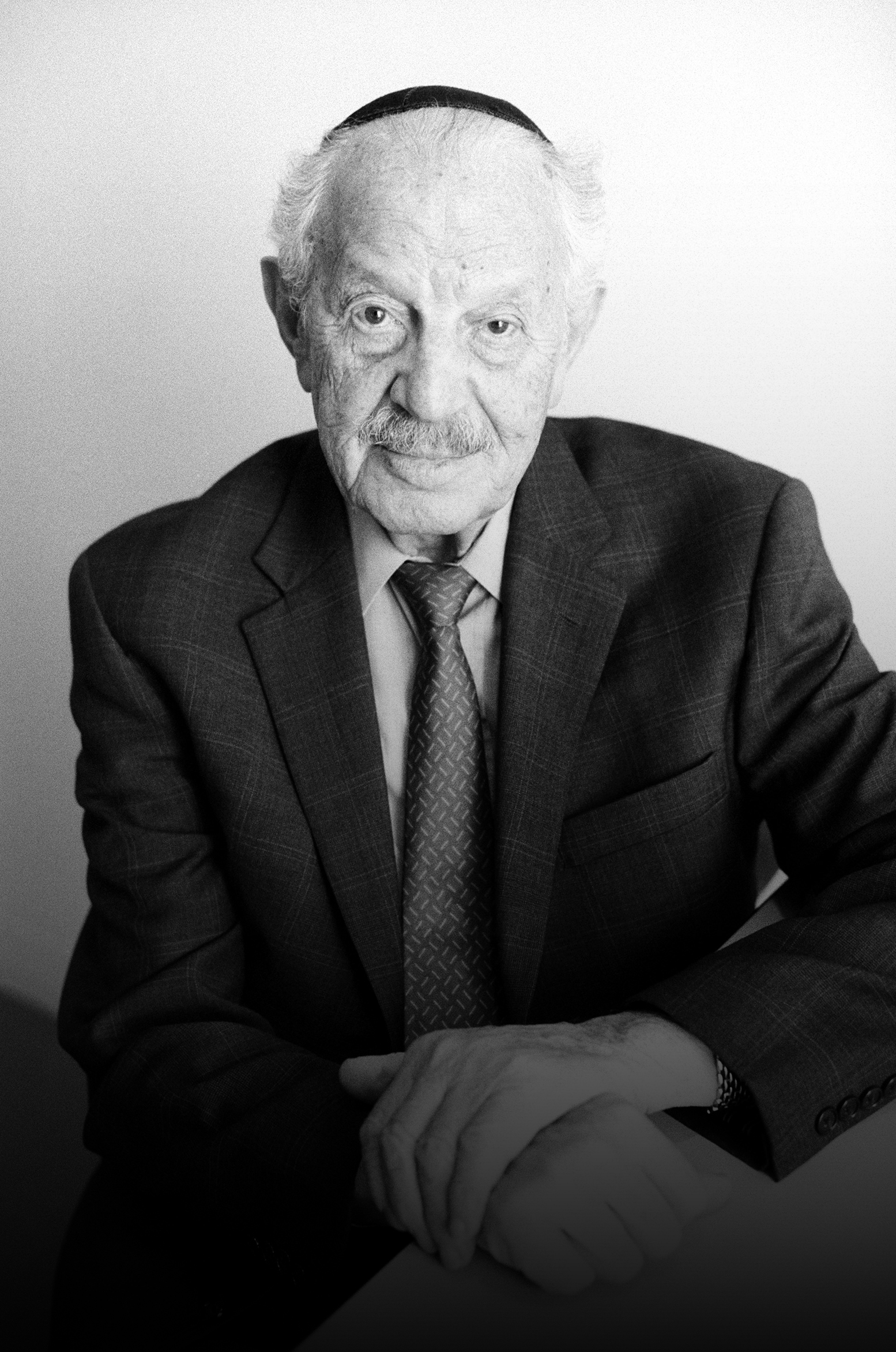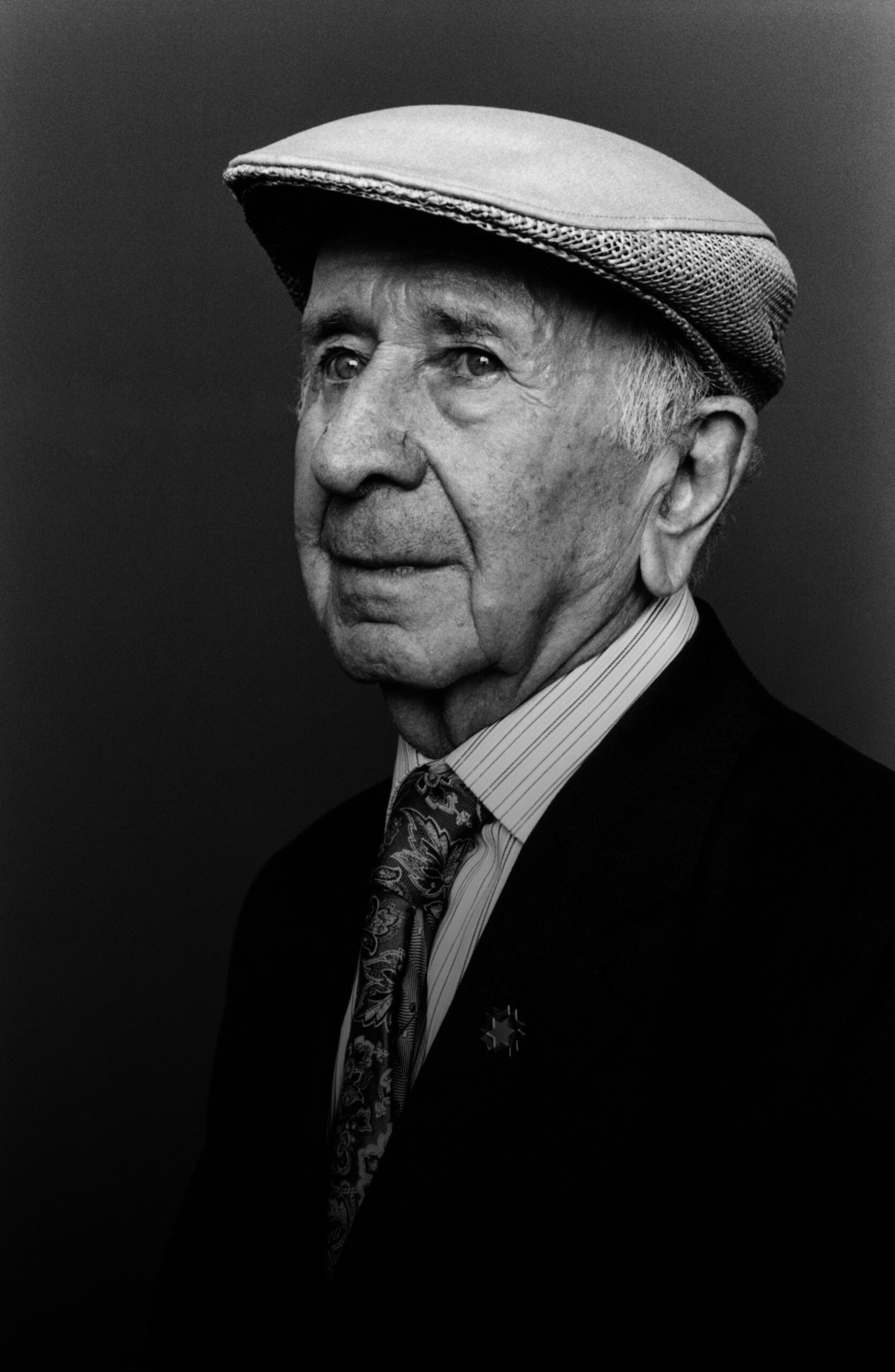
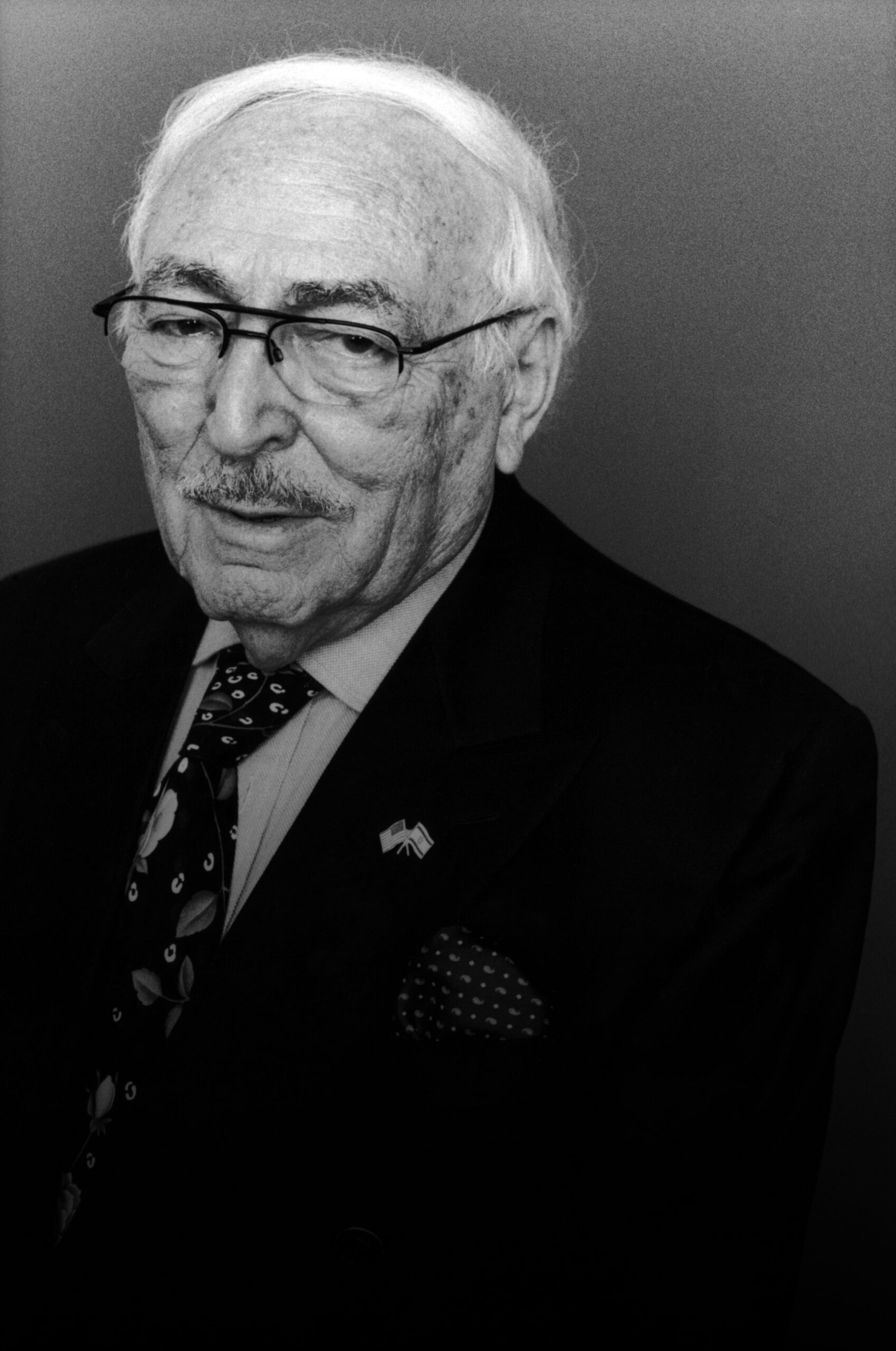
Jean Greenstein
I had to rescue other people because my life had been spared.
Jean (Egon Grünstein) Greenstein was born on July 9, 1924, in Velky Sevlus, Czechoslovakia, to Peter and Sari (née Grünstein), the third of six children. After graduating from engineering school in 1942, Jean was conscripted into a German work camp. His father paid a bribe, and Jean was released. However, in April 1944, Jean and his family were interned in the Sevlus Ghetto.
In June 1944, Jean and three others escaped and hid in a wine cellar. The following day, the local Jews, including Jean’s entire extended family, were rounded up and transported to Auschwitz Extermination Camp. By late August, Jean’s group was starving. They emerged from the cellar, were captured, and put on a passenger train headed for Auschwitz. The train was diverted to Budapest, where Jean climbed through a bathroom window and courageously escaped once again.
Jean found his way to the Jewish Ghetto in Budapest, where he met with members of the Zionist underground. He assumed the identity of Carl Schleier, a non-Jewish family friend, using the papers his mother had sewn into his jacket. Jean was fluent in German, and under the auspices of the resistance, he joined the Wehrmacht as an SS officer. Tasked by the underground with intercepting Jews being marched toward deportation and death camps, Jean confronted Nazi soldiers, informed them that the Jews were protected, and demanded that they be released into his custody. Protected by his forged identity as an SS officer, Jean also made several trips to the Romanian border, where he brought back money for the underground.
In the beginning of September 1944, the resistance obtained 60 Spanish “Schutzpässe” (letters of protection) from Spanish Ambassador Angel Sanz Briz. Using a printing press, the underground resistance organization was able to reprint thousands of false “Schutzpässes.” Since he was officially a German soldier and carried these passes, Jean used these false documents to successfully stop death marches, where Jews were being led out of Budapest.
Instead, he loaded the prisoners on trucks that brought them to safe houses. Jean did this five to six times per week for approximately five weeks, which saved countless lives. None of the Jews saved knew that Jean was Jewish. They saw him only as a sympathetic German soldier.
The “prisoners” were then escorted to the Glass House, a former glass factory under the protection of the Swiss Embassy where, due to the heroic work of others (including Swiss Vice Consul Carl Lutz, Spanish Ambassador Angel San Bris, acting Ambassador Italian Giorgio Perlasca, and Swedish Ambassador Raoul Wallenberg) thousands of Jews were given refuge and provided with Schutzpasses for safe passage out of Hungary. Jean never knew how many people he saved or helped save. “Hundreds, probably thousands,” he estimated.
Soon after liberation, Jean returned to Velky Sevlus, only to find his home ransacked. There was no trace of his family. His parents and four of his five siblings perished at Auschwitz Extermination Camp. Jean was reunited with his only surviving sister, Sidi, at the end of April, 1945.
Jean eventually sailed to Palestine on an Aliyah Bet ship, ending up in Tel Aviv, where he studied dentistry. In late 1947, he was called up to the Haganah, where he fought with the elite Palmach unit in the Jerusalem battles. He was then transferred to the Israeli Navy (Palyam) and was second in command at the Jaffa Port until October of 1949.
By the end of 1949, Jean followed his sister, Sidi, who had immigrated to the United States. With sponsoring documents sent by an aunt and uncle, Jean moved to the United States and continued studying dentistry. In June 1952, he met Ruth Blumer at Brighton Beach; they married on June 1, 1952, and had three children, Paul, Lawrence and Sharon.
In 1961, the family moved to Los Angeles, where Jean opened Cerama-Dent Studios, a dental laboratory specializing in cosmetic dentistry. He sold it in 1972, and opened Creative Dental Ceramics. In addition to his groundbreaking approach to cosmetic dentistry, Jean invented several cosmetic dental techniques and patented a number of innovative dental instruments. He retired in 1988.
Jean began speaking at the Museum of Tolerance in 2011 but began telling his story around 2005 when he realized that his story had been told by others without their realizing that he was a Jew impersonating a gentile. Jean Greenstein z”l passed away on February 24, 2018. He is remembered for his courage and resilience.
Z”L stands for the Hebrew words meaning “may his/her memory be a blessing.”