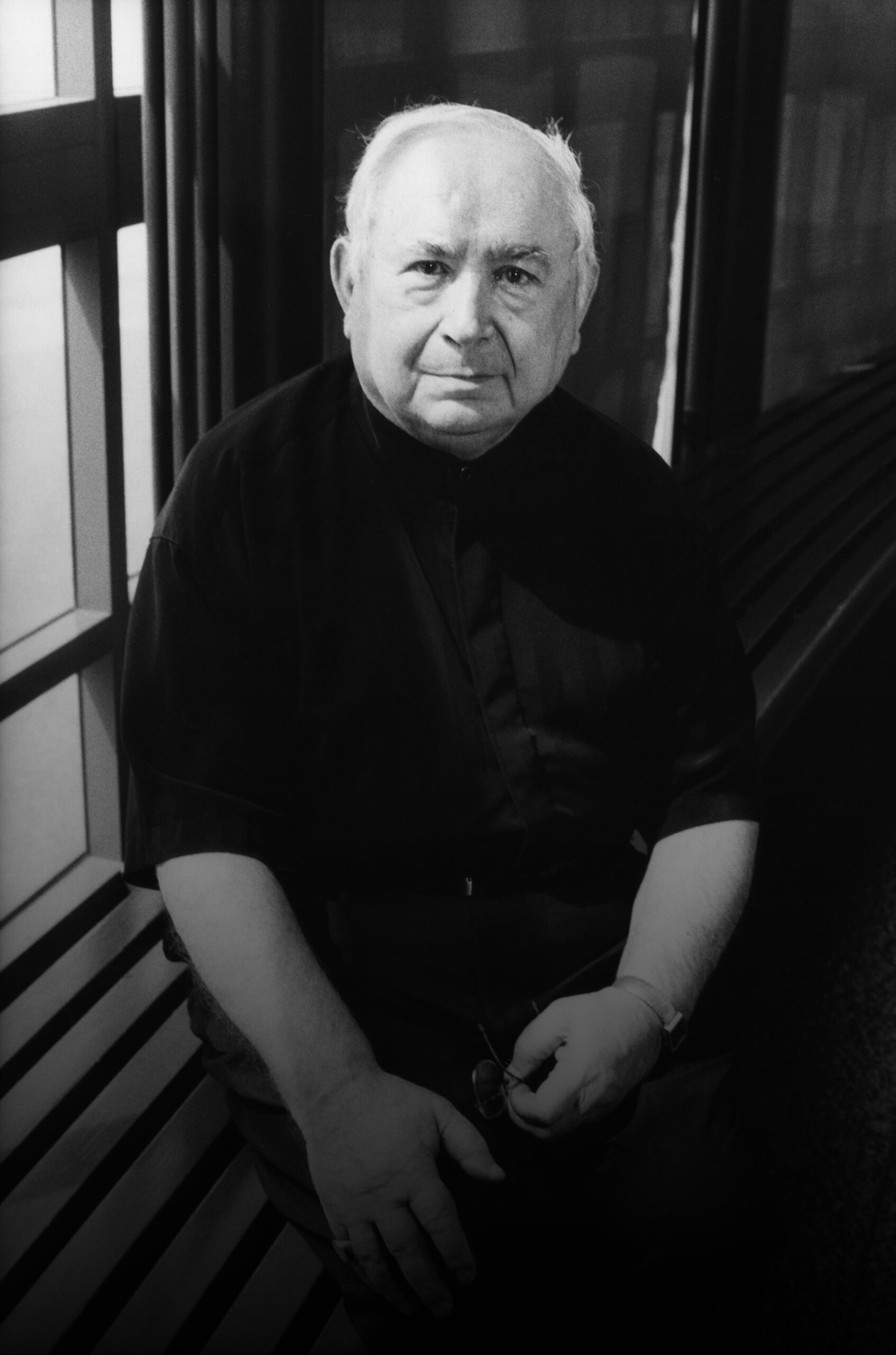
Icek Eddie Ilan
Hate burdens you and hampers your future; Hope is very powerful for survival.
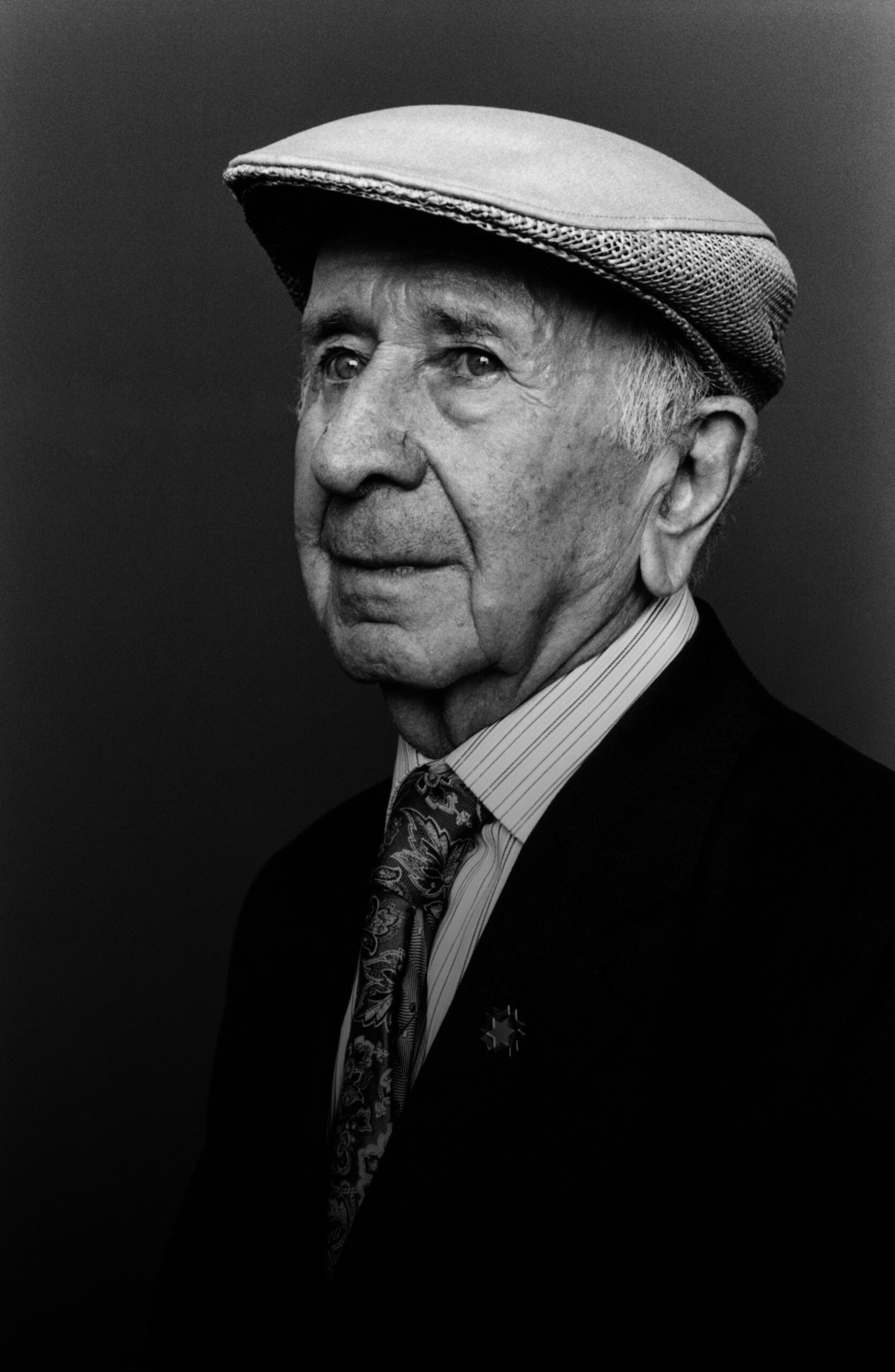
Eddie Ilan was born Icek Brzezowski in Sochaczew, Poland, on July 14, 1928. He grew up with his parents, Gloria and Meier Brzezowski, and three older sisters, Bracha, Esther and Brine. His father was a shoemaker who visited neighboring towns to make shoes for the local farmers. Eddie attended an orthodox Jewish school in the evening and went to a secular school during the day.
Eddie was 11 years old when he first heard about Hitler when the Nazis invaded Poland in September, 1939. In January 1941, his family was informed that, “If they wanted to live, they would need to move to the ghetto.” They were first moved to Sochaczew Ghetto and then to the Warsaw Ghetto. The Warsaw Ghetto, sealed off from the rest of the city by a high wall, was severely overcrowded and lacked food, medicine, and heat. Eddie risked his life to smuggle food for his family into the ghetto.
Eddie managed to escape from the ghetto and returned to Sochaczew, where he was hidden by a Roman Catholic priest who had known him before the war. Priest Vladimar Kozwavsky gave him a new, non-Jewish identity and tattooed his initials VK on Eddie’s left forearm, right above his wrist. Eddie stayed with the priest for seven and a half months. Later, Eddie was arrested as a “Jew,” beaten up, and sent to Buchenwald.
At Buchenwald, the inmates were forced to line up at 5:00 a.m. each day for roll call. Eddie was made to work at local farms but, by smuggling carrots and other produce in their button-down shirts, he and other inmates survived. He stayed at Buchenwald for five to six months before he was sent to Rottenberg, Germany, where the Germans assigned him to rebuild factories. As a slave laborer, he had to dig under the fields, remove rubble, and push a cart back and forth everyday. He worked at Rottenberg for one and a half years before he was forced to board a train.
On the train, prisoners were given no food or water. German soldiers were positioned on top of the train and were instructed to kill anyone who tried to jump off. Despite the risk, Eddie and other prisoners decided to try to escape. They took with them knives they had fashioned from spoons while in Buchenwald. Eddie was shot as he jumped from the train. Only he and his three friends survived; the rest were shot and killed. Following their escape, they headed toward a village, but soon realized that it was run by Germans. They told the Germans that they were Polish and had been attacked by the Soviets. The German farmers offered them both a place to stay and medical aid. Soon the Soviets did arrive at Teplice-Sanov and liberated Eddie, who was 17 years old and weighed 65 pounds.
Now free, Eddie and his three friends decided to ride to Czechoslovakia on stolen bikes. Later they hitched a ride on a bus commandeered by the Jewish Brigade, who had fought with the British forces in Italy. Eddie was thrilled to see Jewish soldiers who had fought the Nazis. The three friends continued to travel to Austria, then to Italy, and ultimately to a displaced persons’ camp in Paris, riding with American soldiers. While in the camp, a Polish family invited Eddie to dinner where he was confounded by an artichoke and, not knowing how to eat it, he left the dinner and, ultimately, the camp. From Paris, he hitchhiked to Belgium and decided to immigrate to the United States.
In 1946, American soldiers befriended him and smuggled him aboard their ship, even though he had no paperwork. When Eddie disembarked alone near New York City, he was fortunate to meet an Italian man who gave him clothes, food, a place to sleep, and some change. The next day, he drove Eddie to the “flowerpot” storefront in Brooklyn, where Jews left notes to find relatives lost during the war. With help from the Jewish agency, Eddie discovered that one of his sisters was still alive in Poland. Remarkably, he also met a woman who had a picture of Eddie as a child. She turned out to be his aunt, his mother’s sister. Eddie stayed with his aunt for three weeks, but she would not let him go outside, fearing that the police would arrest him.
Eddie was a fearless teenager and, with only 50 dollars in his pocket, he decided to take the train to Los Angeles. Once in LA, he found a job as a dishwasher in a restaurant in Boyle Heights and worked his way up to waiter. Eddie then met and married Gloria and had two children, Jay and Leah, and then granddaughter Danielle. He remained close to his sister, Bracha, who had moved to Israel, speaking by phone every Friday, until she passed away.
Eddie retired, and then he started to share his testimony at the Museum of Tolerance. He spoke to thousands of students, law enforcement professionals and public visitors, telling them of the horrors of the Holocaust that he had personally experienced. He knew that there were still people who were not aware that such tragedies occurred. Eddie Ilan z”l passed away on July 13, 2015.
His memory at the Museum of Tolerance lives on.
Z”L stands for the Hebrew words meaning “may his/her memory be a blessing.”