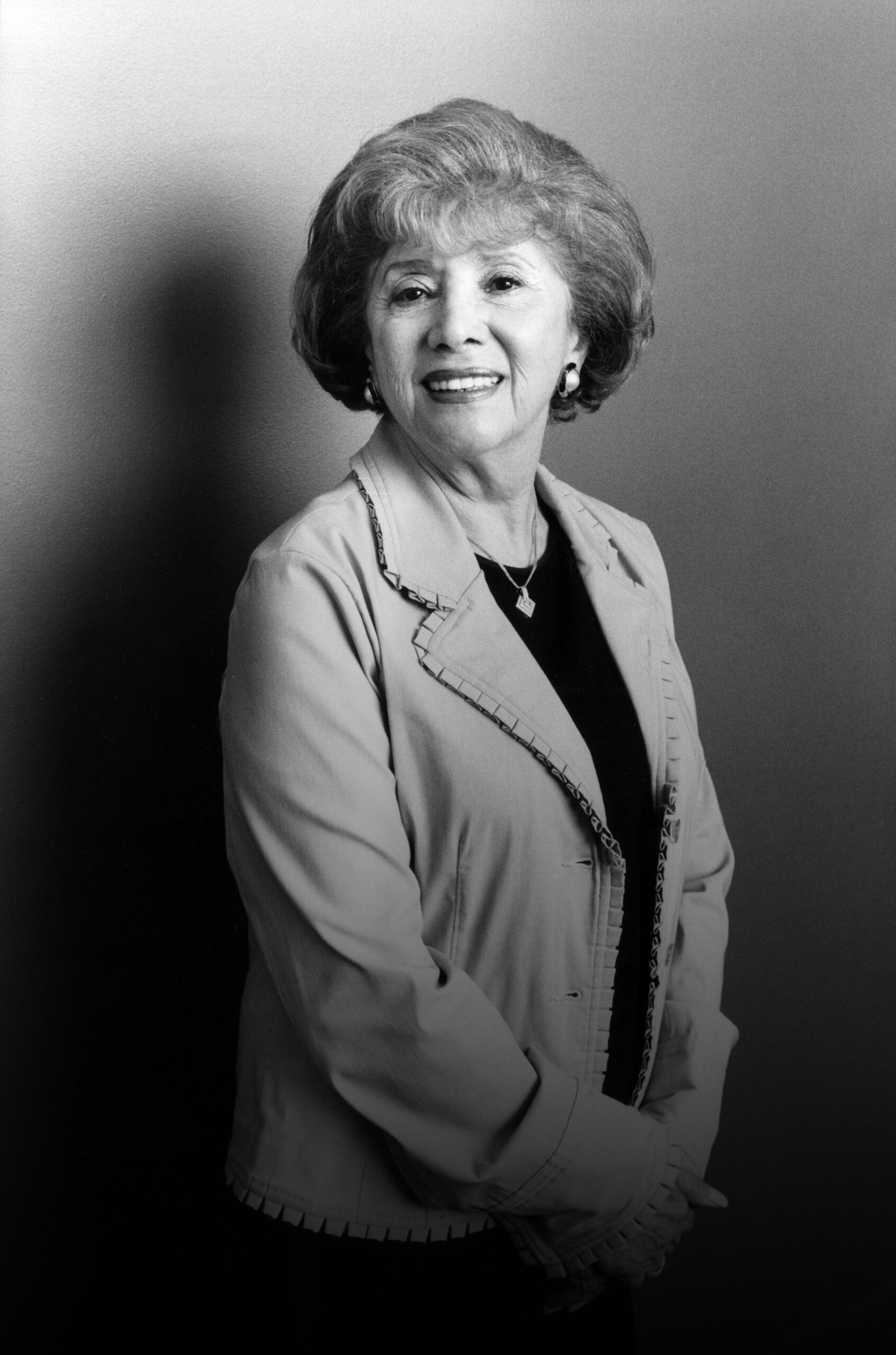
Gloria Ungar
If I can achieve what I achieved in this country, you can do anything.
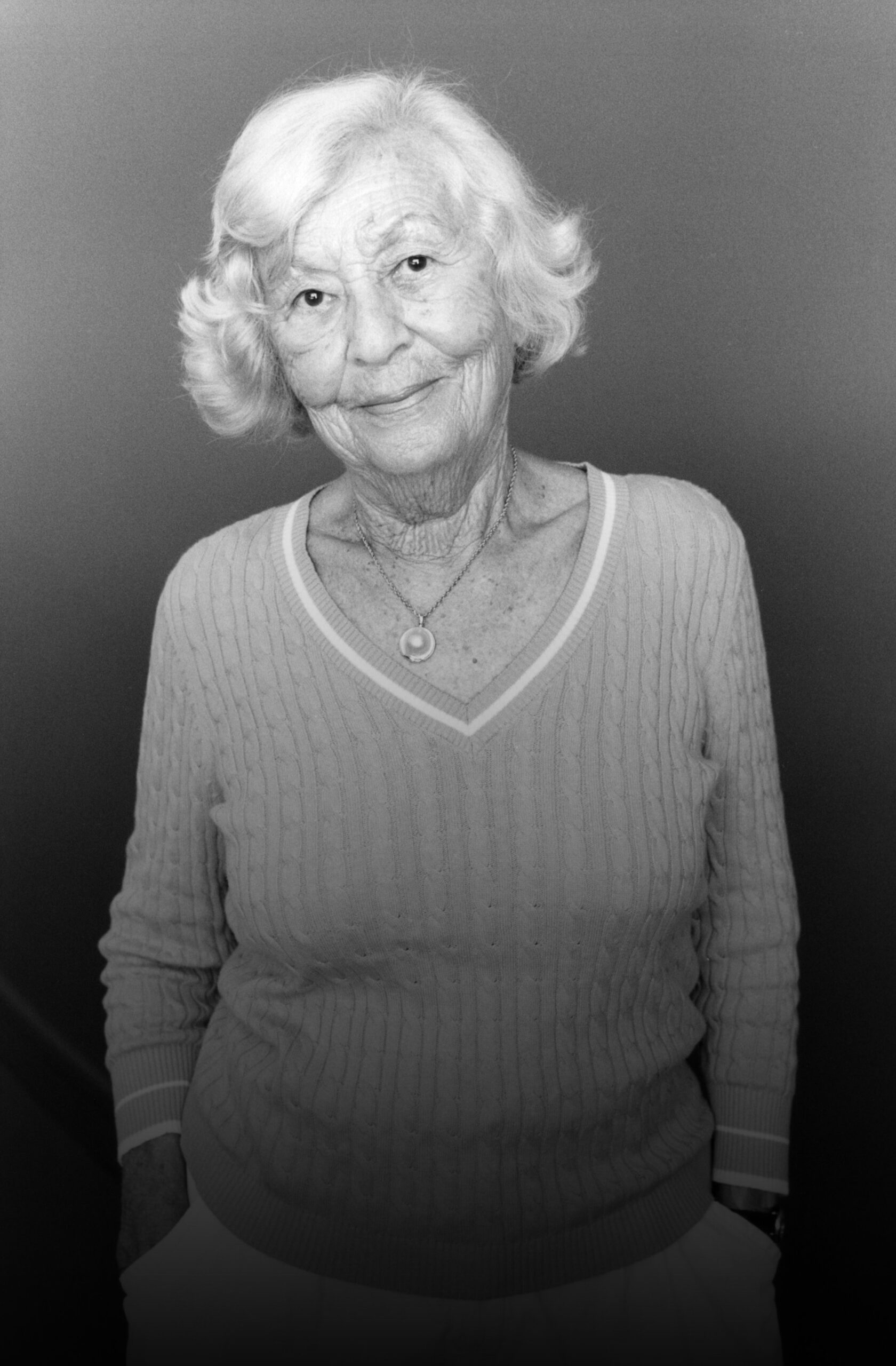
Gloria Ungar was born Gitta Nagel on September 9, 1930. She grew up with her parents, Esther and Abisz Nagel, in Krosno, Poland, together with her grandmother and three brothers. Gloria’s father dealt in real estate while her mother ran a general store. As a child, Gloria attended a public school every morning and received religious instruction in the afternoon.
After the occupation of Poland by Germany in 1939, Gloria and her family were forced into the town ghetto. When conditions in the ghetto worsened, Gloria’s father and her brother Jack escaped to neighboring Slovakia, where her mother’s sister helped them find places to hide. The remaining family members were forced to perform demeaning tasks, and Gloria remembers being forced to clean toilets and floors. The family supplemented its meager food supply with the assistance of her brother, Munek. He was assigned work outside the city and smuggled food into the ghetto under his clothing. Eventually, Munek was taken away by the Germans and never heard from again. Later, Gloria’s grandmother was shot in cold blood in front of the family.
Gloria, her mother and her youngest brother, Nathan, escaped through the forests to Slovakia, where they were reunited with her father and her brother Jack. It was necessary to hide from the Slovak authorities in the forest because the Germans offered rewards to people willing to betray Jews. Jack walked to the village each week to obtain food, a dangerous trip, since villagers would attack anyone they suspected of being a Jew. While taking shelter in the forest, Gloria’s mother became sick. She died in 1942.
Gloria’s father found a non-Jewish woman living alone in a small house who was willing to hide the family in a small storage area below her kitchen floor. Gloria remembers the storage area as being dark and scary with hardly enough room to move, or air to breathe.
In September of 1944, the Germans rounded up the remaining Jews of Slovakia. Gloria and her family were arrested and transported in closed cattle cars to Auschwitz-Birkenau Death Camp. At Auschwitz, the family members were separated. Jews under 14 or over 40 were immediately sent to the gas chambers. Dr. Mengele selected Gloria’s youngest brother, Nathan, for immediate death by gassing. Fortunately, Mengele did not ask Gloria how old she was. Gloria was sent to do slave labor and was tattooed with the number A-25597.
Several months later, Gloria was transported to Bergen-Belsen Concentration Camp. BergenBelsen was not a work camp, but its inmates were left to starve. Gloria remembers inmates fighting and killing each other over crumbs of bread thrown into the barracks by the Nazis.
In May of 1945, after having suffered through several other concentration camps, Gloria found herself in a closed cattle car heading towards Denmark. At one point, the dead bodies were thrown off the cattle car, and Gloria was discarded with them. She knew that she had to climb back onto the train, or she would die. She does not know where she found the strength to pull herself up and climb back onto the cattle car, but she did.
On May 4, the train stopped, and the doors were thrown open. The prisoners were told that the war had ended and that they were free to go. Gloria was too ill to walk, so she was placed on a stretcher and transported by boat to a Swedish hospital. She was 14 years old and weighed only 57 pounds. She was suffering from tuberculosis and one of her lungs had collapsed.
Gloria was nursed back to health in Sweden, and her surviving brother, Jack, flew in from Prague to help her recover. She learned that the rest of her family had perished in the Holocaust.
After two years of recuperation in Swedish hospitals, Gloria was cured of tuberculosis. Her brother Jack wrote to Jewish schools in New York requesting sponsorship for Gloria, and she was fortunate to find one that would sponsor her with a student visa. In May 1947, Gloria arrived in New York, where she was temporarily housed by a family in the Bronx, who affectionately called her “Gloria,” instead of Gitta. In 1948, her brother Jack joined her in New York where they rented a small apartment.
In 1952, Gloria married Victor Ungar who was also a survivor of the Holocaust. In 1955, after attending Jack’s wedding in Los Angeles, Gloria and Victor decided to move west. They have lived in Los Angeles ever since. Gloria has been blessed with three wonderful sons and daughters-in-law, Robert (Chani), Jeffrey (Risa), and Michael, (Yaffa), eighteen grandchildren, and 50 great-grandchildren (and counting). Gloria says that her large family is her revenge.
Gloria began speaking to visitors at the Museum of Tolerance in 1999 about her experiences during the Holocaust. Although remembering these experiences is painful, she believes that it is important to “make sure to tell people what happened and to make sure that it never happens again.”