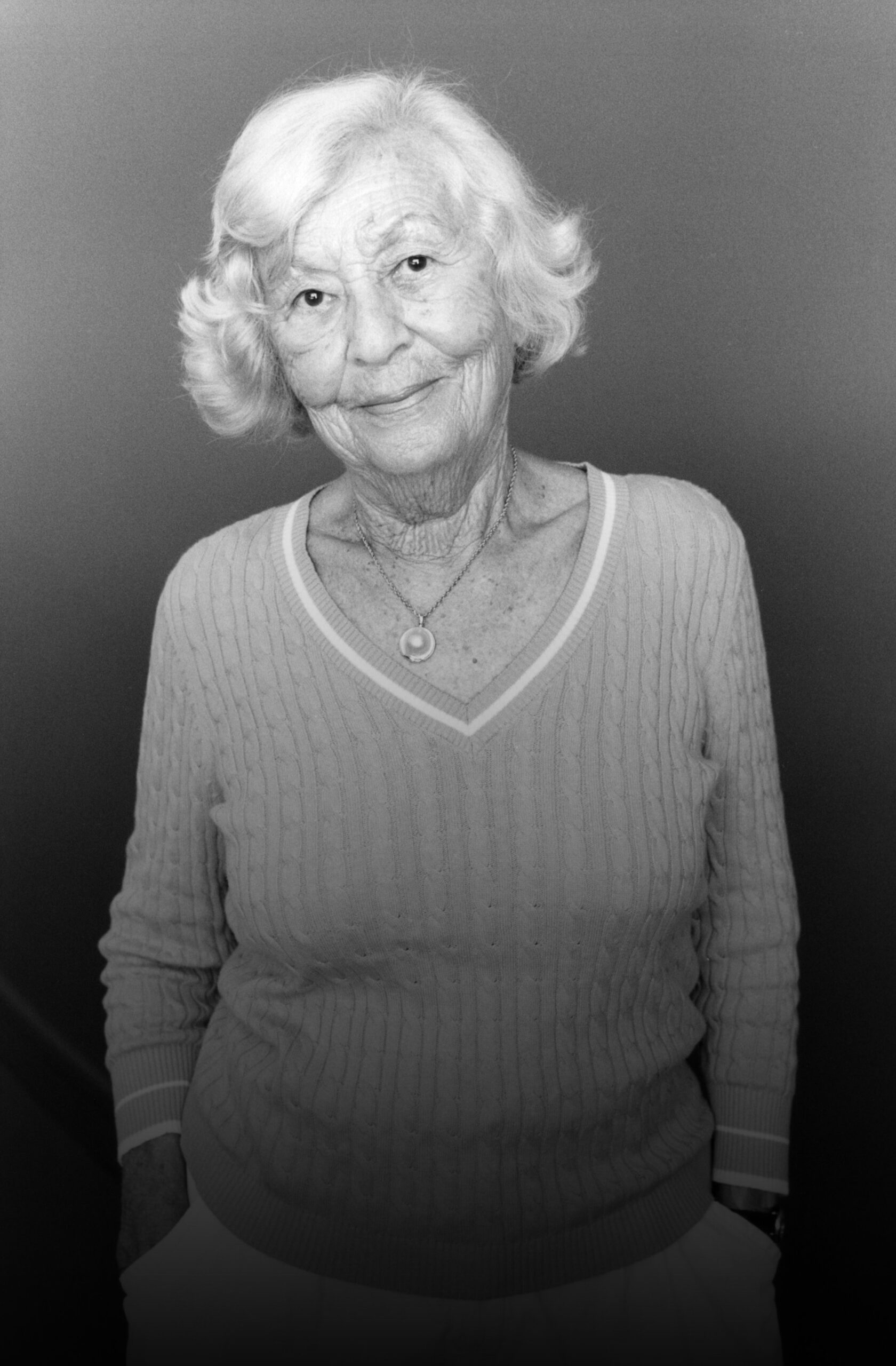
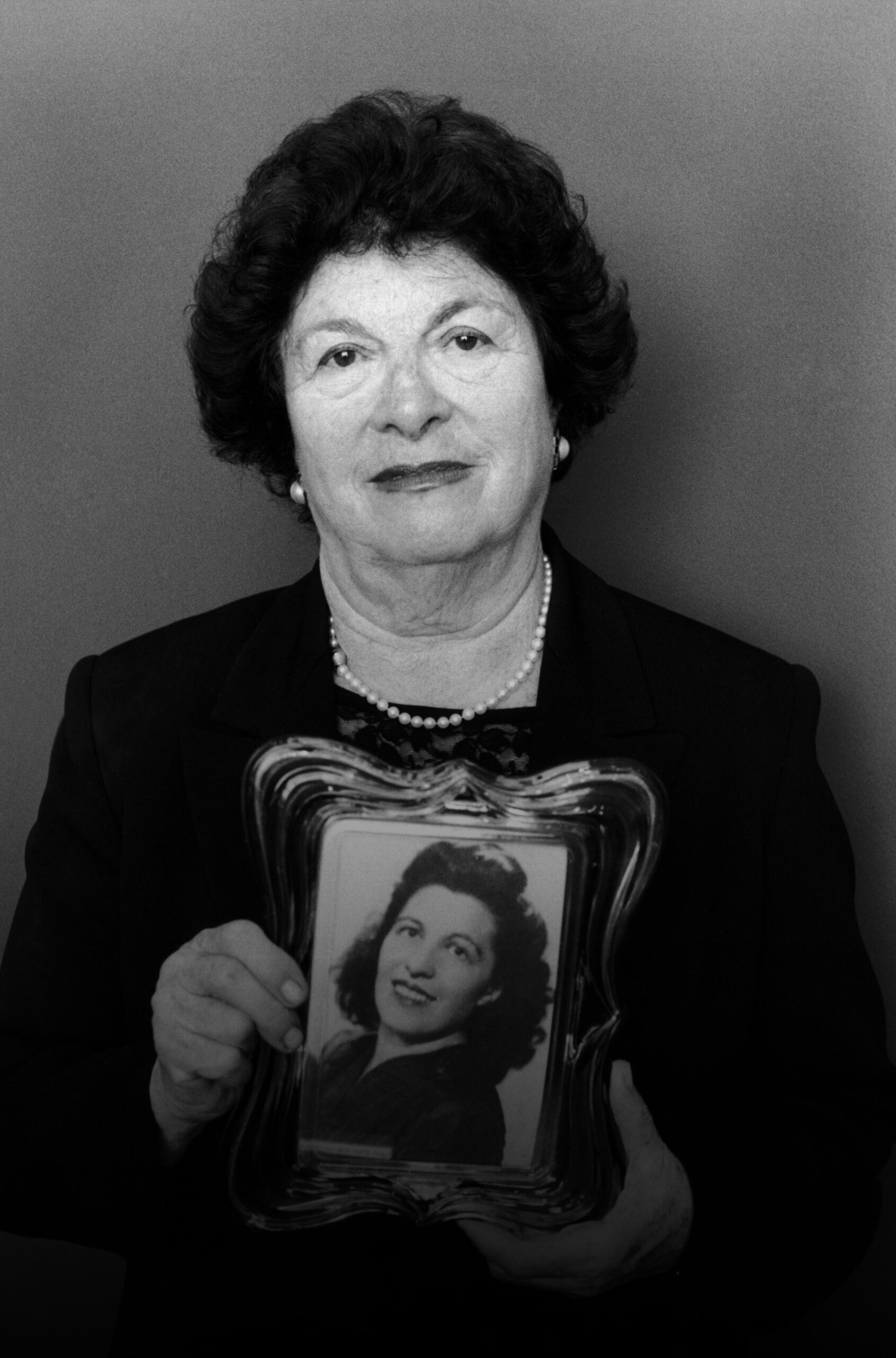
Eva Brettler
You cannot stand idly by when you see injustice happening.
Eva Brettler was born Eva Katz to parents Sandor and Margit (née Roth) Katz on November 29, 1936. However, she considers herself as having been reborn on April 15, 1945, the day she was liberated from Bergen-Belsen Concentration Camp. Eva grew up in the small town of Cluj, Transylvania, in an Orthodox Jewish home. Despite the events occurring at the time, Eva had a normal childhood, and as an only child, she was doted on. Her parents made a conscious decision to shelter her from any information regarding Hitler and the Nazis. Her innocence ended when she was 7 years old, when her grandfather was beaten up on the street and later disappeared. He was never seen or heard from again.
While visiting her grandmother and aunt in Tashnar, Hungary, the Arrow Cross guards of the Hungarian National Socialist Political Party came and forced the family to gather their belongings and walk to the train station to be transported. Eva’s grandmother told her to hide in the cornfields until nightfall, and then to walk to a neighbor’s house and wait for her parents there. Fortunately, the next day, her father came to pick her up. He was now wearing a yellow star on his coat to identify him as a Jew, and he had to ride on the outside of the train.
However, they finally arrived safely in Budapest where the family was now living.
On March 23, 1944, Germany occupied Hungary, and her father Sandor was forced to report to a slave labor camp. Her mother Margit refused to go into the ghetto in Budapest. She procured papers for herself and for Eva to stay in a Swiss safe house and then to move to a Swedish safe house. However, upon arriving at the Swedish safe house, they discovered that it was being evacuated, so they hid until nightfall when they were able to leave the area. Eva was hidden in a basket above a shelf, and Margit hid in the elevator shaft.
With nowhere to go, Eva and Margit approached one of the tenants from their old apartment building to ask for help. He agreed to hide them, but while they were returning to their apartment for some belongings, Arrow Cross guards stopped them. The guards sent them to the police station and then assigned them to a brick factory. They stayed there for a brief period until they were ordered to join a death march to Ravensbrück Concentration Camp.
They were unprepared for the march, since they had dressed formally to register Eva for school. Margit was wearing high-heeled shoes, which were hard to walk in. While the children on the march were sometimes allowed to ride on wagons, Margit was pushed aside. A few moments later, Eva heard gunshots. She was only 7 years old when she realized that she had lost her mother.
During the march, the prisoners stopped in a ghetto where Eva was told to wait at the Red Cross station for relatives. When no one came, a stranger offered to take care of her. They traveled together from there to Ravensbrück on cattle cars. When they arrived at the camp, Eva’s caretaker was separated from her because she was a Mischling, only half-Jewish, and could receive better treatment. Eva was again alone, stripped naked, shaved, and sprayed with disinfectant, but she was brave enough to hide a gold ring, given to her by her parents, under her tongue. Another woman prisoner befriended Eva in the camp and told her to call her Tanta and “Never to give up hope.” When Tanta died, another “kind stranger” cared for her.
As the Soviet Army approached the camp, all the prisoners were put on cattle cars and sent to Bergen-Belsen Concentration Camp. Conditions at this camp were horrific, with “mountains of corpses” everywhere. Inmates died of starvation and disease. Because of her small size, Eva was able to squeeze through a small opening in a fence and steal potato peels from beneath the kitchen, which she shared with other prisoners. Eva wanted to be in the barracks with Luba, who was caring for some of the Jewish orphans, but there was no room for Eva. On April 15, 1945, the British Army liberated the Bergen-Belsen Concentration Camp.
Eva was 9 years old, filthy, and bitten by lice. She contracted typhus and was taken to a makeshift hospital. There, she ran into an old family friend who wanted to take her back to Budapest. Eva did not want to go, and instead, she was sent to an orphanage in Sweden. She reunited there with Luba, a woman who had bravely helped many children prisoners at Bergen Belsen. Luba comforted Eva when she lost the gold ring, her only remaining possession from her parents, while washing her hands. Luba told Eva that her dear mother’s love would always be in her heart.
At the orphanage one day, Eva was called into the principal’s office and told that her father Sandor had survived, and that he was looking for her. Eva took a plane from Sweden to Prague, where, in June 1947, she was reunited with her father, his new wife, and her halfbrother. They returned to Budapest together. She was first enrolled in a Jewish school, but it closed. She was forced to attend public school, where she still encountered a great deal of antisemitism.
Following the Hungarian Revolution of 1956, Eva left Hungary illegally, carrying only her Red Cross Certificate and her prayer book. She was granted refugee status in the U.S. in January 1957. Eva met a fellow Holocaust Survivor, Marten Brettler, on a blind date, and they were married four weeks later. She became a social worker and raised four children, Yisrael, Jeff, Linda and Sandra. Eva began speaking at the Museum of Tolerance in 2008 because “she survived due to the kindness of strangers and would like to inspire compassion in people today.”