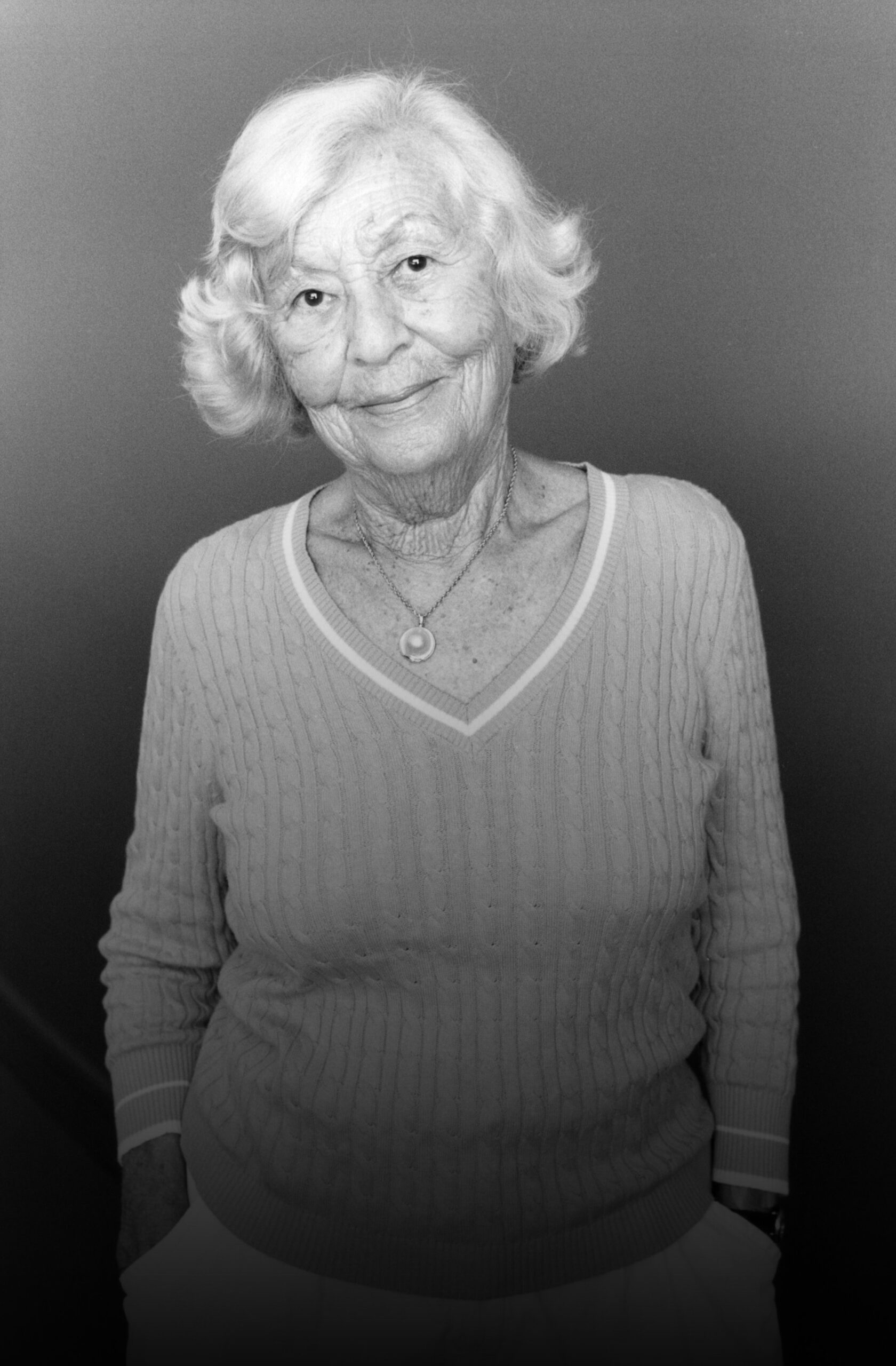
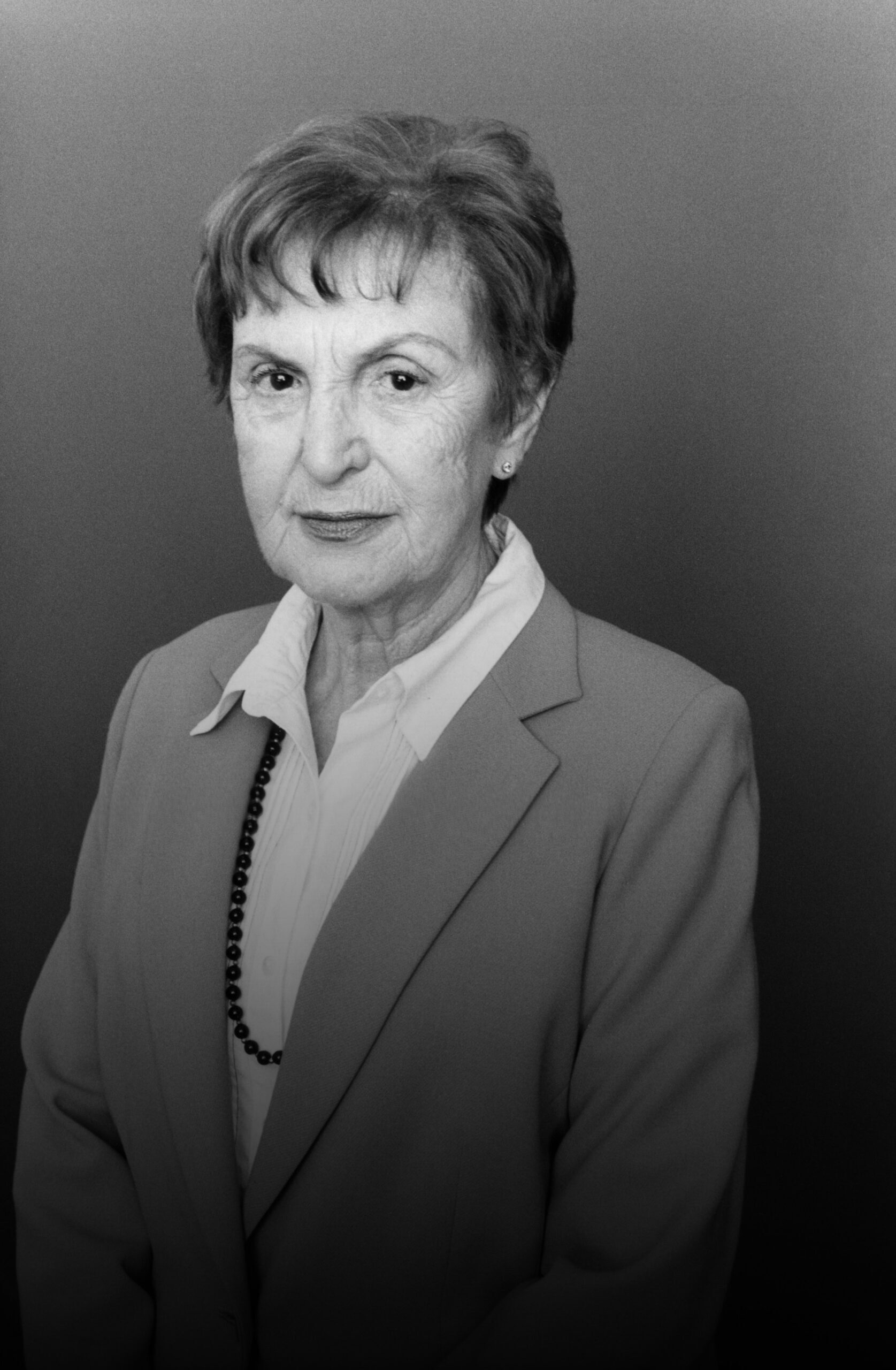
Elisabeth Mann
Never give up hope.
Elisabeth Mann was born Elisabeth Mohr on December 31, 1925, in Kecskemet, Hungary. She grew up with her parents, Charlotte and Joseph Mohr, sister, Klari, and two brothers, Imre and Laci. Her mother stayed at home to raise the children, while her father was a well-respected businessman in the community, as well as the head of a Jewish congregation in their city. The family was religious and celebrated all of the Jewish holidays. Elisabeth remembers that her parents invited young yeshiva students to share Shabbat meals with the family. Charlotte had a beautiful voice and Joseph loved playing the violin. Their home was filled with music and culture, and they would frequently invite their neighbors and friends to attend family concerts in their home, with the children performing, as well. Elisabeth played the piano.
Elisabeth first heard about Hitler when the war broke out in 1939. From his speeches on the radio, she got the impression that he constantly screamed and was hard to understand. In 1941, Imre was drafted into the Hungarian Army and sent to the Soviet front. When the Germans marched into Hungary on March 19, 1944, everything changed for the Jewish community. Three days later, Klari was sent to Budapest on a business trip and there, she was captured by the SS. Her family went to great lengths to save her, but they were unsuccessful. Meanwhile, a Christian couple offered to hide Elisabeth, but they were unable to hide the rest of her family, so she refused the offer.
Each day, new anti-Jewish laws came into effect. Nazis required the Jews to turn in their bicycles, typewriters, and radios. Every day, two SS men would come to Jewish homes and ask for the head of the family. The Nazis would beat him in order to find out where the “fortune of the Jews” was hidden.
One day, two SS men knocked at Elisabeth’s house. They said, “We came for your father,” to which Elisabeth replied, “They already took him away.” They asked for him several times, and Elisabeth kept repeating her original answer. Finally, they left. When Elisabeth closed the door behind her, she collapsed. Two yards away, behind another door, stood her father. After that day her father could not go outside even to the backyard because neighbors might see and report him to the SS.
After some time, Elisabeth and her family were forced to march to a ghetto, leaving all their possessions behind in their home to which they would never return. While in the ghetto, Elisabeth organized the children, sang songs, and told stories to keep their spirits strong. The ghetto was closely guarded so that nothing and no one could come in or leave the ghetto. They had no mail, newspapers, or medicine. Food was scarce. Conditions were so bad that people who died in the ghetto were simply left on the ground.
After some time, the Nazis forced the Jews to pack up and board cattle cars with 100 prisoners per car. Due to these harsh conditions, many people became sick and died, while others were driven to madness. After five days of travel, they arrived at Auschwitz-Birkenau Concentration Camp and were ordered to form two groups. The men were in one group and the women and children in the other. Laci was 13 years old and did not know which line he belonged in.
Elisabeth thought that because he was so sick during the trip, he should go with his mother who would take care of him. She never saw her mother or brother again. Elisabeth said, “I didn’t know that with my advice I killed my brother, because all mothers and children were taken directly to the gas chambers. I didn’t know that, but still I can never forgive myself.” In Auschwitz, Elisabeth stood in roll call with other inmates every morning. At this point, Elisabeth had no family, so she made a pact with ten girls to always stick together. They were able to keep each other alive with encouragement, love, and care. Sixty-five years later, they still communicate. Elisabeth was later taken to Bergen-Belsen and several other concentration camps.
Toward the end of the war, the prisoners were taken from these camps to the forest, and, for roughly ten days, they were without food and water. On the day that they were to be shot, the Germans suddenly fled the forest, except for two soldiers who ordered them on a train to somewhere. Many days later, the Swedish Red Cross found them and took them to Denmark.
After Elisabeth had recuperated, she was taken to Stockholm, Sweden, where she passed an examination to become a teacher. For two and a half years, she taught over 500 Jewish children who had survived the Holocaust. When the school closed, Elisabeth won a scholarship to study and become a bacteriologist.
Elisabeth stayed in Sweden for six more years to finish her education and to work in a state laboratory. In 1950, she married Rudolf Mann in Sweden and, in 1951, they moved to Montreal for four years. Finally, after waiting a total of ten years, they received papers to come to the United States with their daughter Susan. On February 2, 1955, they landed in Cleveland, Ohio.
They then moved to Los Angeles on June 28, 1955 and have resided here ever since. Their family expanded with the birth of daughter Nancy and son Thomas, and later grandchildren Grace and Nick. Elisabeth worked at USC and then at UCLA in their pathology departments.
Now, Elisabeth paints pictures remembering the camps. She began speaking at the Museum of Tolerance in 1987. She inspires thousands of students, law enforcement professionals, and educators with her personal testimony of courage and hope.