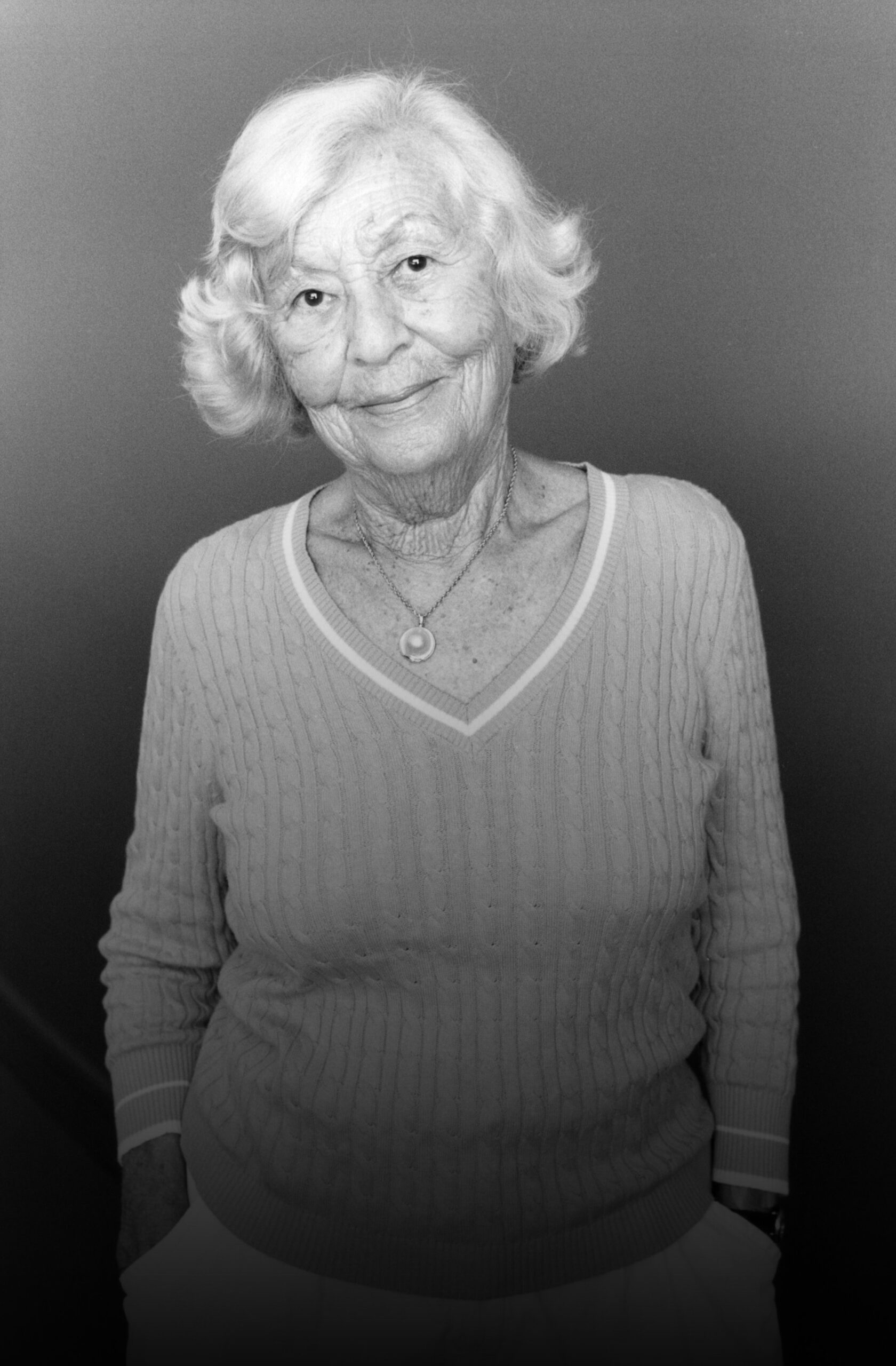
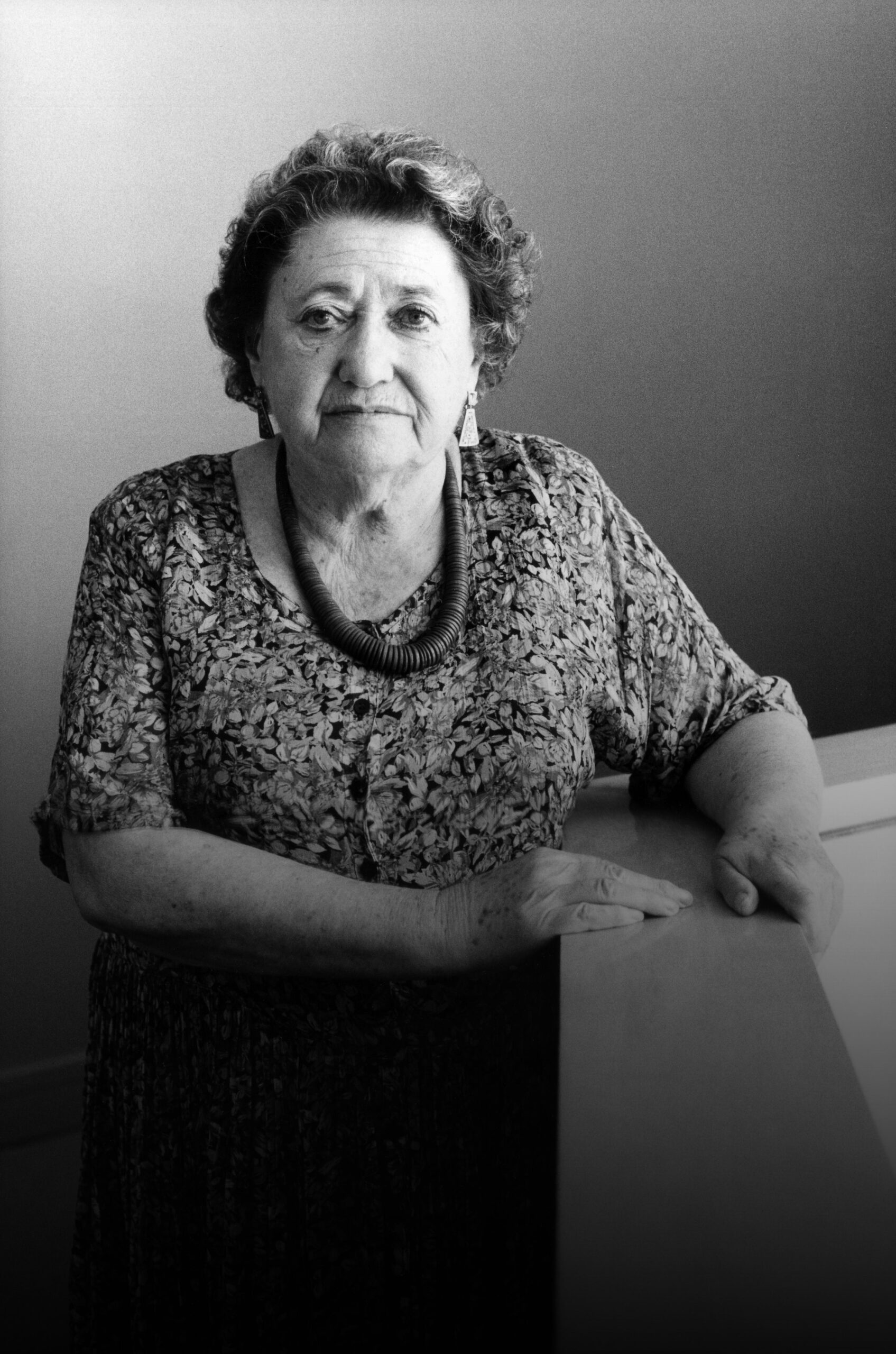
Dorothy Greenstein
Hate burdens you and hampers your future; Hope is very powerful for survival.
Dorothy Greenstein was born Devorah Kirszenbaum, the youngest of ten children, to Rabbi Joshua and Golda Kirszenbaum on December 10, 1930, in Otwock, Poland. By her eighth birthday, the Poles feared a German invasion. Preparing for a gas attack, they sealed windows in their homes and stored food, water and oil. On the morning of September 1, 1939, the Germans began bombing Poland, and three days later the Nazis marched into Poland.
Only months after the attack, Otwock was divided into three separate ghettos. The Greenstein family moved into the poorest ghetto area near Dorothy’s grandfather. The family was given one week to move their family items, including some cherished books, into the ghetto. However, they were forced to leave all their furniture and the rest of their father’s library behind. Three of Dorothy’s sisters were married and remained with their families, so only seven of the children moved to the ghetto.
Life in the ghetto was difficult. There was minimal electricity and no running water. Stores were closed; food was scarce, and rations provided by the Germans were limited to bread, potatoes and, occasionally, jam. Dorothy had blonde hair, blue eyes, spoke perfect Polish and was able to pass for a Christian Aryan, so she began sneaking through the block wall to purchase food for her family.
After two and a half years, Dorothy’s father sensed the deteriorating situation and told the four sisters to get out of the ghetto and hide with Polish friends. One brother, who remained behind with her parents, was selected to work at labor camps. Dorothy was hidden in various cellars, in a bunk with one of her sisters at a labor camp for a brief period, and in the home of their former maid, Pavlova, a Polish widow with two children. On several occasions she was nearly discovered. She lived in a constant state of fear.
Dorothy went to the village Karczew to join one of her sisters who was hiding with her husband and brother. The sister advised Dorothy to go back to Otwock to get a false Christian birth certificate from a woman who worked in their local church. The woman would not give the certificate to Dorothy but told her to travel to a smaller cemetery to find the gravestone of a dead baby with a birthdate like her own. She memorized the child’s information, and then went to the church asking for her Polish birth certificate with the Christian name Zofia Leszczynska.
With this false birth certificate, Dorothy was able to pass for a Christian Pole, and was able to find work. As an 11 years old, she began working in Warsaw as a mother’s helper, remaining there until the Polish uprising of 1944. After 63 days of constant bombing, buildings were demolished, and Hitler ordered the entire town burned down. Inhabitants were forced on a death march, during which time the female doctor that Dorothy worked for escaped with her family and Dorothy to a nearby hospital. The next day, they proceeded back to Krakow with the help of the nurses.
In the winter of 1945, the Russians invaded Poland and liberated Krakow. At liberation, Dorothy was 14, had no money, and while she was anxious to return home, she continued to work in Krakow to live. She wrote a letter addressed to the family that was now living in their family apartment in Otwock, telling them that she had survived and was living in Krakow. She hoped that her siblings had survived and would contact her. Four months later, her sister Tamara came unexpectedly to pick her up and took her back to Otwock. Later, she learned that two of her sisters and one brother had survived the Holocaust, but the rest of her family had perished in Treblinka Concentration Camp. Dorothy and her siblings escaped Poland and went to live in the American zone in Germany in a displaced person’s (DP) camp.
Three and a half years later, at the age of 17, she finished high school and came to Canada.
She worked as a maid and married Allen Greenstein a few months later. Unable to tolerate the cold Canadian winters, Dorothy asked her sister to arrange papers to her to immigrate to the United States. In 1963, after a two year wait, Dorothy, Allen, and their two children, Gloria and Joseph, were able to immigrate.
In the United States Dorothy taught Hebrew, Polish, Yiddish, German, Latin and English.
She also gave piano lessons. She became a Holocaust Survivor speaker at the Museum of Tolerance to remind visitors “to never hate and never give up, and persevere till the goal.” Dorothy Greenstein z”l passed away on December 16, 2018. At the Museum of Tolerance, her memory is always a blessing.
Z”L stands for the Hebrew words meaning “may his/her memory be a blessing.”