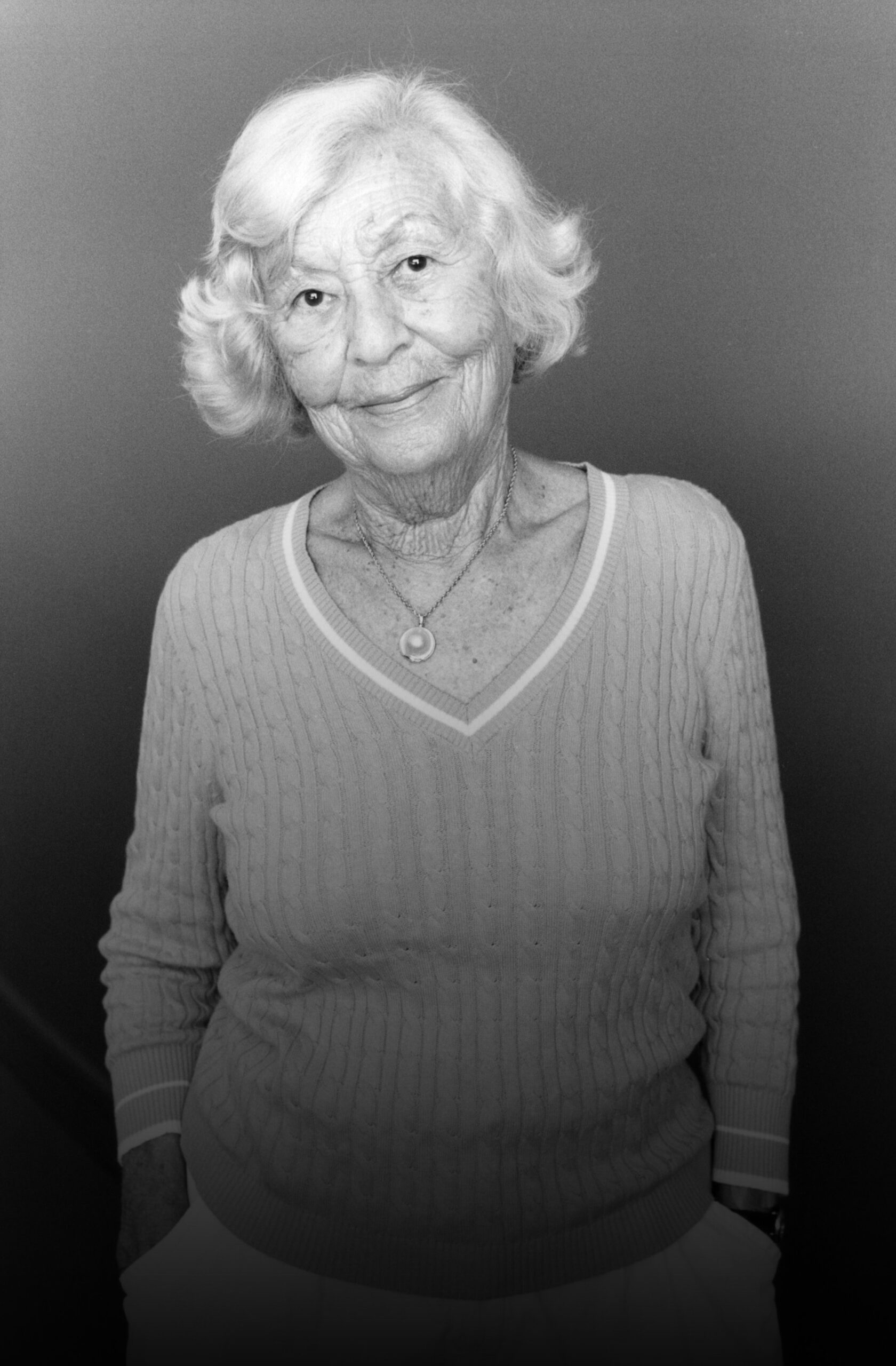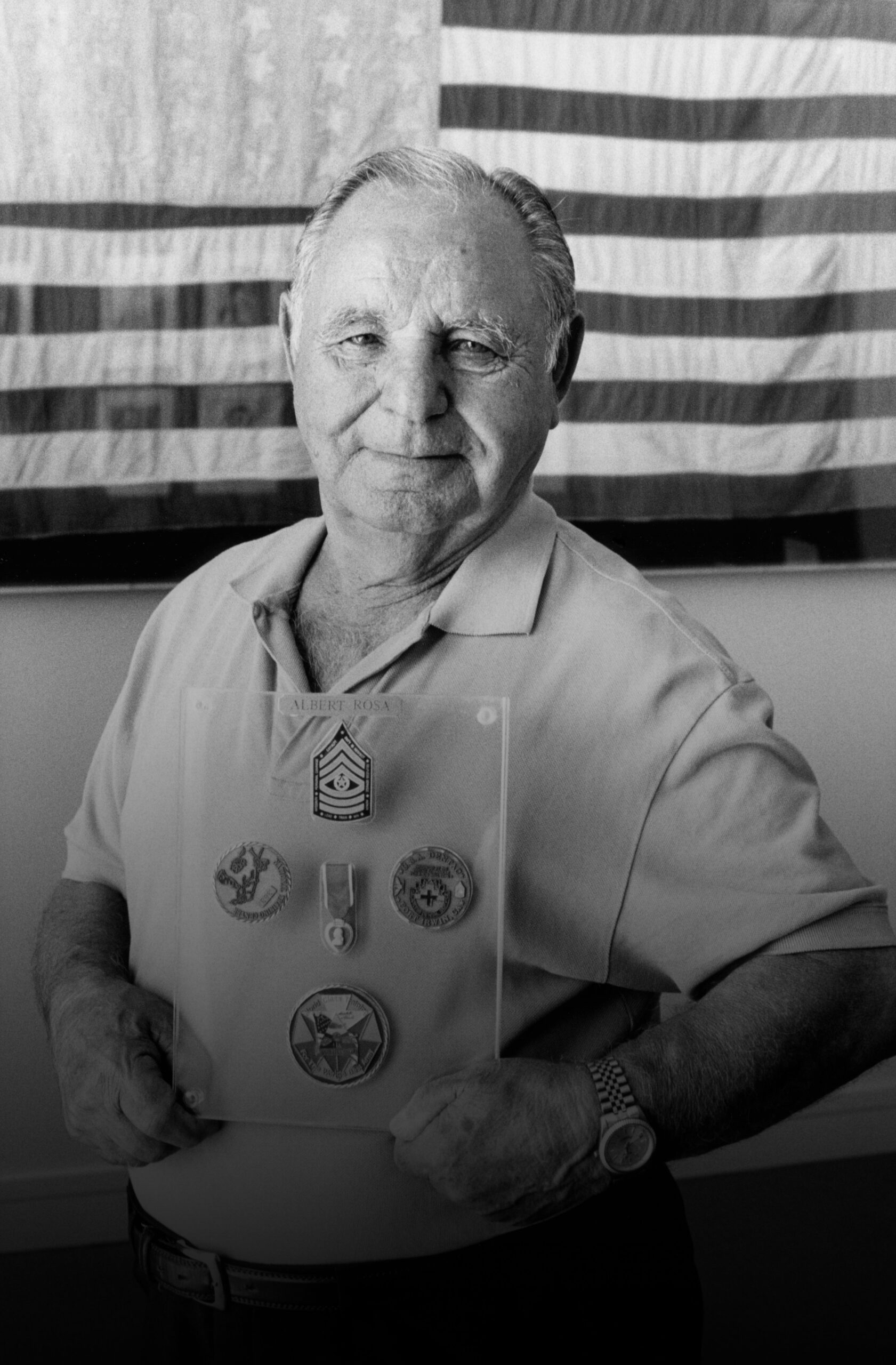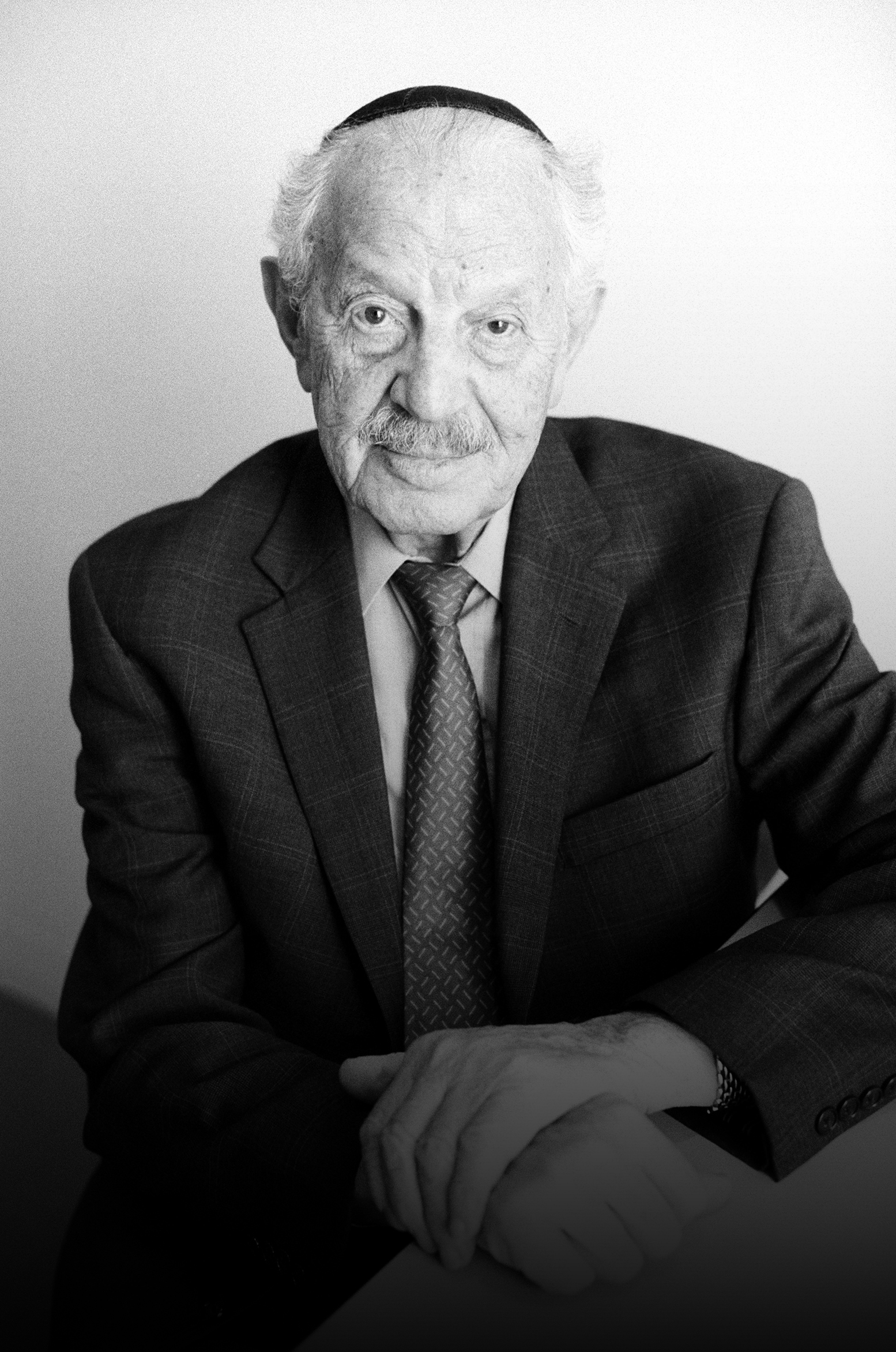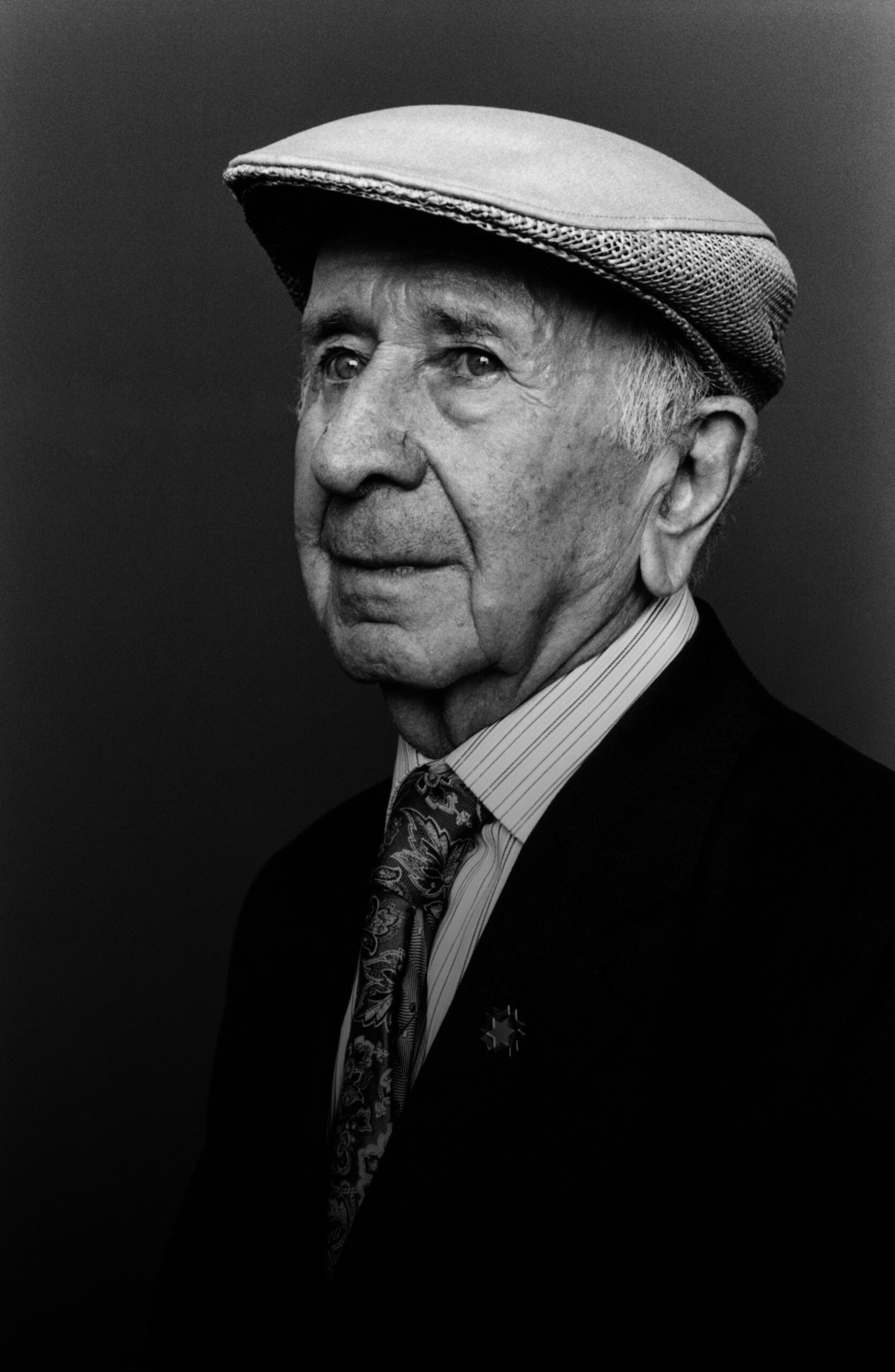
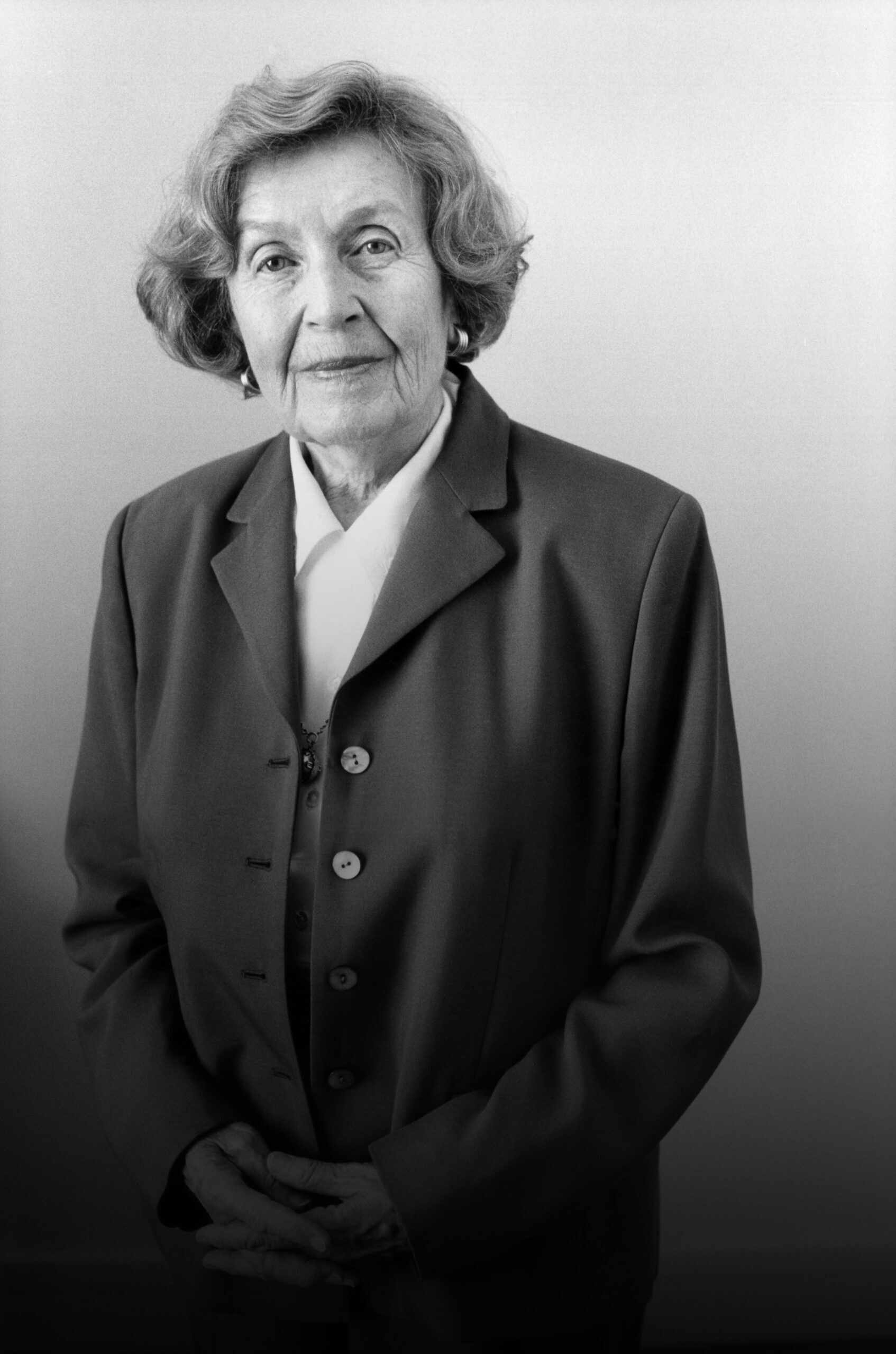
Cathy Weiss
Don’t ever be prejudiced; anytime, anywhere. Everything is based on the individual.
Cathy Weiss was born Ecaterina Lebi on June 12, 1926, in Satu-Mare, Romania, a large town with a population of nearly 50,000 people. Her father, Henrik Lebi, was the owner of a local lumberyard and her mother, née Blanka Lefkovits, was a homemaker. Cathy had a very protected, happy childhood. She began her education at a private school and was lucky enough to be one of the few Jewish students accepted at the public high school, graduating when she was 18.
In 1944, life for Cathy changed drastically when she and her family were forced to pack some food and clothing and walk to the Szatmar-Nemeti Ghetto in Hungary. For the next three weeks, Cathy and her family lived in horrible conditions, surviving on the minimal food that they had brought and living with eight to ten people in a single room. From Szatmar-Nemeti Ghetto, Cathy and her family were transported in closed cattle cars to Auschwitz Concentration Camp. Cathy was imprisoned in Auschwitz from June 3, 1944, until October 1944, when she was forced to go by train to Schlesiersee Slave Labor Camp, in Germany. While in Schlesiersee, Cathy had to rise at 4:00 a.m. each day for roll call and then march to work, where she dug trap ditches for enemy tanks. She managed to endure these conditions from October 1944 until January 22, 1945.
After Schlesiersee, Cathy and the rest of the prisoners were forced on a death march through kneehigh snow to Bergen-Belsen Concentration Camp. The prisoners slept in a barn at night. The next morning when the death march began again, those who could not keep up were shot. Cathy lost one of her wooden shoes and knew that she would never survive with just one shoe. In order to survive, she hid under a pile of rubbish in the barn and watched as the death march continued on past her.
Later, Cathy walked to a nearby farm in hopes of being allowed to hide there. The peasant woman who owned the farm was generous enough to give her a meal, shoes, and jacket but then asked her to leave.
Word quickly spread through the town that an unknown girl had been seen, and an SS officer soon discovered her. The SS officer interrogated her, but he did not believe the story that Cathy had concocted, that she was in Germany with her parents and had gotten lost and separated. They brought Cathy to the City Hall in Weisenberg and placed her in a group with French Foreign laborers, who were wonderful to her. Cathy was comfortable there, speaking French, German, Hungarian and Romanian. A German soldier spotted her and asked her to work as a maid for his household. Cathy was placed on a train bound for the Czech Republic where she discovered that she was to work in a circus owned by the family of the German soldier, Frak Schlesinger. However, her stay with the German family was short, for on May 5, 1945, the Soviets liberated the town, Tecs Bodenbach.
Soon after liberation, Cathy traveled home in search of surviving family members but when she arrived, she found her home deserted. Fortunately, some aunts and cousins, who had lived in Romania during the war, managed to locate her and brought Cathy to live with them.
It wasn’t long before she was reacquainted with Sigmund Weiss, a Holocaust Survivor from her hometown, and they married in 1946. For 18 years, they lived in Communist Romania until they were finally able to receive permission to move to Rome, Italy. From Rome, they waited six months for their immigration papers to the United States. In 1965, Cathy, her husband, and son Gabriel were able to move to Los Angeles where she worked in accounting and her husband worked as an engineer. Together, they have one child, two grandchildren (Yohanna and Michael), and 5 greatgrandchildren (Ryan, Makinze, Evan, Max, and Presly).
Cathy tells her story at the Museum of Tolerance in memory of all her murdered family members, for as she explains, “It’s important for people to know, remember, and prevent future tragedies.”