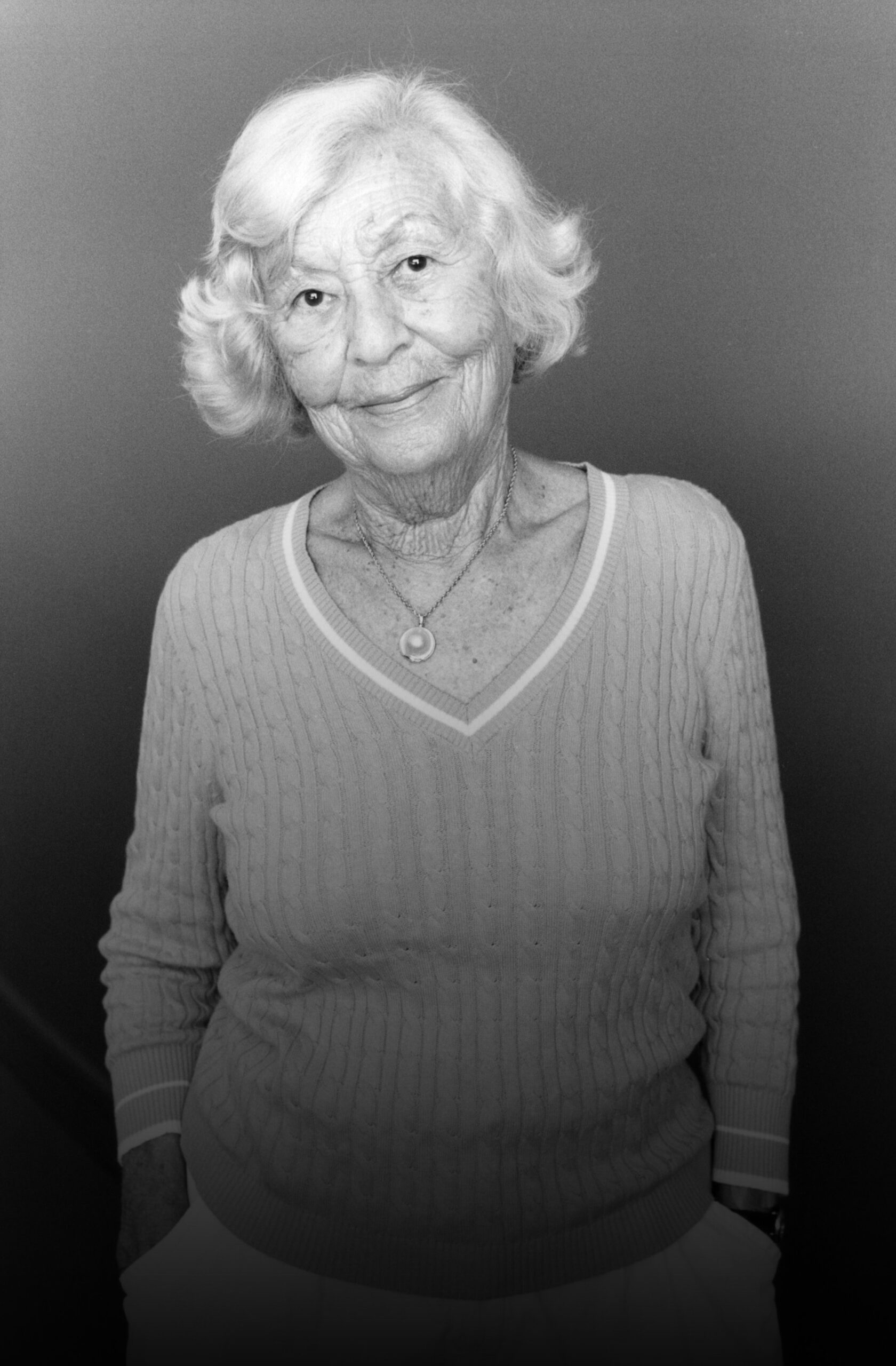
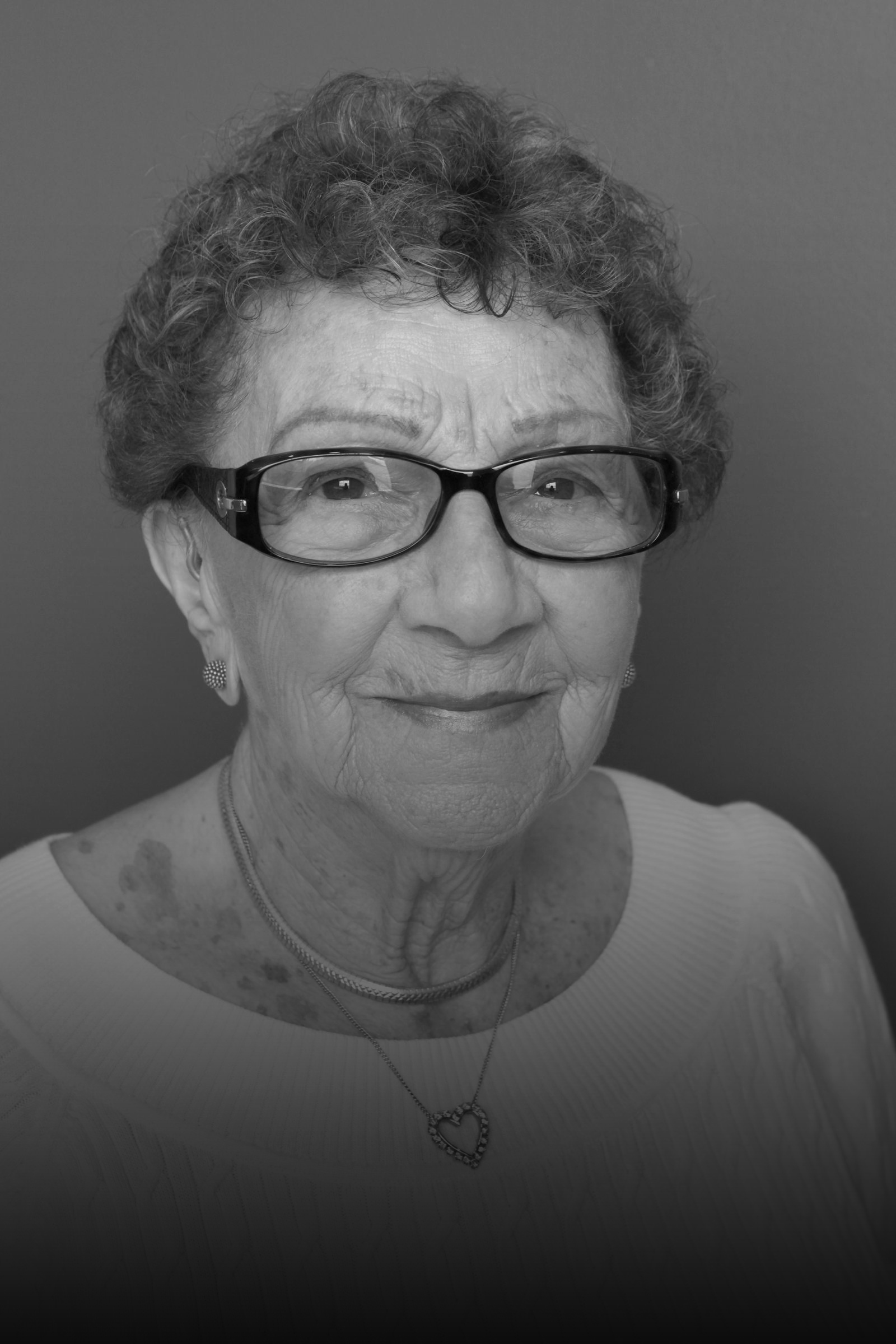
Betty Cohen
Don’t ever leave someone you love without saying good-bye.
Betty Cohen was born Rebecca Corper on March 23, 1921 in Hilversum, the Netherlands. She had two older brothers, Jacob, born in 1912, and Israel, born in 1914. Betty first heard about the Nazis in 1933 from the news and from her German family members who were seeking safety in the Netherlands. Jacob, went into hiding in 1940, and Israel married a German woman, Herta Salomon, in August 1940.
On May 2, 1940, 19-year-old Betty met her future husband Abraham Cohen, called Al, at a dance and fell in love-at-first-sight. Eight days later, the Nazis invaded the Netherlands. Despite this, the couple became engaged in September 1940. By the end of 1941, all the Jews in the Netherlands were forced to move to a specific district in Amsterdam. However, her family had other plans.
In 1942, Betty, Al, her parents, grandmother, aunt, and Al’s brother and sister-in-law all went into hiding in Hilversum. They were joined by nine strangers. Seventeen people shared a small one-bedroom cottage with a living room and an attic. Life in hiding was very stressful. The group could only speak quietly, and arguments about food were common. To pass the time, Al’s brother Gerry, taught the group English. Both Betty’s father and Al kept diaries throughout their time in hiding that were returned to Betty and Al after the war. Reading her father’s diary, Betty discovered a side of him that she had never known. He wrote about her mother’s breakdown, and the pain he experienced in losing his two sons.
In 1944, the family was caught and sent to Westerbork Transit Camp. Then, on May 22, 1944, they were transported to Auschwitz-Birkenau Concentration Camp in Poland. Upon arrival, the children and elderly were sent immediately to the gas chambers where they were murdered. Betty and the ablebodied prisoners were sent to showers, called “the sauna,” where they were told to undress for disinfection. Once naked, they were tattooed, and Betty became number A-5288. The following day, Betty’s head was shaved. She was tattooed again, adding 5252 to her existing number. Betty remembers a guard asking her if she had arrived with her family. He pointed to the smoke from the crematorium and said, “Why don’t you say ‘Goodbye,’ because that’s where they are going.” While in Birkenau, Betty remained close to her sister-in-law, Elizabeth. Betty also became close friends with an older woman, Manja, who had two children still in hiding. Gerry, Al’s brother, committed suicide in Auschwitz by throwing himself onto the electrified wires of the camp.
One day, camp doctors came into her barrack and asked for married girls. While Betty was only engaged, she volunteered to go because she heard that Al was still alive in the men’s camp of Auschwitz, which was close to the medical facility. She and 20-30 other female prisoners were transferred to the medical experimental facility in a barrack outside the perimeter of the camp. Nazi doctors, including the infamous Dr. Mengele, subjected them to sterilization experiments. After some prisoners escaped from the camp, Betty was forced to watch a hanging from the window of the medical facility.
In January 1945, the prisoners of Birkenau were forced on a death march for three days and then transported by cattle cars to Ravensbrück Concentration Camp. Betty had suffered from a serious foot injury because of the poor-fitting shoes given to her by the Nazis. On the march she tied towels around her feet trying to protect them. Because of the brutality of the guards, Elizabeth, died on that march.
Betty and other prisoners were then transported by open cattle cars to Malchow Concentration Camp where they slept on the floor. They had to eat grass, since there was no other food. As the Soviets advanced, the guards moved the hundreds of prisoners into a meadow where they slept. Betty was close to a group of eight other Dutch girls, and they clung to one another throughout the night.
On May 5, 1945, when liberation came, Betty and her fellow prisoners woke up free. The guards and dogs that had forced them on the march were gone. The Soviet Army found the prisoners on May 6, 1945, and moved them to a farm. The Soviets ordered the homeowner and his family into the barn so the Holocaust survivors could have the house. Betty and the others were given plenty of food, but they fell ill because their prior starvation left them unable to digest nutritious food.
After liberation, the first thing that Betty wanted was to return home to Hilversum. She travelled on one of the first transports back to the Netherlands. A harsh winter had left food and other resources scarce.
Betty weighed 76 pounds but felt good. She was placed in a school that served as a temporary home for displaced persons. A Jewish family came to visit and helped Betty reconnect with some of her cousins. When she heard that her aunt and Al were in Hilversum, she caught the weekly bus to Amsterdam, wearing the only clothes she had, her prisoner uniform. A man on a bicycle saw her and took her the rest of the way to her aunt’s home. Betty, Al, and Herta’s child, Louie, who had been saved by a gentile family, survived.
After the war, Betty and Al contacted Herta’s sister, Elsie, who had immigrated to the United States in 1938. On February 1, 1948, Betty, Al and Louie left Europe for the United States to stay with Elsie.
Although Betty thought she had been sterilized, she and Al were blessed with two children, Gerry and Hedy. They are proud of their five grandchildren and four great-grandchildren.
With the encouragement of her daughter, Betty finally began speaking at the Museum of Tolerance in 2005. Betty hoped that those who listened, as well as future generations, would share her story. In this way, it will never be forgotten. Betty Cohen z”l passed away on September 14, 2022. Her legacy will live on at the Museum of Tolerance.
Z”L stands for the Hebrew words meaning “may his/her memory be a blessing.”