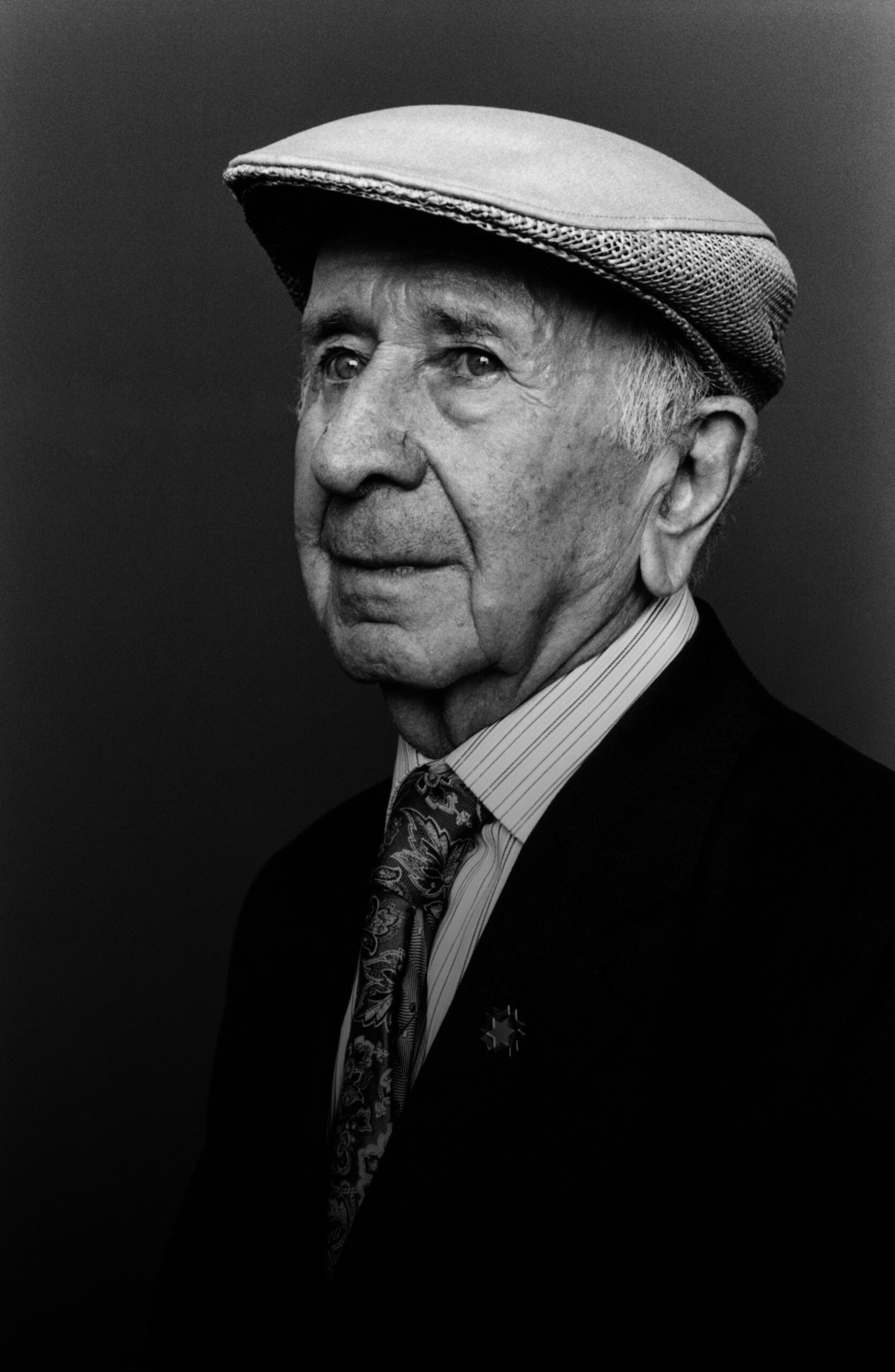
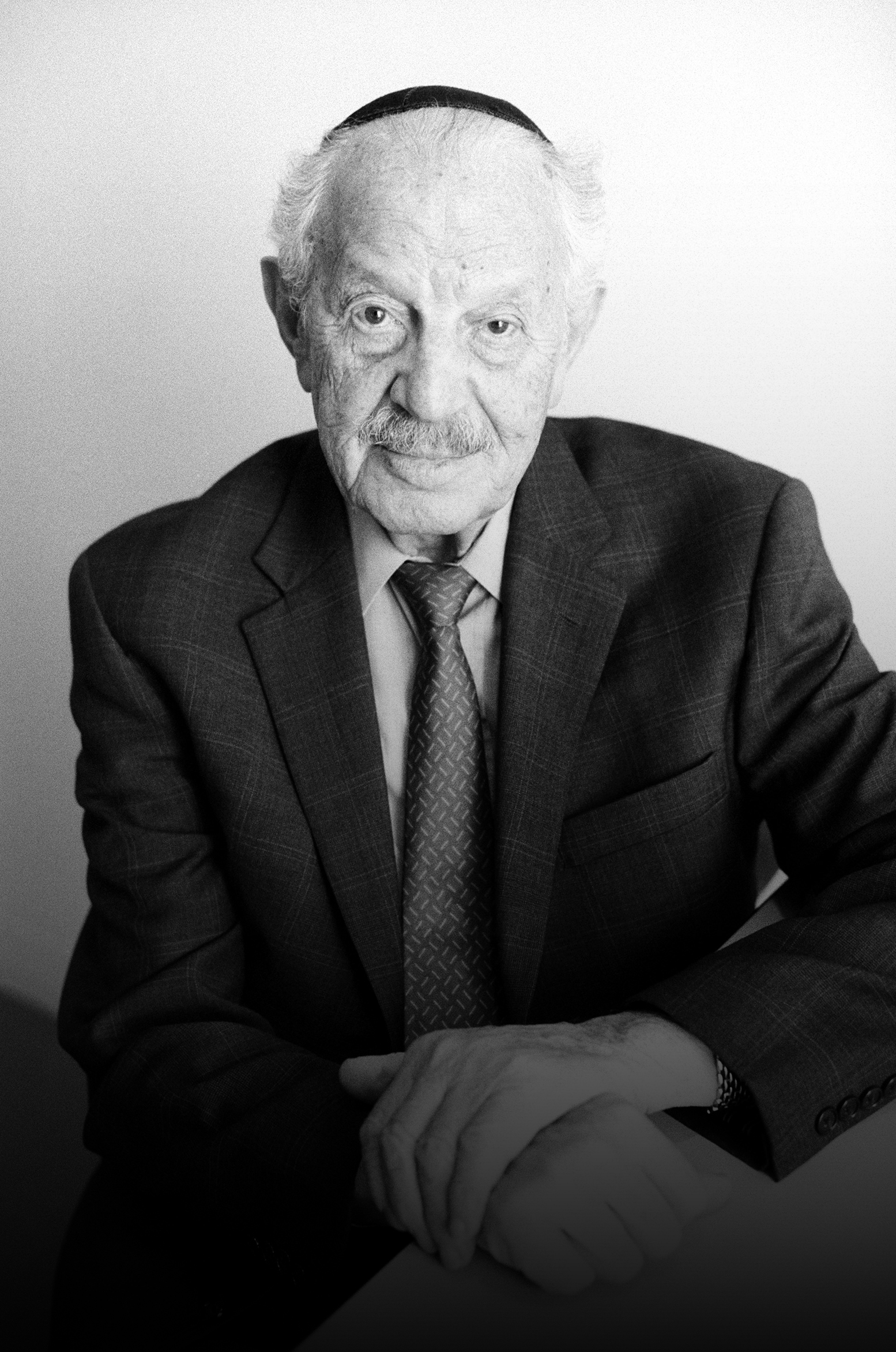
Amrom Deutsch
We must never forget. We must appreciate life and make every minute count.
Adolf (Amrom) Deutsch was born on August 8, 1925, in Sighet, Maramures, on the border between Romania and Hungary. Amrom was the eighth of eleven children in his observant Jewish family, attending religious day school, keeping kosher, and observing all Jewish holidays. His father’s business went bankrupt in 1918, leaving the family in dire financial straits. In those days, Amrom was always hungry and would forage for food in his neighbors’ gardens.
Amrom grew up with both Jewish and non-Jewish friends. He never felt different or unaccepted because of his religion. He was unaware of the struggles facing Jews and other minority groups in Europe. This changed when the Nazis came into his city. Following Passover on April 15, 1944, all Jews from Sighet were relocated to a central Jewish ghetto. Thirteen thousand people lived in the ghetto, crammed in unbearable circumstances with little food or water. Amrom and other boys were sent to do hard labor. After one month, the Nazis let the boys return to their families in the ghetto.
He was excited to be reunited with his parents and siblings. He did not know that they would soon be transported to Auschwitz-Birkenau Extermination Camp, as part of the Nazis’ “Hungarian Operation.” At this time, more people were “processed” and killed in Auschwitz than at any other point during the war. In just ten weeks, over 430,000 Jews arrived in Auschwitz. Eighty percent of them were murdered immediately upon their arrival. Amrom and the other Jews on the transport were not told where they were heading, only that they were being “relocated to the East.”
As Amrom was pushed off the train, dogs were barking, guards were shouting, and families were being ripped apart. He was immediately separated from his family. Men and women were lined up in two rows and each person passed in front of the infamous Dr. Josef Mengele, who organized the selection. When asked for his age, Amrom replied, “19.” He was sent to the right, which meant slave labor, terrible conditions, starvation, and disease. However, it also meant that he survived the first selection. Auschwitz was a factory– a factory of death.
From Amrom’s transport, 400 people were selected for slave labor. They stood naked after disinfection. Their belongings were stolen and their hair was shaved off. They received their prisoner number, tattooed on their forearm, branded to the bone like cattle. His new identity was prisoner #A3146. Amrom was awakened at 4 a.m. every day for roll call. The prisoners stood in rows for hours being counted. He worked 12 hours a day and was given only a slice of bread and a cup of watery black soup. However, Amrom survived in Auschwitz as a barber. He would shave the incoming prisoners’ hair and, thanks to his specialized job, he received a small amount of extra food.
Amrom was transferred to a sub-camp of Auschwitz called Buna, where he worked in a factory for six months. While at Buna, one of the Jewish Capos secretly approached Amrom and told him that he had hidden under the barracks a set of tefillin (phylacteries), used by Orthodox Jewish men for morning prayers. Each morning Amrom would rise 20 minutes early to sneak under the barracks in order to put on the tefillin and say his morning prayers by heart. Then, he would sneak back into the barracks to begin the day. Had he or the Capo been discovered, they would have been shot.
In January 1945, the Allied forces began bombing the factory, but the Nazis refused to surrender their Jewish prisoners. Amrom was forced on a death march beginning January 5, 1945. For four days the prisoners marched in the bitter cold and snow. Each night, whoever survived would sleep in hay outside. Amrom felt that there was a large world out there and he was determined to survive and explore it. He wasn’t ready to give up and die, so he ate leaves and kernels, as he knew rabbits did.
The death march brought him to Bergen-Belsen Concentration Camp, which had a rampant typhus outbreak. The prisoners were starving because the guards, fearful of being infected, refused to enter with food. Amrom resorted to eating parts of the scattered corpses in order to survive just one more day, and at night he slept among the dead bodies. On April 15, 1945, the British liberated BergenBelsen. As the British marched into the camp, Amrom hid among the dead, afraid that it was the SS guards returning to kill the remaining Jews. Amrom believes that the harsh circumstances of his upbringing contributed to his ability to survive the intolerable conditions of the concentration camps.
Liberation was a bitter-sweet day. The long sought-after day of freedom had finally arrived, but he was left with nothing — no family, friends, belongings, or country. He got rid of his striped prison uniform and stole luggage from trains to find new clothing. Amrom was taken in an ambulance to a hospital in Germany, where he remained for six weeks. Then he returned to Bergen-Belsen, which had been transformed into a Displaced Person’s Camp.
Amrom met his future wife and got married in January 1946 in the DP camp. He learned that three of his sisters and one brother had managed to survive Auschwitz. Two of his other brothers had survived in Siberia. On August 8, 1949, Amrom immigrated to America. He was happy to finally be in a free country. In New York, Amrom became a baker. He never wanted to be hungry again! In 1957, he came to Los Angeles and slowly picked up the pieces of a broken life. For 20 years, Amrom never shared his story Amrom began speaking at the Museum of Tolerance in 2016, finally telling his story and passing on the memory of his murdered family members. He never forgot the day his mother, father, and two baby sisters disappeared. His message to future generations is to never forget and to appreciate every single moment. In Los Angeles, Amrom woke up each day with a smile, because he once lay among the dead bodies in Bergen-Belsen.
Amrom was a proud grandparent to eight grandchildren and seventeen great-grandchildren. Amrom Deutsch z”l passed away on October 19, 2022. His memory will always be a blessing at the Museum of Tolerance.
Z”L stands for the Hebrew words meaning “may his/her memory be a blessing.”