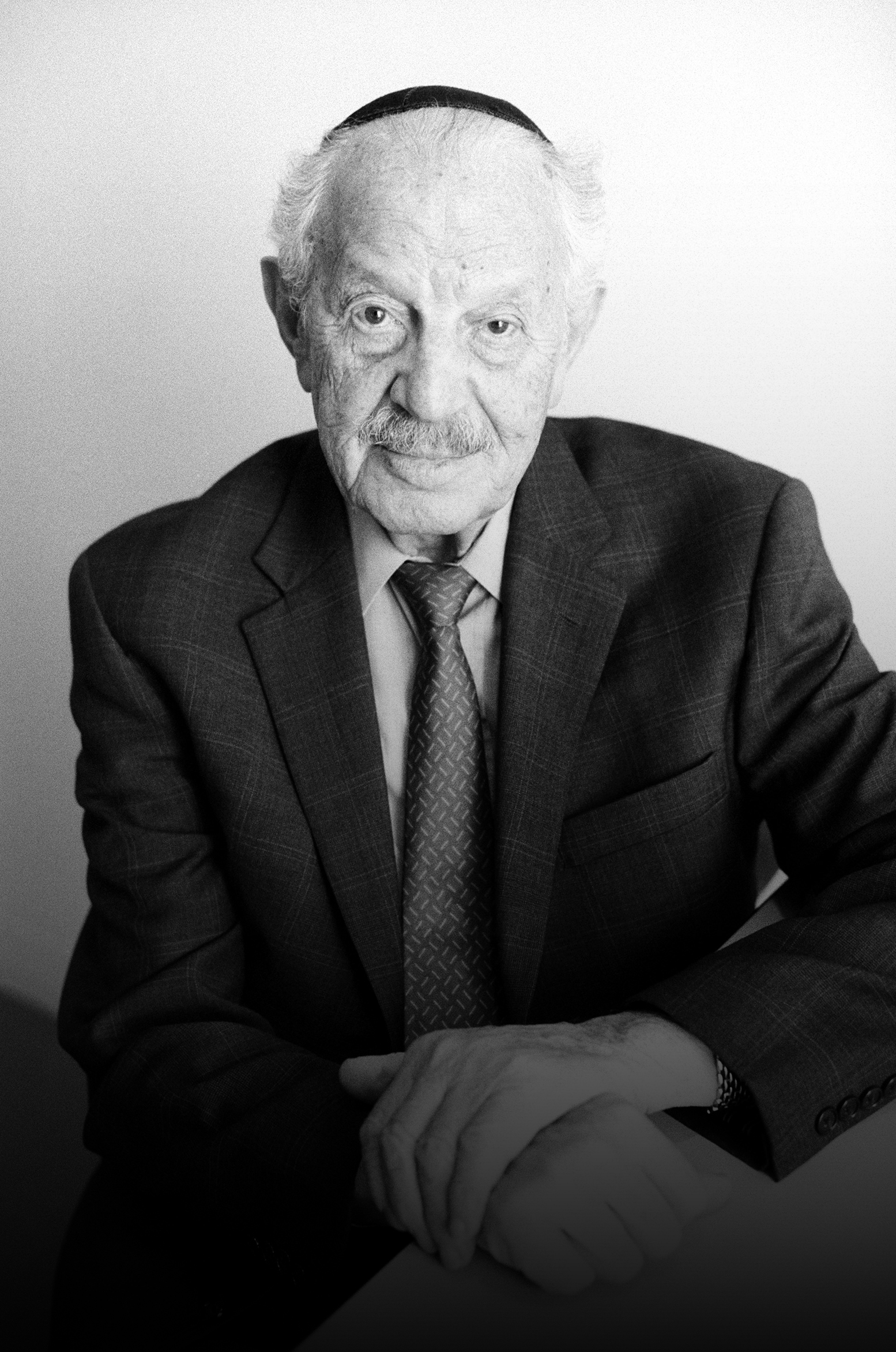
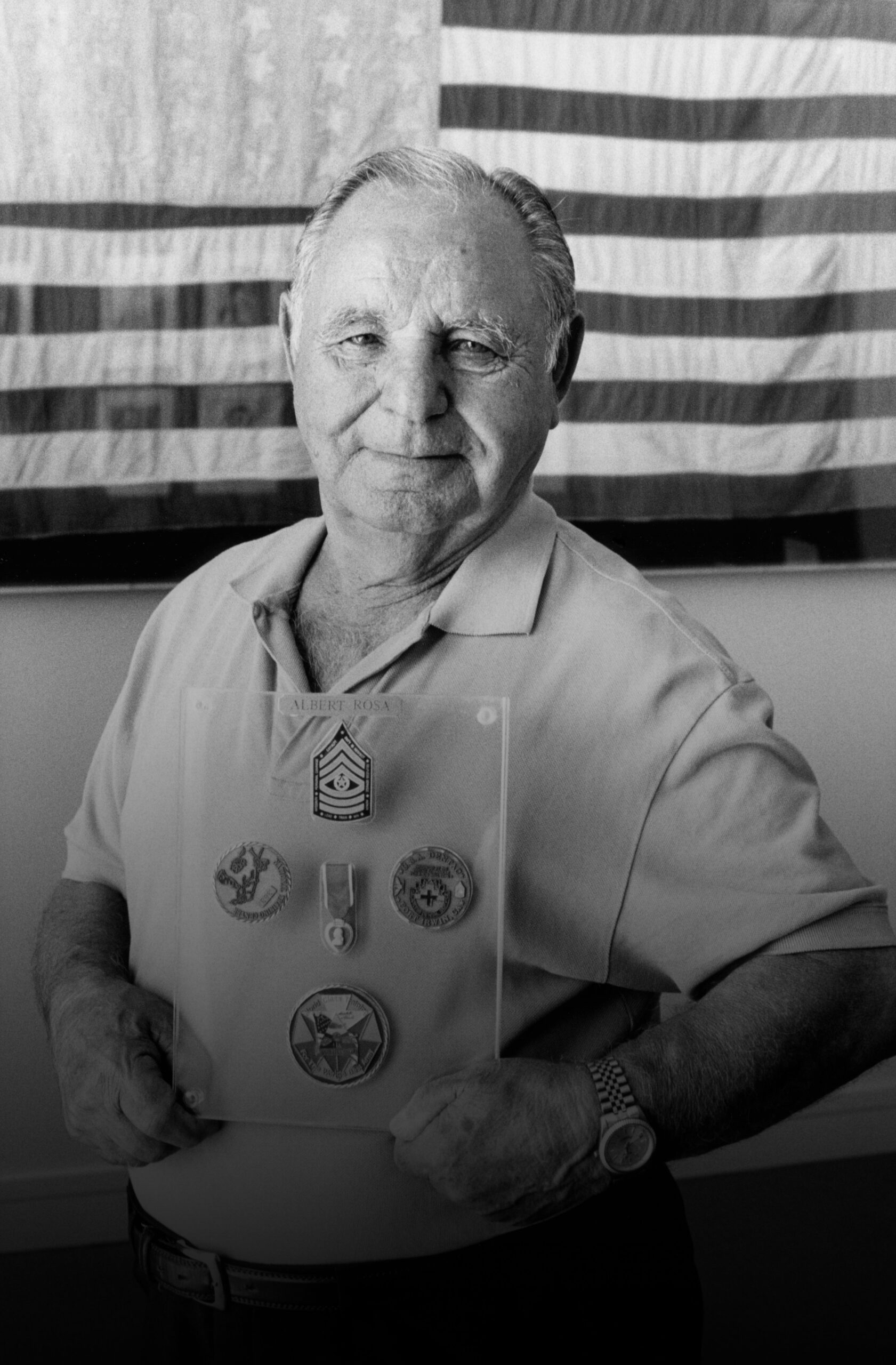
Albert Rosa
Never give up. If you have to die, die like a man. Die fighting for your life.
Albert Rosa was born Alberto Rosa to parents, Regina and Ephraim Rosa, on January 25, 1925, and grew up with his five brothers and two sisters in Salonika, Greece. As Greece’s second largest city, Salonika boasted a large Jewish community of well over 77,000 people. When the war began, the Italians bombed Albert’s school. However, the country did not fall to Nazi forces until April of 1941. At this time, the Nazis confiscated his father’s hardware business, along with the family’s bank account.
After Greece’s occupation, Albert was forced to perform slave labor for one year, along with many other young Greek Jewish men. After his year of service, Albert returned home only to be transported to the ghetto in town. To protect their family from starvation, Albert and one of his brothers regularly jumped over the ghetto walls to find food. One night, German soldiers forcibly entered Albert’s home and assaulted his grandmother and mother. A neighbor, who witnessed the attack, resisted the soldiers and was shot in front of his entire family. During the same night, Albert, with the rest of his family and 60 other people, all in their sleepwear, were taken from their homes and loaded onto a truck. The truck containing the prisoners arrived at the railroad station where Albert and two of his brothers were immediately forced into a cattle car. The rest of the family, however, was separated into another car.
During the 10-day journey from Greece to Auschwitz Concentration Camp, there was no food or water; and three quarters of the people died before their arrival. Upon arrival at Auschwitz, Albert was 15 years old. He passed the selection process, received a tattoo with the number 110362, and was assigned to work 15-16 hours a day in the coal mines. After two or three weeks in the camp, he found out that one of his sisters was in the neighboring camp and devised a way to work near her. They managed to speak to each other for a brief moment before an SS officer noticed them and beat his sister to death. The guard then pointed her gun towards him. One of Albert’s cousins begged the SS officer to spare him. Instead, she shot his cousin and ordered a German Shepard dog to attack Albert. He was fortunate to recover from the vicious attack with the help of a Greek doctor, who was also imprisoned in Auschwitz.
Albert saw a pile of potatoes in the kitchen and quickly ran over to steal them. An SS guard spotted him and began beating him. Albert’s brother ran and knocked the SS man to the ground.
Other German guards used their rifles to club Albert’s brother and then they hung him. On that day, Albert promised himself that he would avenge his brother and sister. From Auschwitz, Albert was forced on a death march of 940 kilometers to Dachau Concentration Camp. The prisoners ate only roots and leaves that they found along the way. During the march, Albert decided to escape with seven other men by running into the forest. They eluded the German soldiers by walking backwards in the snow. Albert soon encountered Mexican-American soldiers and spoke to them in Ladino, a version of Yiddish that originated in Spain. Soon after entering the American camp, Albert and four other friends began fighting alongside the American Army, in order to avenge his brother’s death. Awarded the Purple Heart and four other medals for bravery, Albert was told he was the “bravest man in the whole platoon.” After World War II ended, Albert joined the IRGUN, an underground Jewish resistance group fighting for the creation of a Jewish state. He was soon captured by the British for smuggling arms and was imprisoned on Cyprus. He escaped from the British prison in Cyprus by working for an Italian fisherman. Later, Albert immigrated to America in 1949 with his wife, Betty Rosensweig, also a Holocaust Survivor.
Albert was haunted by terrible Holocaust nightmares, and for 50 years he refused to speak a word about the Holocaust. Albert’s daughters, Regina and Yvette, convinced him to start speaking at the Museum of Tolerance. Since March 1998, Albert has shared his remarkable story of courage and survival with thousands of students, public visitors and law enforcement professionals, who are inspired by his life. Albert was the only survivor of his 70-member family.
Albert Rosa z”l passed away on June 3, 2023. His memory will always be a blessing.
Z”L stands for the Hebrew words meaning “may his/her memory be a blessing.”