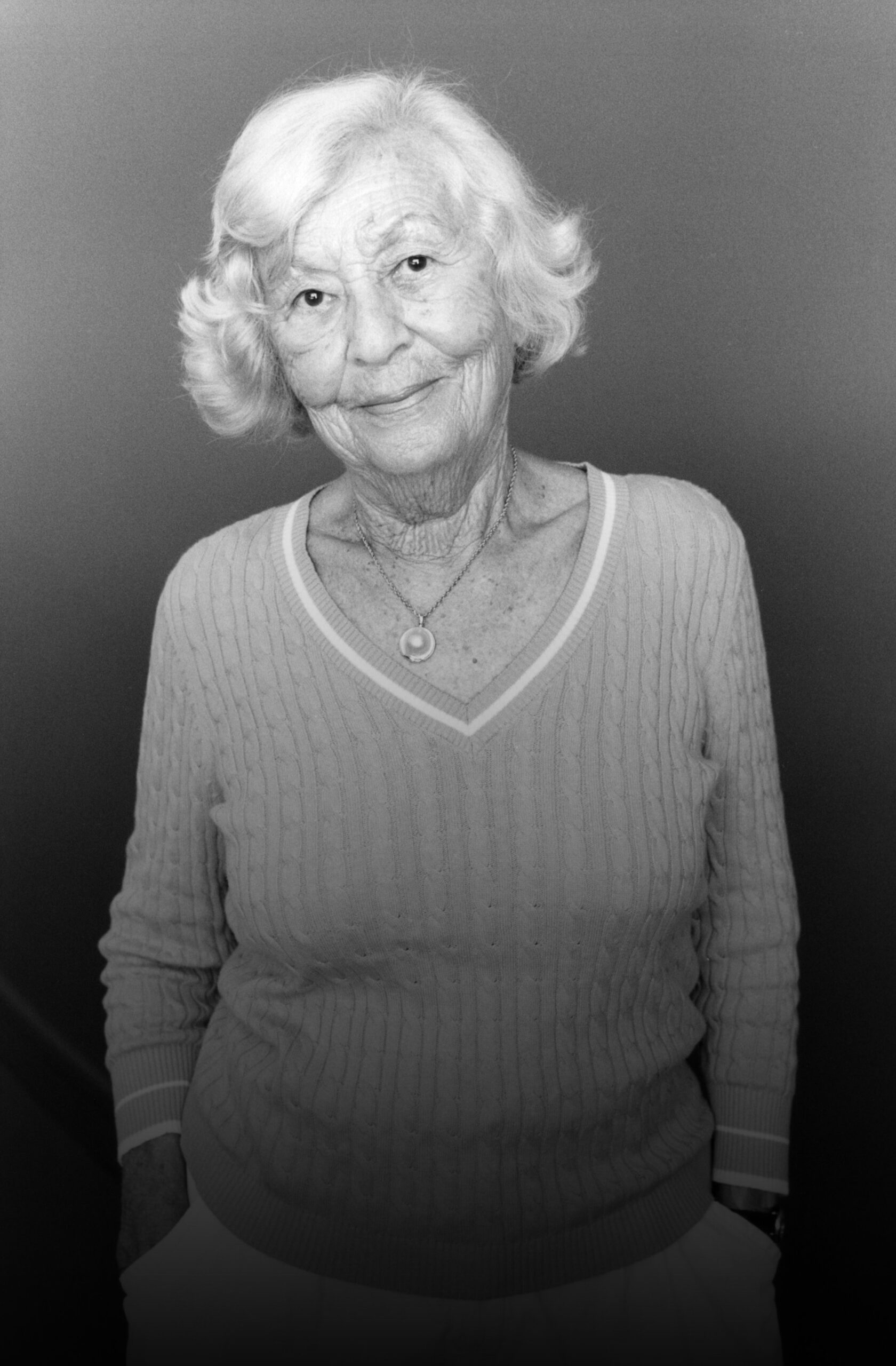
Agnes Kun
The only thing worth crying for is human life. It is the only thing you can’t replace.
Agnes Kun was born Agnes Diamanstein to parents Eta and Dezsö Diamanstein on May 3, 1926, in the small town of Satu-Mare, Transylvania. In 1940, Hitler gave Satu-Mare, which had been located in Romania, to Hungary. Hungary was an ally of the Nazis and, almost immediately, anti-Jewish laws went into effect. These laws closed Jewish-owned businesses, restricted travel, and prohibited most Jewish children from attending public school. Agnes was one of only five Jewish students who were allowed to remain in high school.
By 1944, it was clear that the Nazis were losing the war, and Hungarian Jews were optimistic that anti-Jewish legislation would soon end. However, on March 19, 1944, Germany invaded Hungary and the restrictions on Jews increased dramatically. All Jews over the age of six were required to wear a Jewish star to identify them as Jews. Jewish families were forced from their homes and transported to ghettos. In mid-May 1944, Agnes and her family were sent to the Satu-Mare Ghetto, which held more than 18,000 Jews. To prevent anyone from escaping the ghetto, the Nazis took 80 Jewish men hostage and threatened to kill them if anyone escaped. Agnes and her family remained in the ghetto until May 31, 1944, before being transported via cattle car to Auschwitz-Birkenau Death Camp.
Upon arrival, the men and women were forced through the “selection process,” separated and lined up for inspection. Those who were deemed unfit for work were immediately sent to the gas chambers by Dr. Josef Mengele, the “Angel of Death.” Agnes’ mother, who had been badly burned by a teakettle while in the ghetto, traveled in the hospital boxcar, and so she was immediately sent to the gas chambers. Out of the 3,000 Jews who arrived with Agnes at Auschwitz, only 300 survived the inspection.
Agnes was stripped of her clothing and belongings before being sent to the showers.
Prisoners were then given a postcard and ordered to write to a neighbor telling them they had arrived safely. Agnes was sent to the labor portion of the camp at Birkenau, where prisoners slept in three tiered bunks and shared a single bed with up to seven girls. A roll call twice a day served both to pass out food rations and to select those unfit for work. Those who did not appear healthy were sent directly to the gas chambers.
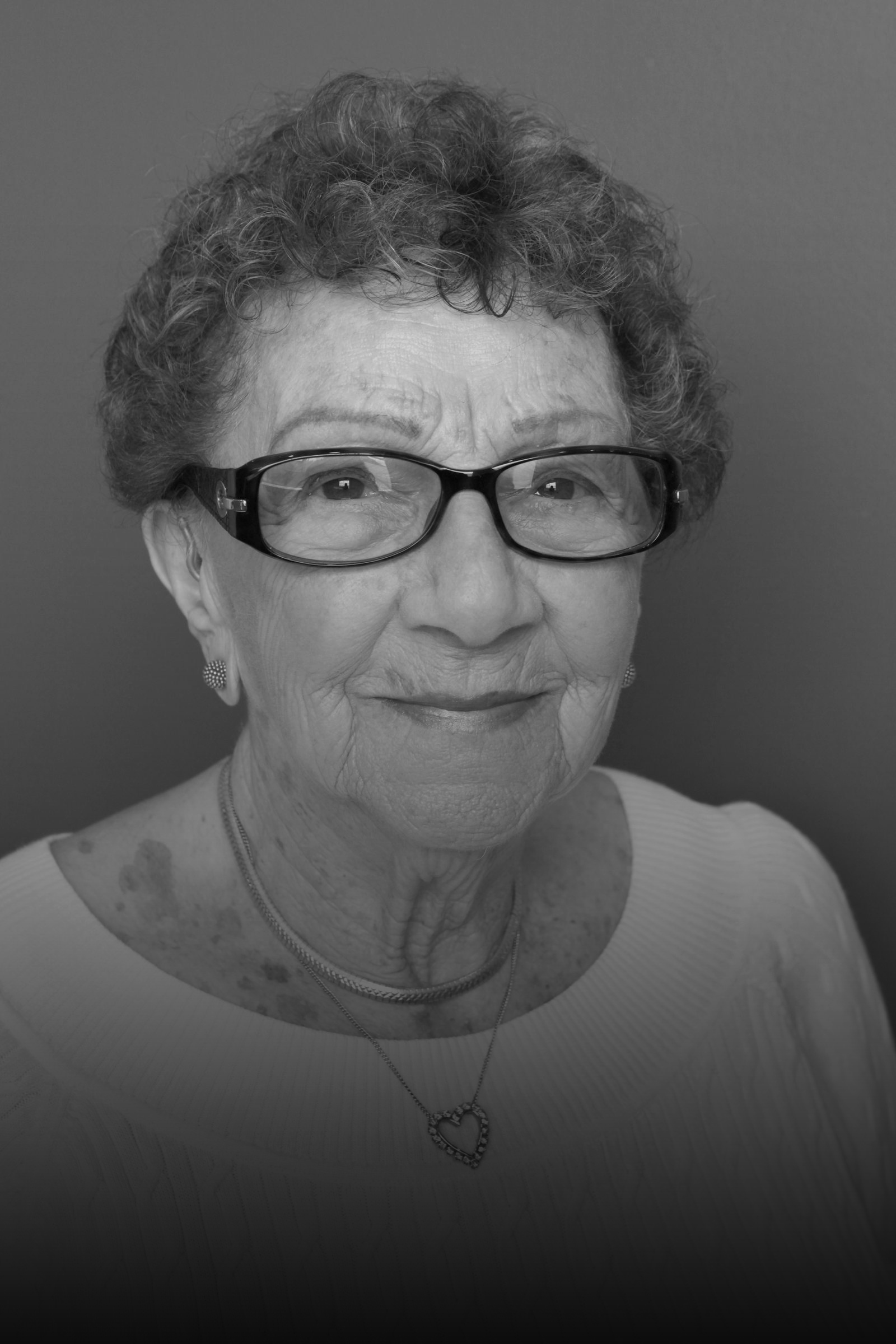
Witness to Truth Portrait by Marissa Roth, courtesy of SWC, MOT, SWC Archives After seven weeks in the camp, Agnes contracted measles. Luckily, a new hospital ward had just been added to treat inmates with the disease. While in the hospital, she discovered her cousin was working there as a doctor. Her cousin helped Agnes to recover and then hired her as a nurse. Agnes worked at the hospital until November 30, 1944, when she was sent to work at a factory in Germany. Though she was forced to work producing bullets for the German army, she and other prisoners tried to sabotage the work by producing as little as possible.
The United States Army freed Agnes on April 14, 1945. She describes this moment as the most beautiful day of her life. She went to live in a displaced persons camp in Germany where she worked as an interpreter. When she searched for news of her father, she discovered that he had died at a work camp in Austria just two months prior to liberation.
Agnes married Andrew Kun, who was a survivor of a Jewish labor unit. They had two daughters, Annie, born in 1947, and Marianne, born in 1950. Agnes immigrated to the United States in 1962 and moved to Los Angeles in 1963. She was blessed with three grandchildren and one great-grandchild.
Agnes spoke at the Museum of Tolerance in memory of her parents, who were robbed of their lives and were never able to see their only child grow up. Agnes Kun z”l passed away on March 4, 2020. At the Museum of Tolerance, she will always be remembered for her gentle smile and humanity. May her memory be a blessing.
Z”L stands for the Hebrew words meaning “may his/her memory be a blessing.”