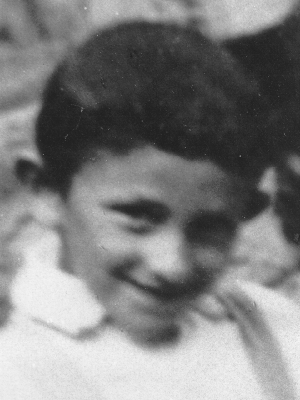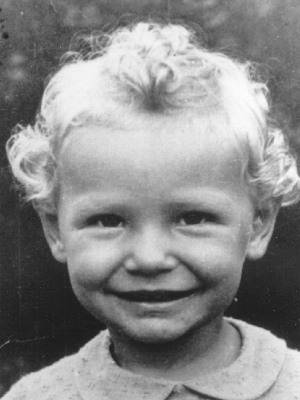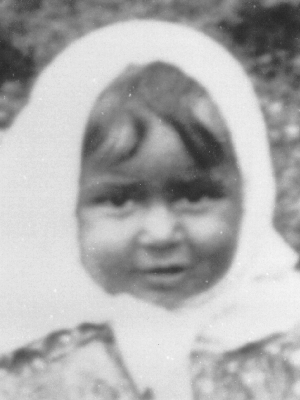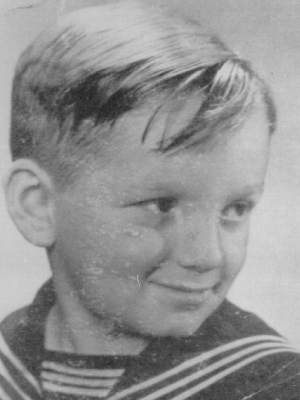
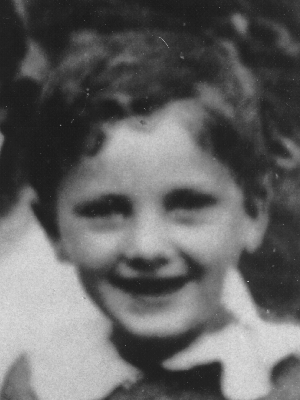
Born: 1934
Birthplace: Wejherowo, Poland
Yezik Wielkabroda
Yezik Wielkabroda, the younger son of Leah and Leib Wielkabroda, was born in 1934 in Wejherowo, Poland, a small town near the large port city of Gdynia, a major seaport and rail junction. Only 62 Jews lived in Wejherowo.
Yezik was a 5-year-old schoolboy when the Germans invaded Poland in September 1939. On September 21, the Nazis decreed that all Jewish communities with less than 500 members were to be dissolved. These Jews were to live in certain restricted areas in the larger cities, or in a poor village region near Lublin.
Yezik and his family were sent to Warsaw, a large cosmopolitan city and home to Europe’s largest Jewish community. The great influx of Jews from throughout rural Poland and the severe economic repression imposed by the Germans on the entire population caused great hardship.
In October 1940, Yezik and his family, along with all the other Jews of the city, were forced to leave their homes and live in a run-down area of the city. On November 15, eight-foot walls were built around the ghetto, sealing it off from the rest of the world. Over time, 465,000 people were packed into apartments on 73 streets. Lacking money and the means to earn it, most residents were quickly impoverished. Food, medicine and heat were inadequate and thousands died from starvation, exposure and disease. Children risked their lives by smuggling food into the ghetto so that their families could eat. Yet, amidst all the horror, schools and cultural events were organized.
In July 1942, the Germans began rounding up and deporting the ghetto residents in massive raids. Few were exempt. Packed like cattle into freight cars, they were sent to the nearby Treblinka Death Camp, where almost all were immediately taken to the gas chambers and murdered.
By September 1942, only 60,000 Jews, mostly young men and women, were left in the ghetto. They were the last remnants of their families, and they resolved to fight the Germans. On Passover eve, April 19, 1943, the Germans began what they believed was to be the final roundup and deportation. Instead, they were met with organized, armed resistance. The Germans began systematically burning buildings in order to force people out of hiding.
Armed mostly with grenades and other incendiary devices, the young Jewish fighters fought the Germans, house by house, for almost a month. The ghetto was turned into one great burning torch. On May 16, it was over. No details are known about the ultimate fate of Yezik and his family. They were never heard from again.
Jews first came to Poland from central Europe at the end of the 11th century, as refugees from the Crusades. They were welcomed by the Polish nobility, which was eager to use their skills in modernizing their country. Jews were granted charters to live in specific towns and engage in various businesses and crafts. After the massacre of 1648-1649 by the Cossacks, Poland’s surviving Jews were impoverished.
Despite the economic poverty, however, religious and cultural life was rich. Poland was home to some of the world’s greatest rabbis and scholars. Religious observance throughout the large cities and smaller towns, known as shtetlach, was the norm, and religious scholarship was highly prized. By the late 19th and early 20th century, Jewish cultural life in Poland expanded to include political parties and Zionist groups, as well as a wide range of literature and sports clubs. By the 1930s, Poland’s Jews numbered over 3 million and accounted for 10% of the total population.