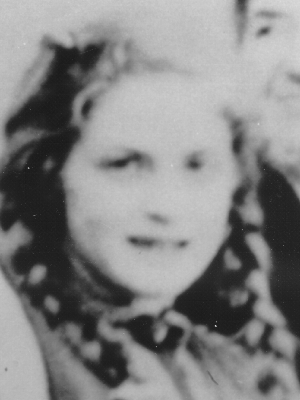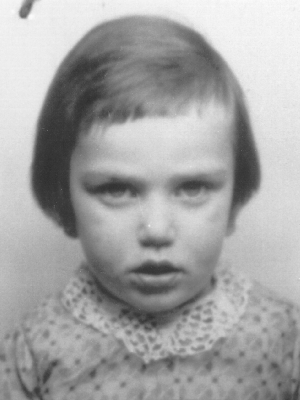
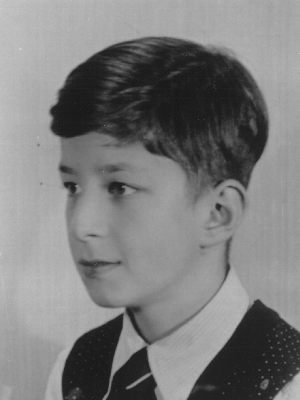
Born: November 2, 1927
Birthplace: Berlin, Germany
Ulrich Arnheim
Ulrich Arnheim, the only child of Milli and Dr. Fritz A. Arnheim, was born on November 2, 1927 in Berlin, Germany, a large cosmopolitan, highly sophisticated city. The Jews of Berlin were well integrated into the social and cultural fabric of the city. Ulrich’s father was a successful lawyer.
In 1933, when the Nazis came to power in Germany, Ulrich was a 6-year-old schoolboy. The Nazis slowly introduced harsh economic and social restrictions against the Jews. Jews were barred from most professions and lost their citizenship. Ulrich’s father lost his job, leaving the family with no regular income.
The Germans began expelling Jews who had not been born in Germany.
In November 1938, a countrywide night of massive riots and plundering was directed towards Germany’s Jews. This was later known as Kristallnacht , “Night of Broken Glass,” because of all the glass windows that had been broken. Ulrich’s parents decided to find a way to leave the country. They attempted to place Ulrich in a boarding school in England. Because his father had lost his job and could not guarantee his monthly maintenance, Ulrich was turned down. A Jewish woman living in England expressed interest in taking him in, but Ulrich’s parents were unable to part from him. They tried to obtain visas so that the family could go to the United States.
After October 1941, the Arnheim family was hopelessly trapped. Emigration from Germany was now forbidden by the Nazis, and harsher restrictions were being passed against the Jews. They were forbidden to use public transportation, and they could be evicted from their homes at any moment. Jews were forced to wear yellow stars to identify them as Jews.
The Germans began deporting Jews to sealed, hunger- and disease-ridden ghettos in eastern Europe.
After September 1942, they began deporting German Jews directly to death camps. Ulrich and his parents were deported to Auschwitz Death Camp in Poland, where Dr. and Mrs. Arnheim were murdered. Ulrich, now a teenager, survived. After the war, he immigrated to the United States.
Jewish life in Germany dates back to the days of the Roman Europe. As with the rest of Europe during the Middle Ages, the rights of Jews in Germany were greatly limited due to the influence of the church. In the late 18th and early 19th century, the situation changed and Jews found greater acceptance in German society. Most German Jews quickly assimilated into the environment around them. Many became prominent musicians, writers, teachers, scientists, politicians and businessmen. Antisemitism, though still a factor in German society, was not as prevalent as in Eastern Europe. As a result, German Jews were fiercely patriotic and fully identified with their country’s hopes and dreams.