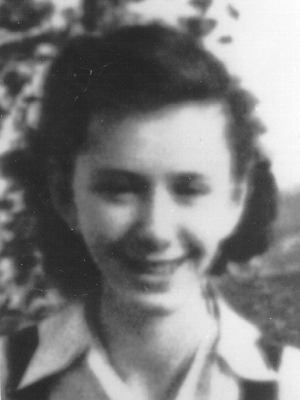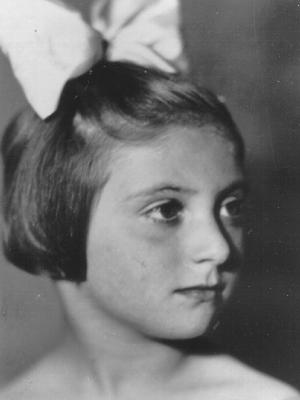
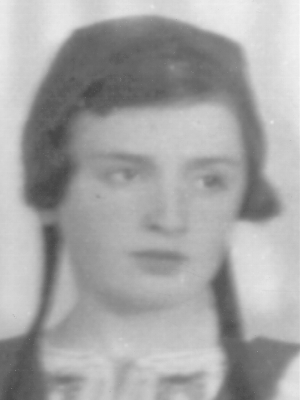
Born: December 14, 1927
Birthplace: Prague, Czechoslovakia
Stella Klinger
Stella Klinger, the daughter of Marie and Gustav Klinger, was born on December 14, 1927, in Prague, Czechoslovakia.
Her father was a businessman, and had three older children from a previous marriage. Stella’s mother stayed home and cared for her. Prague was a large, cosmopolitan city, and was home to one of the oldest Jewish communities in Europe. Jews contributed greatly to the economic success of the city and played a key role in its rich cultural life.
In March 1939, when Stella was 11 years old, the Germans occupied Prague, and passed various antisemitic measures, prohibiting Jews from practicing their professions or taking part in normal civic life. Property was confiscated, and Jews were prevented from participating in religious, cultural or any other public activity. They could not attend public schools or use public transportation.
Beginning in October 1941, the Germans began deporting the Jews of Prague to concentration camps. In early 1942, Stella and her parents were deported to the nearby Theresienstadt Transit Camp-Ghetto. The ghetto was overcrowded, lacked adequate sanitation and food, and was infested with typhus-spreading vermin. Jews were continually packed into trains headed for death camps.
In April 1942, Stella and her parents were “selected” and deported to Auschwitz Death Camp in Poland. Upon their arrival, they were taken to the gas chambers and murdered.
Jews first came to the former Czechoslovakia in the 10th century. Though subjected to persecution and massacres, the community survived to become the home of many famous rabbis and a rich Jewish culture. Most of Czechoslovakia’s Jews were living in Prague by the 1700s. Others lived in small towns earning their living as traders, smiths, and craftsmen.
After World War I, Jews played a major role in the economic life of the country, most notably in textiles, food stuffs, wood and paper, mining and banking. They were also major contributors to their country’s cultural life, which included such figures as Franz Kafka and Max Brod. By the 1930s the Jewish community numbered approximately 375,000.