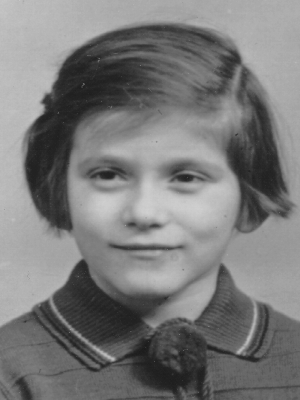
Born: 1935
Birthplace: Frankfurt am Main, Germany
Ruth Moses
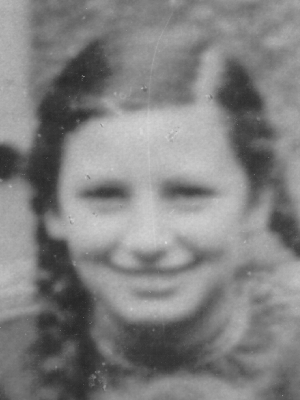
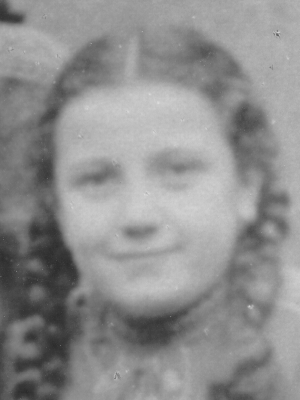
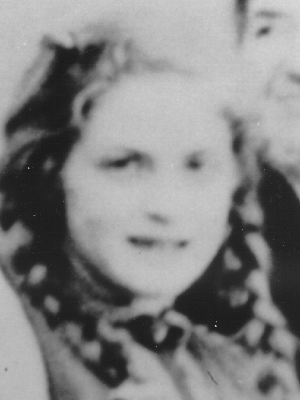
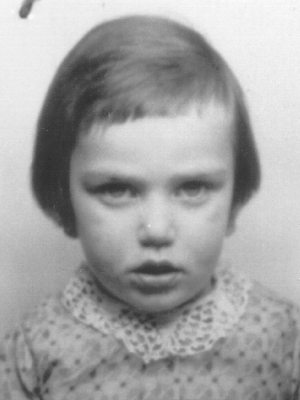
Ruth Moses, the only child of Berta and Hugo Moses, was born in 1935 in Frankfurt am Main, Germany.
Frankfurt am Main was one of Europe’s most important centers of Jewish culture and learning. The Jewish community participated in all aspects of the city’s commerce and industry. In 1933, Frankfurt am Main even had a Jewish mayor, Ludwig Landmann.
On January 30, 1933, with the Nazi rise to power, the tranquil life of the Jews ended. Even before any official laws were enacted, Frankfurt’s Jews were subjected to physical assaults and to a general boycott of Jewish businesses. All public institutions – hospitals, courts, schools, universities, cultural and art centers – dismissed their Jewish employees. Economic conditions worsened in 1935, after the passage of the Nuremberg Laws.
After October 1941, Jews were forbidden to leave Germany, and Ruth and her family were trapped.
Between December 1941 and the spring of 1942, the Germans deported 16,000 German Jews to the ghetto in the city of Riga, the capital of Latvia, including 6-year-old Ruth and her parents.
The Riga Ghetto’s previous residents, 30,000 Latvian Jews, were murdered by the Nazis in November 1941 to make room for the newly arriving German Jews. Conditions in the overcrowded ghetto were horrendous. The ghetto was plagued with food shortages and poor sanitation. Thousands of people died of starvation, disease and exposure to freezing weather.
On November 2, 1943, the Riga Ghetto was shut down. Most of the remaining residents were gassed in sealed transport vans. Others were sent to labor camps where they were worked to death. By December 1943, there were no Jews left in the Riga Ghetto.
Nothing is known about Ruth’s fate after she was sent to Riga.
Jewish life in Germany dates back to the days of the Roman Europe. As with the rest of Europe during the Middle Ages, the rights of Jews in Germany were greatly limited due to the influence of the church. In the late 18th and early 19th century, the situation changed and Jews found greater acceptance in German society. Most German Jews quickly assimilated into the environment around them. Many became prominent musicians, writers, teachers, scientists, politicians and businessmen. Antisemitism, though still a factor in German society, was not as prevalent as in Eastern Europe. As a result, German Jews were fiercely patriotic and fully identified with their country’s hopes and dreams.