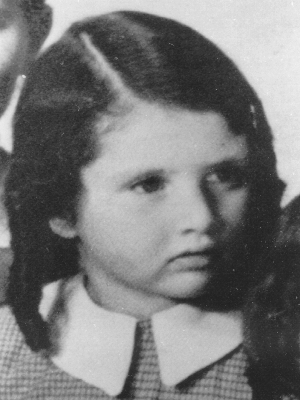
Born: September 3, 1935
Birthplace: Vienna, Austria
Renate Krochmal
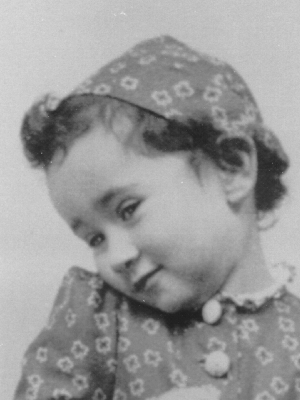
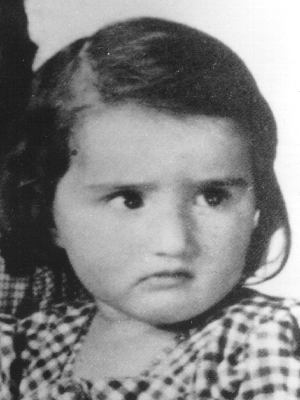
Renate Krochmal, the middle child of Amalie and Jacob Krochmal, was born on September 3, 1935, in Vienna, Austria. Vienna was home to some 175,000 Jews and was one of the world’s most important Jewish cultural centers. However, Vienna was also a city in which antisemitism flourished. When the Germans took over in March 1938, they found many Austrians willing to participate in the persecution of the Jews.
Renata was 2 years old when Austria lost its independence and became part of Nazi Germany. Seeing no hope under the Nazis, the Krochmal family fled to France. From France they hoped to eventually receive permission to enter the United States. Renate had an uncle living in New York who was willing to guarantee the support of the entire family.
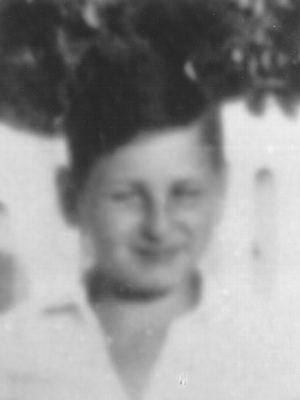
Despite the guarantee, the U.S. State Department refused the Krochmal family permission to come to the United States. Soon after, on September 16, 1942, Renate and her family were arrested by the French police and handed over to the Germans. They were sent to a transit camp, where her 11-year-old brother died. Renate’s parents were eventually deported to Auschwitz Death Camp in Poland.
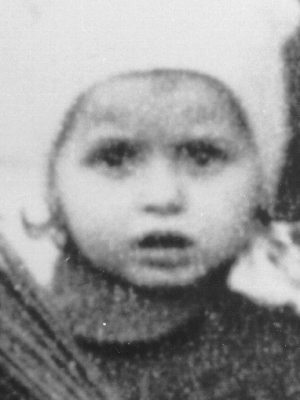
Renate and her sister were sent to live in the children’s home at Izieu. On April 6, 1944, the home was raided and the children were shipped to Auschwitz. They were murdered in the gas chambers upon their arrival.
Jews first came to Vienna from Germany in the 12th century. During the 19th century, Vienna became a hub for Jewish authors and intellectuals, and by 1923, the local Jewish community had grown to nearly 200,000, third largest in all of Europe. Vienna’s Jewish community maintained 60 synagogues, a vast educational network, and a variety of social action institutions. It was also in Vienna that Theodore Herzl established the first headquarters of the Zionist movement. At the same time, however, Vienna was a center of popular antisemitism. At the turn of the century, Karl Lueger was elected mayor on a platform espousing anti-Jewish views. Nevertheless, the Jewish community, among the most sophisticated throughout Europe, continued to thrive.