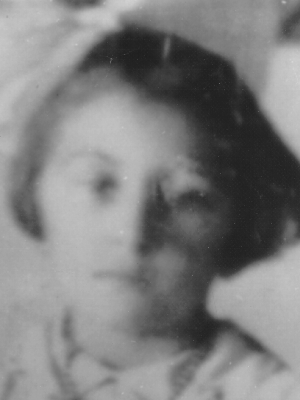
Born: 1929
Birthplace: Kirajhaza, Czechoslovakia
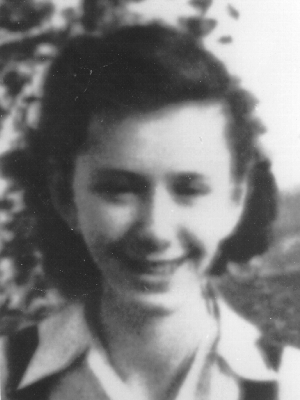
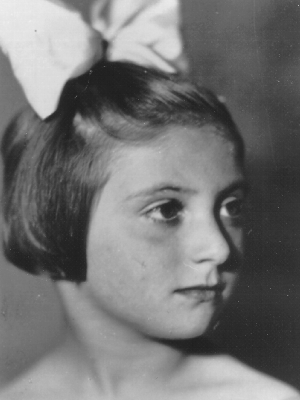
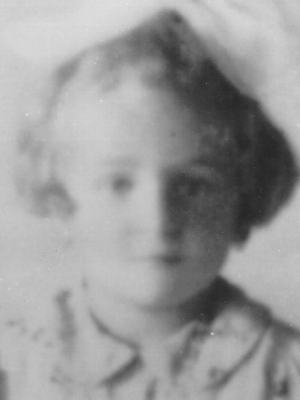
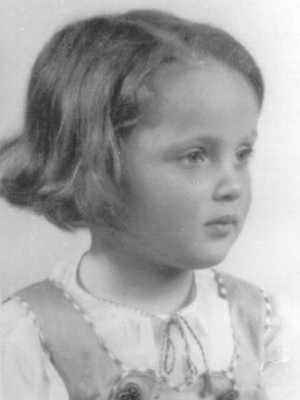
Rashka Schwimmer
Rashka Schwimmer, the older daughter of Miriam and Ephraim Schwimmer, was born in 1929 in Kirajhaze, a small town in rural Czechoslovakia. Her father, a grocer, had studied in the town’s Jewish seminary.
In the fall of 1938, Hungary annexed the area. Various anti-Jewish measures that were passed by the Hungarian government caused economic hardship. In addition, many of the Jewish citizens were conscripted into forced labor and were subjected to inhumane treatment. Rashka and her family coped with the restrictions, and life went on.
In March 1944, the Germans invaded Hungary, setting into motion a plan to destroy the country’s entire Jewish population. Beginning in April, food was strictly rationed, and they were required to wear yellow stars to identify them as Jews. On the first day of Passover, Rashka and her family were forced to leave their home without notice and to move into a sealed-off ghetto in the nearby city of Nagyzsollos. All the Jews of the city and of the towns in the surrounding area were concentrated into four streets. The overcrowded ghetto contained between 12,000 and 14,000 people. Lacking adequate food, medication, and sanitation, many of these people died.
Toward the end of May, Rashka and her family, along with the other Jews in the ghetto, were forced into crowded, locked cattle cars and transported to Auschwitz Death Camp. After an agonizing journey of several days with little food and water, the prisoners arrived. Rashka and her family were immediately sent to the gas chambers where they were murdered.
Jews first came to the former Czechoslovakia in the 10th century. Though subjected to persecution and massacres, the community survived to become the home of many famous rabbis and a rich Jewish culture. Most of Czechoslovakia’s Jews were living in Prague by the 1700s. Others lived in small towns earning their living as traders, smiths, and craftsmen.
After World War I, Jews played a major role in the economic life of the country, most notably in textiles, food stuffs, wood and paper, mining and banking. They were also major contributors to their country’s cultural life, which included such figures as Franz Kafka and Max Brod. By the 1930s the Jewish community numbered approximately 375,000.