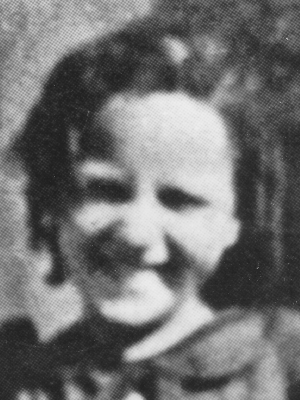
Born: January 10, 1934
Birthplace: Antwerp, Belgium
Paula Mermelstein
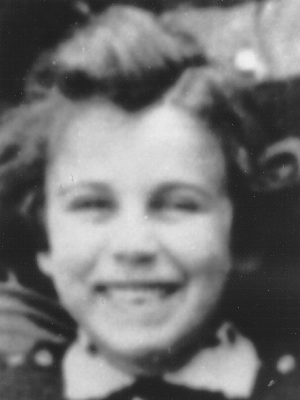
Paula Mermelstein, also known as Paulette, was the older child of Frieda and Max Mermelstein. She was born on January 10, 1934, in the bustling seaport of Antwerp, Belgium. Their father was a butcher, and although not rich, he was able to provide for his family’s needs.
Jews lived in Antwerp as early as 1526. Like the great majority of Antwerp’s 50,000 Jews, Paula’s parents were Eastern European immigrants who had left their native homelands to escape rising antisemitism and to live in the more tolerant society of Western Europe.
In the spring of 1940, Germany invaded Belgium, and the Mermelstein family escaped to France. However, France quickly came under German domination. Soon, the Nazis began rounding up Jews for deportation and death. For two years Paula and her family avoided capture, but eventually they were arrested and imprisoned at the Rivesaltes Internment Camp, where their stay was short.
Paula’s father managed to escape and join the Resistance, while Mrs. Mermelstein went into hiding in southwestern France.
Paula and her brother were sent to live at the children’s home in Izieu, France. The peaceful surroundings provided comfort and shelter for over 40 Jewish children whose lives had been disrupted by the war.
However, the relative calm of the children’s home did not last very long.
On April 6, 1944, the Nazis raided the home and deported the children to Drancy Transit Camp. Paula’s mother was also arrested, probably because her address had been found in the raid on the children’s home. Paula, her brother and their mother were reunited at Drancy. On May 20, 1944, they were deported to Auschwitz Death Camp in Poland. Immediately upon arrival, they were sent to the gas chambers, where they were murdered.
Jews first came to Belgium in the 13th century, but it was not until the 1500s that a permanent Jewish community was established. It was then that many Portuguese merchants were attracted to what is now Belgium. Most of these were Marranos, or Conversos, Jews who outwardly converted to Catholicism to avoid the Inquisition, but secretly kept their Jewish faith. The newcomers made their homes in Antwerp. It was not until 1831, however, that Judaism received official state recognition.
The two major centers of Jewish life in Belgium were Antwerp, with 60% of the Jewish community and Brussels, with most of the rest. Jews were particularly active in the country’s diamond trade and were generally looked upon favorably by their non-Jewish neighbors