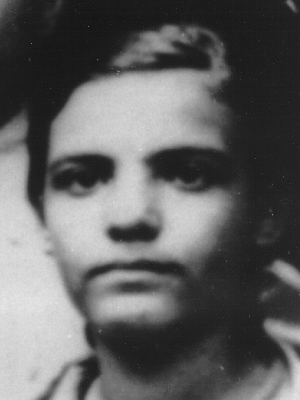
Born: 1931
Birthplace: Thessalonike, Greece
Oro Torres
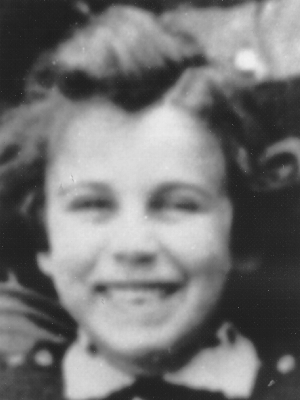
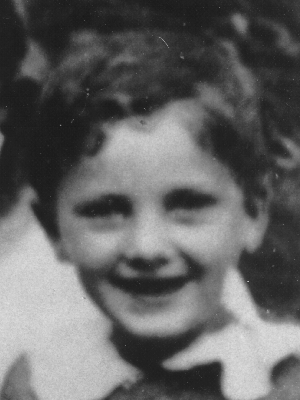
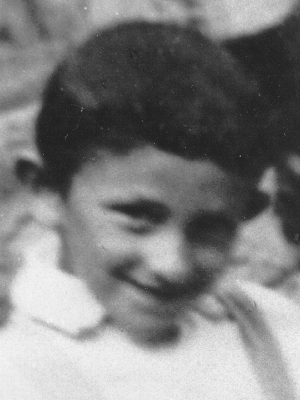
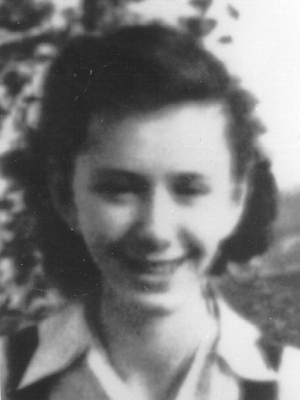
Oro Torres, the youngest child of Mazeltov and Eliau Mose Torres, was born in 1931, in Thessalonike, Greece. Thessalonike, also known as “Jerusalem of the Balkans,” is a port located in northeast Greece, where Jews lived as early as 140 BCE. The Jewish community grew and played a major role in the development of the city. Oro’s father owned a family-run clothing store and the family lived comfortably.
In 1939, on the eve of World War II, 55,250 Jews lived in Thessalonike, and the Jewish community had a strong, active, vibrant and rich cultural life. However, it ended in April 1941, when the Germans invaded Greece.
The Germans immediately began the persecution of the Jews of Thessalonike. Male Jews were forced to register for labor. Jews were forbidden to enter restaurants and had to surrender their businesses to the Germans, including the Torres family, who became impoverished. Many died from disease and starvation.
On February 8, 1943, anti-Jewish laws were implemented. Oro and her family struggled to cope. On April 10, 1943, the Torres home in Thessalonike was surrounded by the Germans. Oro and her family were forced to leave the house, taking only a few personal items. Oro’s older brother had to carry their father, who had recently suffered a stroke and could not walk. Together with other Jews, they were marched through the streets to the Baron Hirsch quarter located near the train station.
Oro and her family were forced onto overcrowded cattle cars. They set off for a journey into the unknown.
Almost a month later, they arrived at Auschwitz Death Camp where most of the Jews were gassed upon arrival. Oro, her mother and her sister were separated from the rest of the family and sent to the Birkenau section of the camp, only to be gassed a week later.
Although there was a Jewish presence in Greece before the Christian era, most of Greece’s Jewish community descended from Spanish Jews who fled the Inquisition in the late 15th century. Many were able to maintain commercial contacts with their former homelands and became successful international leaders. Others excelled as weavers, textile dyers and jewelers.
Greece was home to some of the world’s greatest rabbis during the late middle ages. By the beginning of the 20th Century, Jews could be found in all professions in the city, but most earned simple livings as longshoremen, craftsmen and shopkeepers in Salonika’s bustling seaport. Before World War II, nearly 70,000 Jews made their homes here.