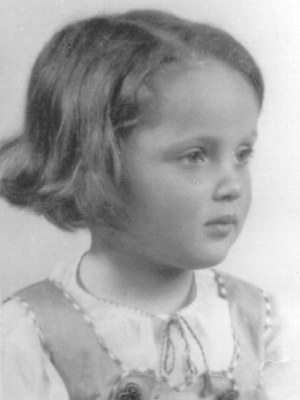
Born: January 4, 1932
Birthplace: Prague, Czechoslovakia
Naomi Posin
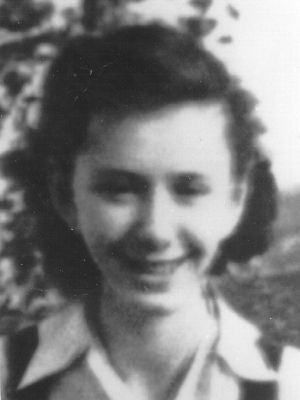
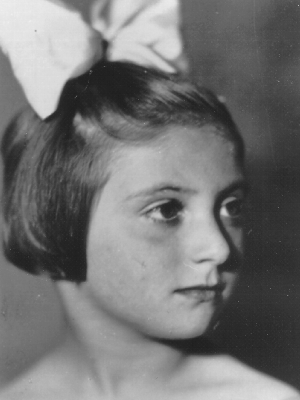
Naomi Posin, the daughter of Rachel and Max Posin, was born on January 4, 1932, in Prague, Czechoslovakia. She was an only child, part of a large, extended family. Her father was a hat maker who also owned a plastics factory, and her mother was a housewife. Prague was a large city, home to one of Europe’s oldest and most revered Jewish communities. Jews contributed greatly to the economic progress of the city and played a key role in its rich cultural life.
After the German army occupied Prague in March 1939, various antisemitic measures were enacted. Jews were barred from their professions, their property was confiscated, and they were prohibited from participating in religious, cultural or any other public activity. They could not attend public school, use public transportation, or the telephone.
In August 1942, Naomi and her parents were deported to Theresienstadt Transit Camp-Ghetto in Czechoslovakia.
Naomi’s father worked there in a cap factory and her mother worked in a children’s home. Though children over the age of 10 were forced to work, Naomi was somehow able to continue her education. Conditions in the camp were horrible. There was terrible overcrowding, lack of adequate nutrition, and primitive sanitary facilities.
Typhus-carrying vermin infested the camp. There were daily selections, and those chosen were deported to the death camps at Auschwitz and Treblinka. Between October 1941 and March 1945, the Germans deported 46,067 Jews from Prague to the death camps.
In 1944, Naomi and her parents were selected for transport to Auschwitz. Soon after their arrival, Naomi and her mother were murdered in the gas chambers.
Jews first came to the former Czechoslovakia in the 10th century. Though subjected to persecution and massacres, the community survived to become the home of many famous rabbis and a rich Jewish culture. Most of Czechoslovakia’s Jews were living in Prague by the 1700s. Others lived in small towns earning their living as traders, smiths, and craftsmen.
After World War I, Jews played a major role in the economic life of the country, most notably in textiles, food stuffs, wood and paper, mining and banking. They were also major contributors to their country’s cultural life, which included such figures as Franz Kafka and Max Brod. By the 1930s the Jewish community numbered approximately 375,000.