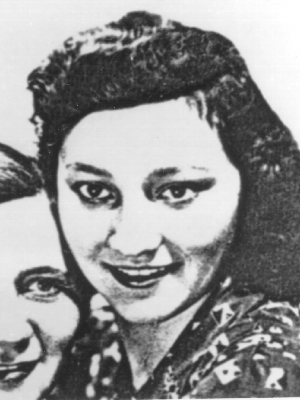
Born: November 24, 1927
Birthplace: Vrshac, Yugoslavia
Melanie Ormosch
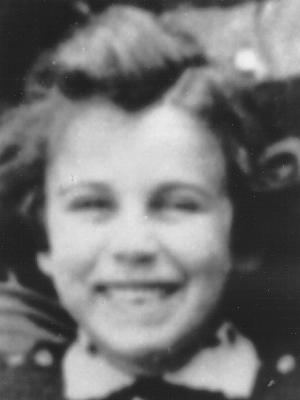
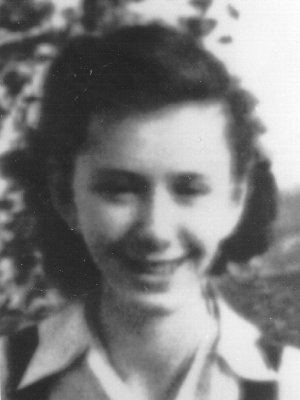
Melanie Ormosch was born on November 24, 1927 in Vrshac, Yugoslavia. Melanie’s father and mother separated soon after their marriage, and she grew up in the home of her wealthy maternal grandparents, living with her mother and four uncles. Melanie was given everything she wanted. She spent her summers with her father and his non-Jewish mistress. Melanie’s comfortable, though unusual, lifestyle was disrupted on April 6, 1941, when Germany invaded Yugoslavia.
All Jews in Vrshac were required to report for registration. Soon after, the Germans confiscated the family’s leather factory and forced them, along with the other Jews of Vrshac, into cattle cars and boats headed for Belgrade. The men were taken to a concentration camp outside the city. Women and children were moved into already overcrowded Jewish homes.
In Belgrade, Melanie’s mother found her former husband’s mistress and begged her to save Melanie. The woman promised to help. In October 1941, the Germans began murdering the Jewish men imprisoned outside Belgrade.
Melanie’s father was among the victims. His mistress, however, was somehow able to convince the German authorities to let her take Melanie just before the girl was to be imprisoned in the concentration camp.
In 1943, the Nazis re-arrested those Jews they had earlier released. Melanie, 15 years old, was among them.
Again, her father’s mistress secured Melanie’s release, but on condition that Melanie convert to Christianity and marry. A match was arranged, and Melanie married a 25-year-old relative of the mistress.
Although she was called up for forced labor a year later, Melanie survived the horrors of the Holocaust. In October 1944, the Soviets invaded Yugoslavia and forced the Nazis out. Melanie no longer feared for her life. She was one of the few members of her family to live through the war.
The former Yugoslavia was a country formed of several territories with distinct cultural differences. Today, some of these territories are independent countries. Right before World War II, nearly 70,000 Jews lived in Yugoslavia. Most earned their living as merchants and professionals. Many were descendants of Jews who had fled the Spanish Inquisition in the 15th century. Antisemitism, for the most part, was marginal in Yugoslavia; the monarchy and Orthodox Church looked favorably upon the Jews. Antisemitism in largely Catholic Croatia and Slovenia, however, was problematic and did become a factor during the Holocaust.