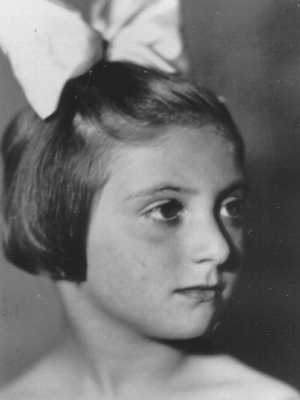
Born: August 10, 1935
Birthplace: Sečovce, Czechoslovakia
Margaréta (Greti) Stern
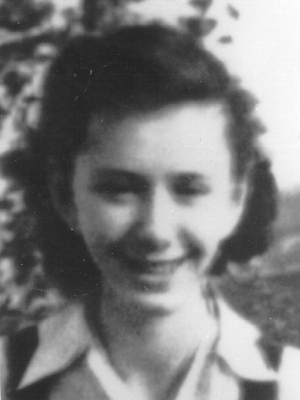
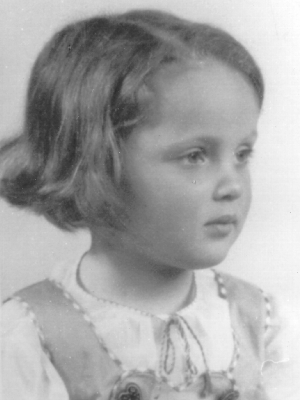
Margareta Stern, known as Greti, was the daughter of Stefania and Imre Stern. She was born on August 10, 1935 in Secovce, Czechoslovakia. Her father worked in the family hardware store. Greti was 3 years old when the Germans occupied Czechoslovakia. The Germans immediately began persecuting and brutalizing the Jewish residents of her town. When they confiscated her father’s store, he lost his livelihood. Imre desperately searched for a way to survive.
Through a friend, Greti’s father was able to obtain false baptism certificates, giving the family a new identity. They changed their last name to Skala and moved to Bratislava, the capital city of the region. The family lived as best as they could under wartime conditions. They constantly lived in fear that they would be betrayed. Greti, now called Margit, began school and became the top student in her class. She even helped her Christian classmates with their religious lessons.
In early 1944, Hungary seemed to be a relatively safe haven. Greti’s father obtained visas for Hungary. Soon after their arrival at a Hungarian hotel, the Germans occupied Hungary. The Sterns were recognized as Jews and denounced. Handed over to the Nazis, Greti and her parents were deported to Ravensbrück Concentration Camp in Germany.
Conditions in Ravensbrück barely sustained life. The Germans were determined to starve their prisoners to death, and typhus-carrying vermin infested the entire camp. In April 1945, as the Allies approached, Greti and her mother, along with thousands of sick and starving inmates, were evacuated from Ravensbrück and forced to march westward. Many hundreds died of exhaustion, while others were shot. Some were even killed by allied bombs.
They arrived at Bergen-Belsen, a camp filled with dead and dying prisoners. In May 1945, the camp was liberated.
Greti, who had contracted typhus in Bergen-Belsen, and her mother were sent home in trucks to Bratislava. Greti was immediately hospitalized, but she died on June 18.
Jews first came to the former Czechoslovakia in the 10th century. Though subjected to persecution and massacres, the community survived to become the home of many famous rabbis and a rich Jewish culture. Most of Czechoslovakia’s Jews were living in Prague by the 1700s. Others lived in small towns earning their living as traders, smiths, and craftsmen.
After World War I, Jews played a major role in the economic life of the country, most notably in textiles, food stuffs, wood and paper, mining and banking. They were also major contributors to their country’s cultural life, which included such figures as Franz Kafka and Max Brod. By the 1930s the Jewish community numbered approximately 375,000.