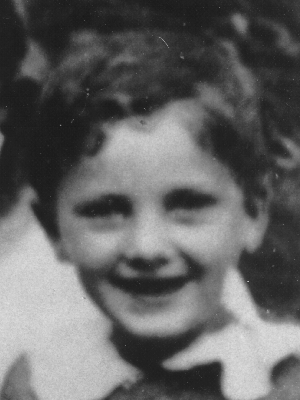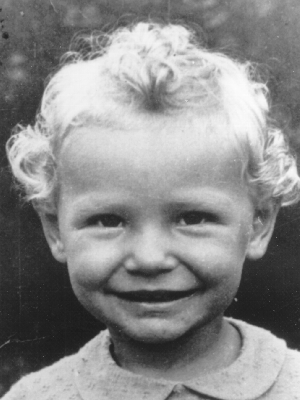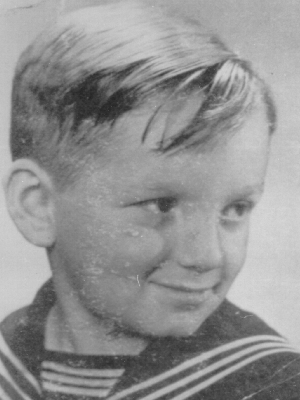
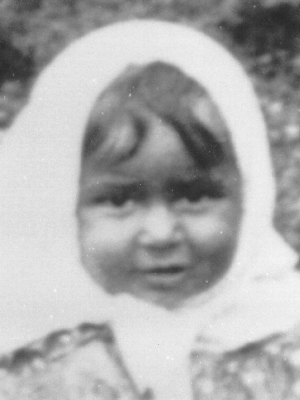
Born: 1936
Birthplace: Lodz, Poland
Lenka Nadolna
Lenka Nadolna, the daughter of Anna and Hershel Nadolna, was born in 1936 in Lodz, Poland. Lodz had the second largest Jewish population in Poland, and was a center of Jewish culture and political and social activity. From the mid-1800s, Lodz was a flourishing industrial city with a successful textile sector. Much of the city’s industry was established by Jews, and more than half of them derived their livelihoods from it. The city was also home to a large Jewish working class. Lenka’s father worked as a tailor.
Germany occupied Lodz on September 8, 1939, and immediately began persecuting the Jews. Jews were forbidden to congregate for religious services. They were subject to curfew, their radios were confiscated, and they were forced to wear yellow stars to identify them as Jews. In addition, Jewish-owned bank accounts were blocked, most Jewish-owned businesses were confiscated, and Jews were barred from most professions.
In early February 1940, Lenka’s family, along with the rest of the Jewish population of Lodz, was forced to relocate to a run-down part of the city. They were crowded into a very small ghetto where there was inadequate food, medicine and heat. The ghetto was sealed off from the outside world on April 30, 1940. Thousands soon died of starvation, disease or exposure. The Germans also moved an additional 38,000 Jews from areas outside Lodz into the ghetto.
In January 1942, the Germans began deporting ghetto residents to Chelmno Death Camp. By September, the ghetto was almost empty. Very few children were left. Only able-bodied men and women were kept alive for forced labor.
The Nazis decided to empty the ghetto in the spring of 1944. Clearing the ghetto street by street, the Germans transported the inhabitants to death camps at Chelmno and Auschwitz. By the fall of 1944, the ghetto was empty.
We have no information about the fate of Lenka and her family. After moving into the ghetto, they were never heard from again.
Jews first came to Poland from central Europe at the end of the 11th century, as refugees from the Crusades. They were welcomed by the Polish nobility, which was eager to use their skills in modernizing their country. Jews were granted charters to live in specific towns and engage in various businesses and crafts. After the massacre of 1648-1649 by the Cossacks, Poland’s surviving Jews were impoverished.
Despite the economic poverty, however, religious and cultural life was rich. Poland was home to some of the world’s greatest rabbis and scholars. Religious observance throughout the large cities and smaller towns, known as shtetlach, was the norm, and religious scholarship was highly prized. By the late 19th and early 20th century, Jewish cultural life in Poland expanded to include political parties and Zionist groups, as well as a wide range of literature and sports clubs. By the 1930s, Poland’s Jews numbered over 3 million and accounted for 10% of the total population.