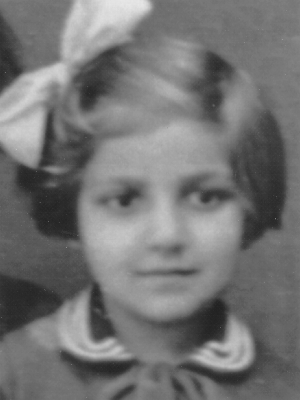
Born: 1938
Birthplace: Gabin, Poland
Hanna Blawat
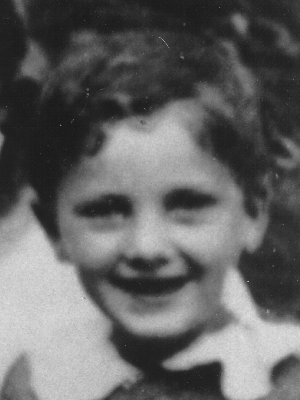
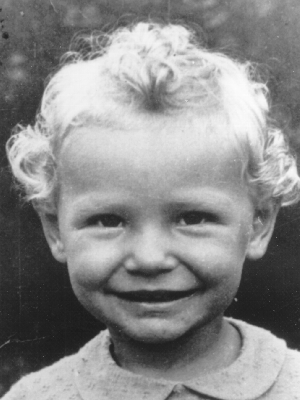
Hanna Blawat, the only daughter of Frymet-Leah and Maier-David Blawat, was born in 1938. She was an infant when the Germans occupied her home town of Gabin, Poland. Located near Warsaw, Gabin was surrounded by lush and beautiful forests. The wealthy and middle-class Jews of Warsaw vacationed in Gabin during the summer, staying in the town’s numerous resort hotels.
Soon after Hanna’s birth, Mr. Blawat, a tailor, left Poland for France. He hoped to make a better life there for his family. Mr. Blawat got a job on a friend’s farm while he tried to obtain the papers that would enable his wife and child to come to France. Just before the papers were granted, however, Germany invaded Poland, trapping Hanna and her mother.
When the Nazis entered Gabin, they immediately set fire to the synagogue and nearby Jewish houses.
Jewish adults were forced to report for compulsory labor, and Poles of German-descent took over their homes. Hanna and her family were forced to move into the attic of their once-comfortable home.
Early in 1940, 2-year-old Hanna and the other Jews of Gabin were forced to leave their homes and live in a closed-off ghetto. There was little food in the overcrowded ghetto. Hanna and her mother would sometimes sneak out to beg for food from their former neighbors. Jews were still required to report for compulsory labor, and the Germans began sending transports of Jews to labor camps. At first, Jews complied with the transport orders, hoping that this would help their families left behind in the ghetto.
Jews began hiding, however, when they learned of the horrendous conditions in the camps. The Germans began raiding Jewish homes and picking up young Jews at random. Despite the transports, the Jewish population of Gabin grew, as Jews from surrounding areas were forced into the ghetto.
On May 12, 1942, all the Jews of Gabin, including Hanna, were sent to Chelmno Death Camp. Hanna, her mother, and her grandparents were murdered upon arrival.
Jews first came to Poland from central Europe at the end of the 11th century, as refugees from the Crusades. They were welcomed by the Polish nobility, which was eager to use their skills in modernizing their country. Jews were granted charters to live in specific towns and engage in various businesses and crafts. After the massacre of 1648-1649 by the Cossacks, Poland’s surviving Jews were impoverished.
Despite the economic poverty, however, religious and cultural life was rich. Poland was home to some of the world’s greatest rabbis and scholars. Religious observance throughout the large cities and smaller towns, known as shtetlach, was the norm, and religious scholarship was highly prized. By the late 19th and early 20th century, Jewish cultural life in Poland expanded to include political parties and Zionist groups, as well as a wide range of literature and sports clubs. By the 1930s, Poland’s Jews numbered over 3 million and accounted for 10% of the total population.