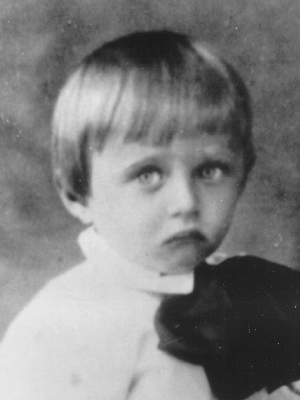
Born: 1928
Birthplace: Stazow, Poland
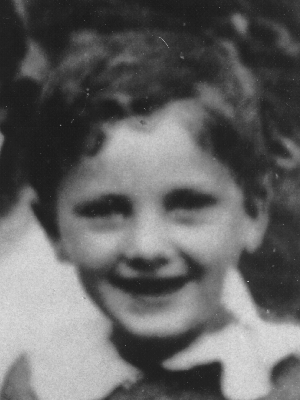
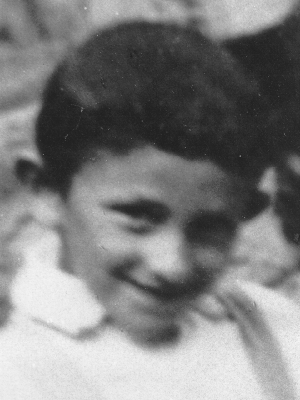
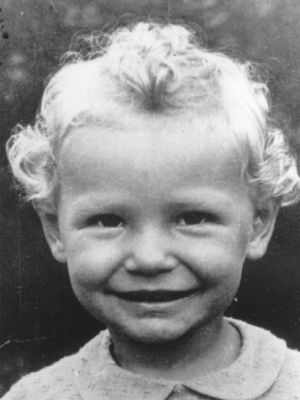
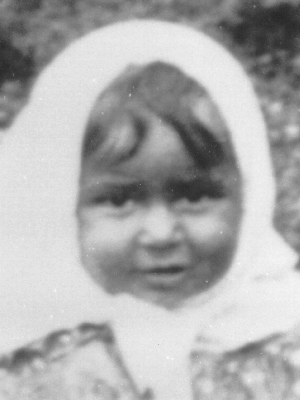
Chaskell Wolman
Chaskell Wolman, the son of Devora and Aron Wolman, was born in 1928 in Stazow, a small town in central Poland. Jews had lived in Stazow since the beginning of the 18th century. The Jewish community operated schools, yeshivot (religious schools), two hospitals and libraries. At the end of the 19th century, Jews established clothing factories and engaged in small-scale trading. Before World War II, there were about 5,000 Jews in Stazow, which constituted over half of the town’s population. In 1932, local Polish peasants attacked and brutalized their Jewish neighbors. In spite of these hostilities, the Jewish community thrived.
In 1939, Chaskell was an 11-year-old schoolboy when the Soviet Union, by agreement with Germany, annexed Stazow and the neighboring area. The Soviets immediately instituted their own administration, prohibiting traditional religious and cultural life for the Jewish community. With the suppression of private enterprise, Jewish economic life was destroyed also. Still, the Jews believed they would quickly adjust, and that they were better off under Soviet rule than under German rule.
However, in June 1941, the Nazis broke their treaty with the Soviet Union and invaded Stazow. They immediately began brutalizing and persecuting the town’s Jewish population. A ghetto was established.
In June 1942, the Nazis forced Chaskell and his family, together with the entire Jewish population of Stazow and the surrounding area, into the ghetto. The ghetto was sealed off from the rest of the city. It was severely overcrowded and lacked food, medicine and sanitation. Many people died of starvation and disease.
On November 8, 1942, the ghetto was liquidated, and its residents were forced into cattle cars. In an attempt to escape, Chaskell’s father jumped from the train and was shot to death.
Chaskell, his younger sister and their mother, along with the rest of the ghetto’s Jews, were taken to Treblinka Death Camp. They were gassed immediately upon arrival.
Chaskell was 14 years old.
Jews first came to Poland from central Europe at the end of the 11th century, as refugees from the Crusades. They were welcomed by the Polish nobility, which was eager to use their skills in modernizing their country. Jews were granted charters to live in specific towns and engage in various businesses and crafts. After the massacre of 1648-1649 by the Cossacks, Poland’s surviving Jews were impoverished.
Despite the economic poverty, however, religious and cultural life was rich. Poland was home to some of the world’s greatest rabbis and scholars. Religious observance throughout the large cities and smaller towns, known as shtetlach, was the norm, and religious scholarship was highly prized. By the late 19th and early 20th century, Jewish cultural life in Poland expanded to include political parties and Zionist groups, as well as a wide range of literature and sports clubs. By the 1930s, Poland’s Jews numbered over 3 million and accounted for 10% of the total population.