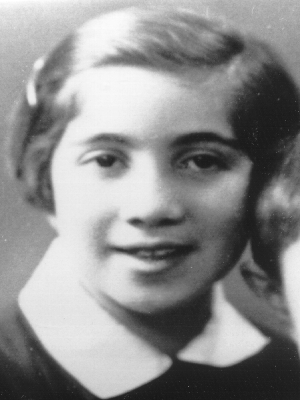
Born: 1928
Birthplace: Kazlu-Ruda, Lithuania
Assia Levinski
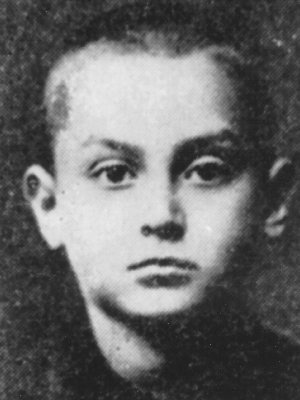
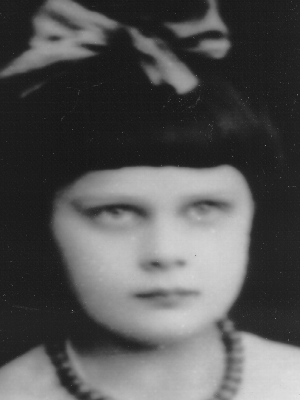
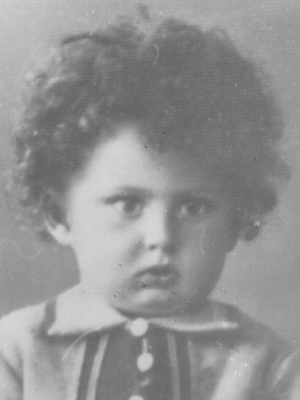
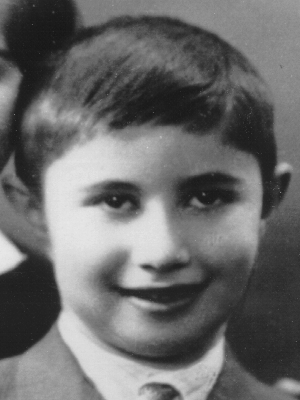
Assia Levinski, the older child of Chaja and Leon Levinski, was born in 1928 in Kazlu-Ruda, a small village in Lithuania. Assia was part of a large, loving, extended family. Assia’s father was a lumber dealer.
Both of Assia’s parents grew up in Kazlu-Ruda, but attended high school in the closest city, Marijampole, which hosted a vibrant Jewish community. The 2,545 Jews earned their livelihood from trading in agricultural produce and from small industry. The first Hebrew high school in Lithuania was established in Marijampole, as well as a small farm which trained youth interested in becoming Halutsim (pioneers) in Palestine (pre-1948 Israel). However, life was soon to take a turn for the worse, when, in the summer of 1941, the Germans invaded Lithuania.
With the German occupation, Assia and her family were forced to leave their home. Together with all the Jews of the surrounding area, they were deported to the Marijampole Ghetto. The ghetto was overcrowded, unsanitary, and sealed from the world, without food, medicine or heat. Over 7,000 people endured great hardship.
At the beginning of September 1941, the Germans liquidated the ghetto. They forced all the Jews to march in groups of 500 to a site outside the city, under the watchful eye of the Einsatzgruppen, special mobile killing squads, and their Lithuanian collaborators. There, in front of large previously-dug pits, Assia, her family, and all the Jews were shot with machine guns and their bodies fell into the pits. The dead and any that fell in still alive were buried together in those pits.
Jewish life in Lithuania dates back to the 14th century. Lithuania’s Jews earned their living as shopkeepers, craftsmen, innkeepers and contractors. Jewish life was based on observance of tradition. Lithuania’s rabbinical schools were considered the world’s greatest. Vilna (Vilnius), the country’s capital, was one of the world’s great centers for the printing of Hebrew language books and materials. Other important centers for Jewish culture in the country were Kovno (Kaunas), Panevezys, and Telz (Telsiai). Lithuania also proved to be fertile ground for the growth of Zionism.
When Lithuania became an independent republic after World War I, its Jewish population numbered approximately 150,000.